REVIEW · RED SEA
From Hurghada: Abydos, Osireion, and Dendera Day Tour
Book on GetYourGuide →Operated by FTS Travels · Bookable on GetYourGuide
Ancient Egypt, packed into one long day. This Hurghada trip hits Abydos for the Osiris story—then swings you to Dendera Temple for Hathor and that famous ceiling. I like how the sites connect like chapters: Seti I’s world of New Kingdom detail, then the Greco-Roman layers at Dendera.
The other big win is the guidance. Guides such as Aziz and Omran (and also Walid in some groups) are praised for making the symbols make sense, not just naming rooms. One thing to consider: it’s a long day with extended driving, so you’ll be trading comfort for history.
In This Review
- Key highlights you should care about
- Hurghada to Abydos: the drive that sets the mood
- Abydos Temple: why the “gate to the underworld” still grabs people
- Osiris cult, Seti I’s temple details, and the filigree relief effect
- Osireion Bath: the watery space behind Seti I
- Dendera Temple Complex: Hathor’s domain and that ceiling
- Cleopatra VII shows up where you least expect it
- What the day feels like on the ground (timing, pace, and comfort)
- Lunch and the little logistics that actually matter
- Guides like Aziz and Omran: why the explanations change your photos
- Price and value: is $199 really fair for this route?
- Who should book this Abydos–Osireion–Dendera tour?
- Should you book it?
- FAQ
- FAQ
- What’s included in the tour price?
- How long is the drive from Hurghada?
- Is pickup available outside Hurghada city limits?
- Which sites are visited on this day trip?
- Is lunch included?
- What languages are available for the guide?
- What should I bring, and are there luggage restrictions?
- Is the Osireion Bath entered during the tour?
Key highlights you should care about
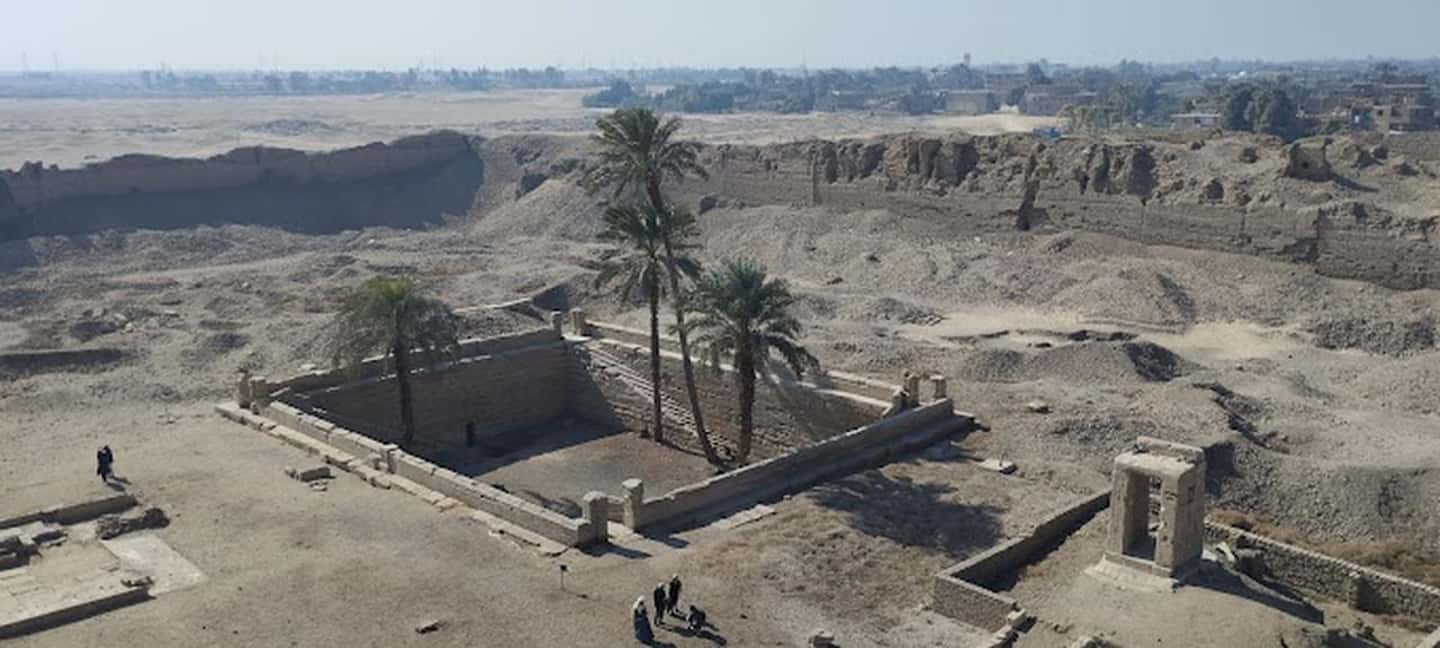
- Dendera Temple: one of Egypt’s best-preserved temple complexes, including a decorated ceiling
- Hathor + Greco-Roman blend: Roman-era decorations alongside Egyptian gods
- Osireion Bath: a watery, underground-spring-feeding space associated with Osiris (often viewed from above)
- Seti I’s Temple reliefs: delicate, filigree-style carvings from the New Kingdom
- Cleopatra VII statue: a later ruler shown in a temple setting dedicated to Hathor
- Guides who explain the symbols: from Aziz to Omran, the focus stays on meaning, not memorization
Hurghada to Abydos: the drive that sets the mood
This is one of those trips where the schedule matters as much as the monuments. You’ll get picked up from your hotel in Hurghada and start early, then spend a lot of time on the road. Expect roughly 4–5 hours each way of driving, plus time in and around the sites.
That long travel time has a downside: you’ll want good water, patience, and comfortable clothes. It also has a benefit: it makes the day feel like a mission, not a quick photo stop. Once you’re seated in the sites with your Egyptologist guide, the distance you traveled suddenly makes sense.
If you’re the type who likes to read cues on buildings—how Egyptian art shows power, belief, and daily religion—this itinerary rewards you. If you need everything to be short and easy, it may feel like a lot.
You can also read our reviews of more tours and experiences in Red Sea.


Abydos Temple: why the “gate to the underworld” still grabs people
Abydos is one of Egypt’s great spiritual magnets. The drive lands you in the area of a temple once considered among the holiest places on earth. Here, you’re not just looking at ruins—you’re stepping into a belief system that shaped how Egyptians understood life, death, and kingship.
Your guide will tie the monuments to the cult of Osiris. Osiris matters here because he represents regeneration, the afterlife, and the idea that the dead could be restored. You’ll hear about the “gateway” to the underworld—an idea that shows up in how people built and decorated sacred spaces.
At Abydos, you also get that classic Egyptian feeling of layering: older faiths and older rulers still echo through later additions. It’s easy to walk through a temple and see carvings. It’s harder—and more satisfying—to understand what those carvings were meant to do for the living.
What I’d watch for: the way inscriptions and reliefs connect the king to the gods. Egyptians didn’t treat religion as a separate topic. For them, a pharaoh’s role and a god’s role were tied together.
Osiris cult, Seti I’s temple details, and the filigree relief effect
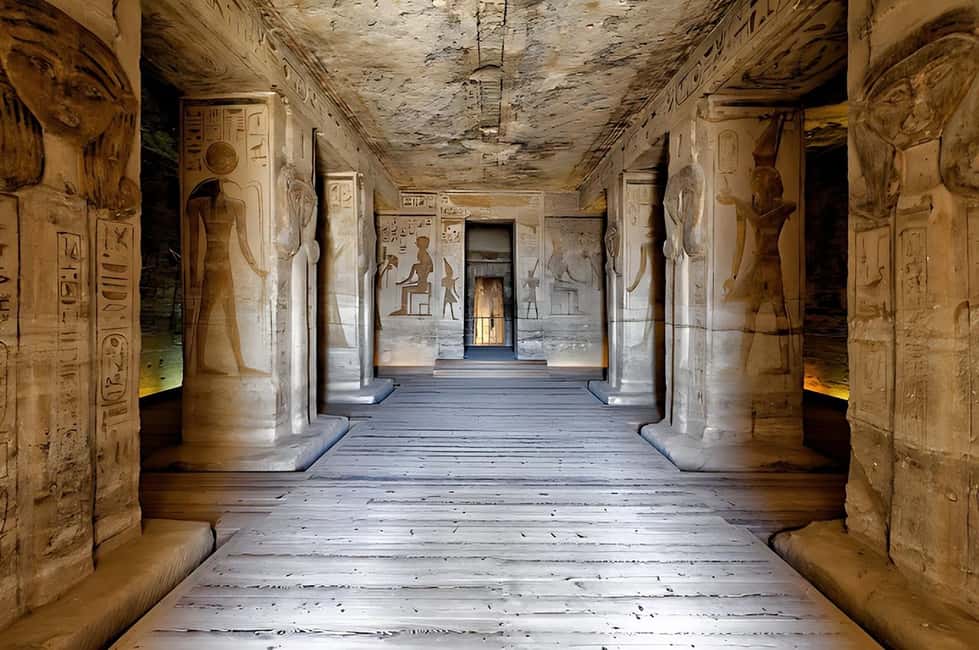
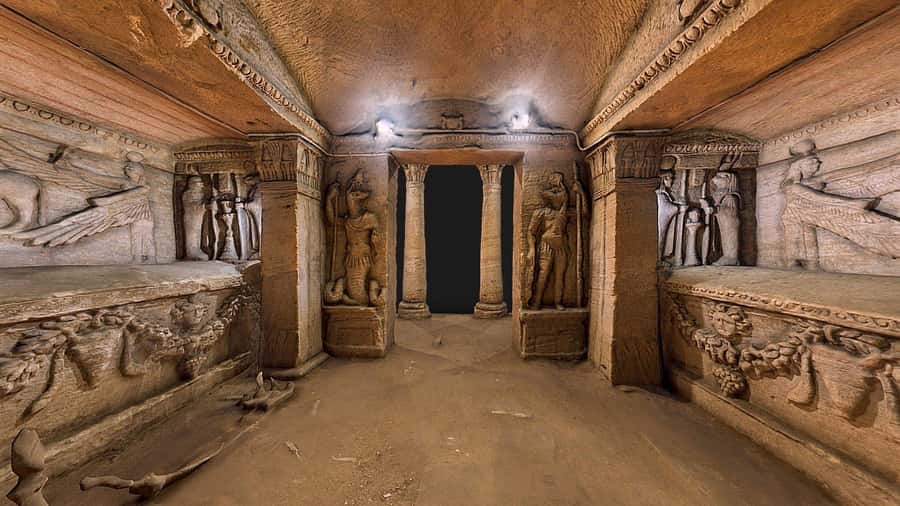
Next up is the Temple of Seti I, with those famous fine carvings. The description you’ll hear on this trip points out the reliefs—almost filigree in their detail—and that matters because Seti I belongs to the New Kingdom era, when royal art gets both political and spiritual.
These reliefs aren’t just decorative. They’re visual arguments. The king is shown in relationship to divine powers. When your guide pauses on specific panels and explains what you’re seeing, you start noticing how Egyptian artists used scale, posture, and symbolism to communicate rank and purpose.
This is also where the day gets more “architectural,” in the good way. Abydos isn’t only about walking a corridor of rooms. It’s about standing in a sacred landscape where buildings were designed for a particular ritual logic.
Practical tip: take a breath before you charge forward with your camera. This stop rewards slowing down for one or two key areas rather than speed-walking the whole temple.
Osireion Bath: the watery space behind Seti I
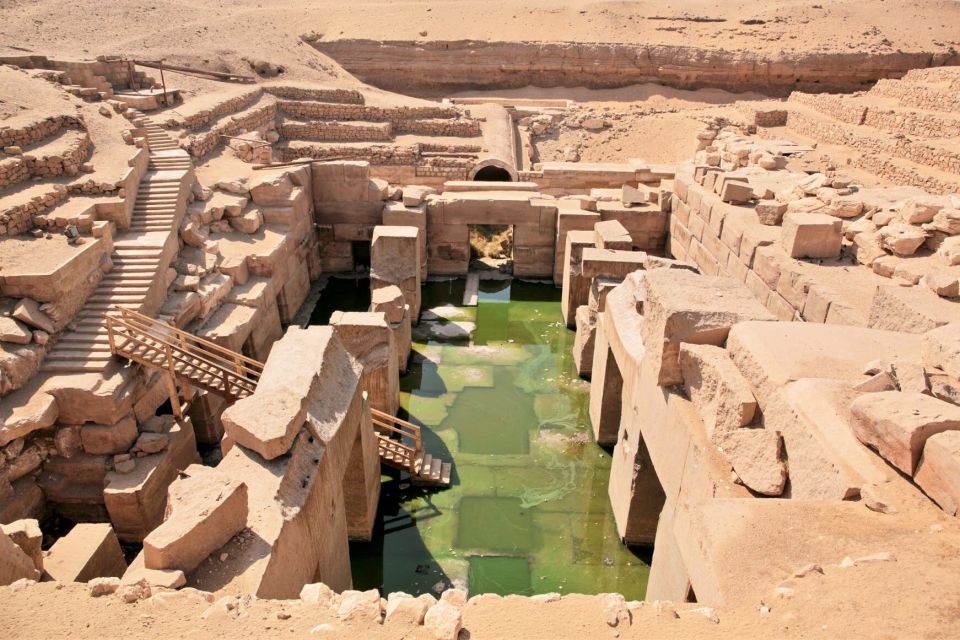
The Osireion Bath is one of those places that sounds stranger than it is—and then turns out to be exactly what makes it memorable. The tour frames it as an impressive building with a watery nature, established on ancient underground water springs. It sits behind the Temple of Seti I, at a low level, about 18 meters.
This is a temple-like space connected to Osiris, and the “water” idea isn’t random. It fits the Osiris theme: renewal, the cycle of life, and the afterlife. Water in ancient Egyptian religion often carried meaning beyond thirst.
One important note for your expectations: on this kind of trip, you may not enter the Osireion Bath itself. Some tours provide views from above rather than an inside visit. So don’t plan your mental checklist around walking down into it like a museum exhibit. Plan for it as a sight you study from your viewing points, with your guide doing the heavy lifting on interpretation.
If you’re curious: ask your guide what the underground-spring concept changes about the mood and purpose of the site. Even a short answer makes this stop click.
Dendera Temple Complex: Hathor’s domain and that ceiling
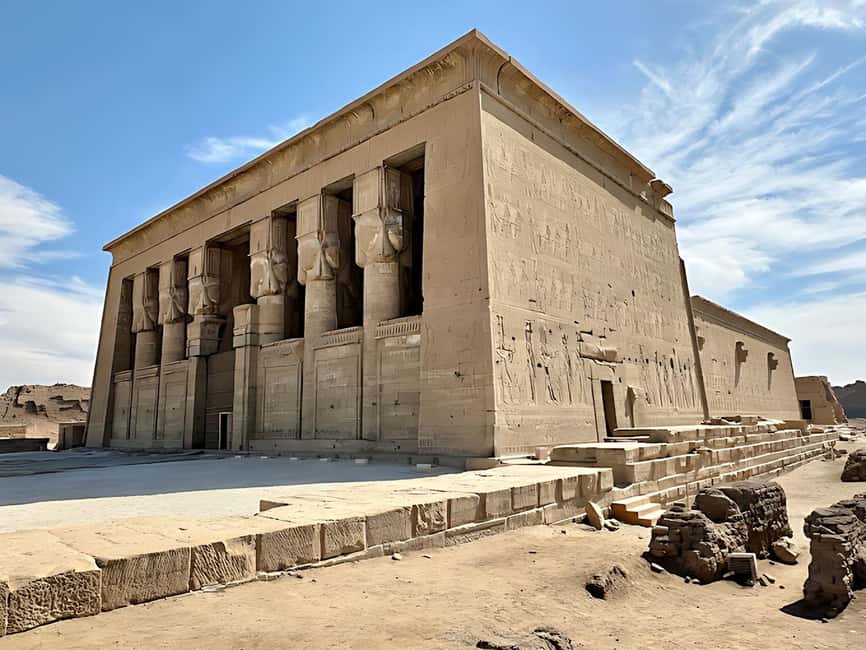
Then you hit Dendera, and the mood changes. Dendera’s Temple Complex is described as one of the best preserved temples in Egypt, and you feel that immediately. The carvings and painted surfaces (where visible) tend to read clearer than in more eroded sites.
Dendera is dedicated to Hathor, a goddess tied to love, joy, happiness, and music. That matters because it’s not the same vibe as many “grim” afterlife-focused sites. You’re looking at a place where people came to connect with a goddess linked to pleasure and celebration—just expressed through ancient symbolism and temple ritual.
Your guide will point out decorations featuring Roman rulers alongside Egyptian gods. Dendera is often described as the last major temple built in Greco-Roman times, and that blend shows in the art and inscriptions. This helps you see how Egyptian religion didn’t just disappear under new empires. It kept being used, adapted, and reinterpreted.
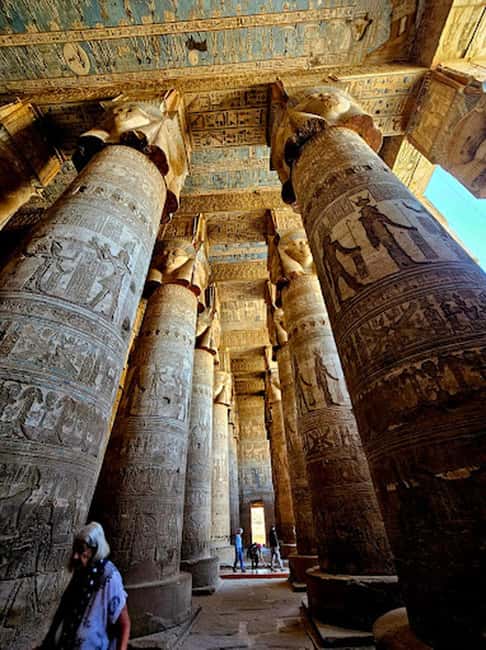
And yes, you’ll hear about the ceiling of the Dendera temple. It’s the kind of detail people remember, because it’s hard to reduce it to a single photo. When a guide talks you through what you’re seeing, the ceiling stops being a “cool feature” and becomes a map of ideas.
Cleopatra VII shows up where you least expect it
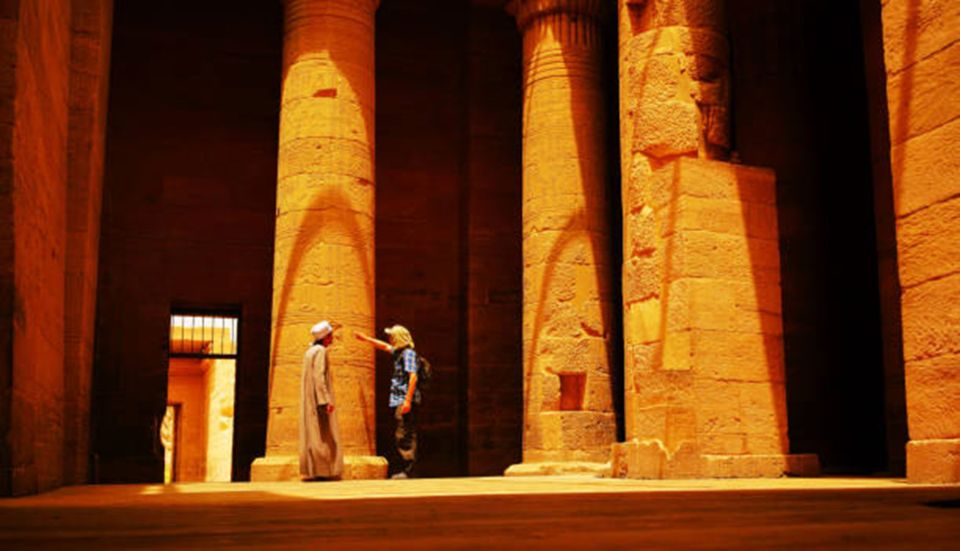
One of the more surprising details on this tour is the beautiful sculpture connected to Queen Cleopatra VII. The setting is a temple dedicated to Hathor, so you’re watching a later ruler inserted into a much older sacred universe.
Cleopatra is often taught through politics, alliances, and power. In a temple like this, you get a different angle: she’s participating in religion as a way to legitimize rule. The statue isn’t just a historical artifact. It’s part of the visual language that says, This ruler belongs here.
If you like history that feels grounded in real places, this moment is a good one to slow down. Stand back, look at the context, then look again at the figure. That’s usually when it clicks.
What the day feels like on the ground (timing, pace, and comfort)
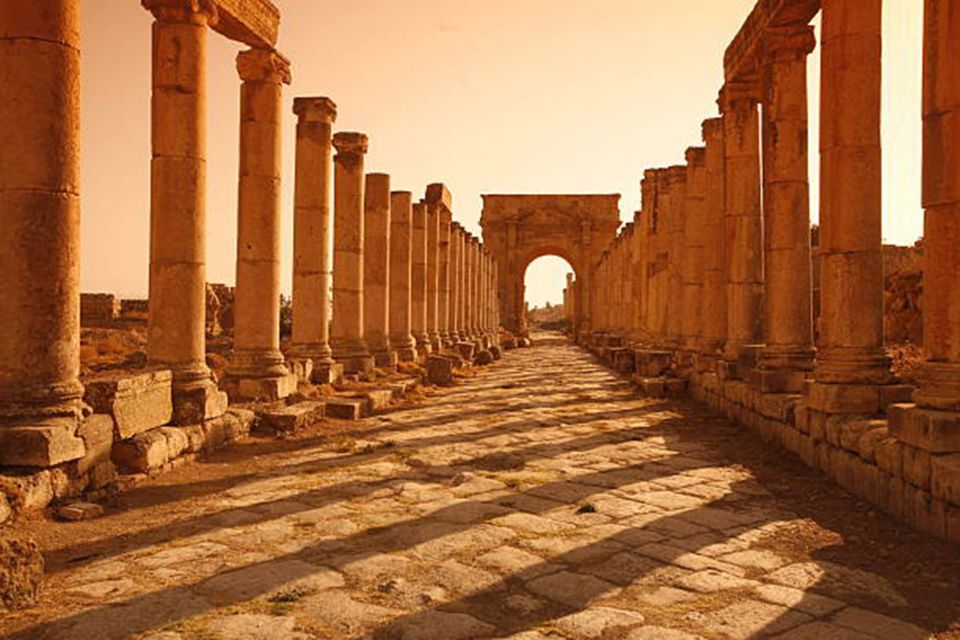
This isn’t a relaxed stroll tour. It’s a full day trip with early departure and long drives, and it can run hot depending on the season. One review noted the day ran shorter than the program indicated, which helped on a hotter day. Either way, you’ll want to treat this like a serious daytime outing.
The pacing works best if you accept a simple pattern:
- drive in,
- focus on one site at a time,
- use your guide for meaning,
- keep breaks practical.
Transportation is typically described as comfortable and air-conditioned, which you’ll appreciate once you’re back in the van after walking through temples in the sun.
Also remember: luggage or large bags aren’t allowed. Pack light. Bring what you need for weather, sun, and walking. A small day bag is usually the safer choice.
Lunch and the little logistics that actually matter
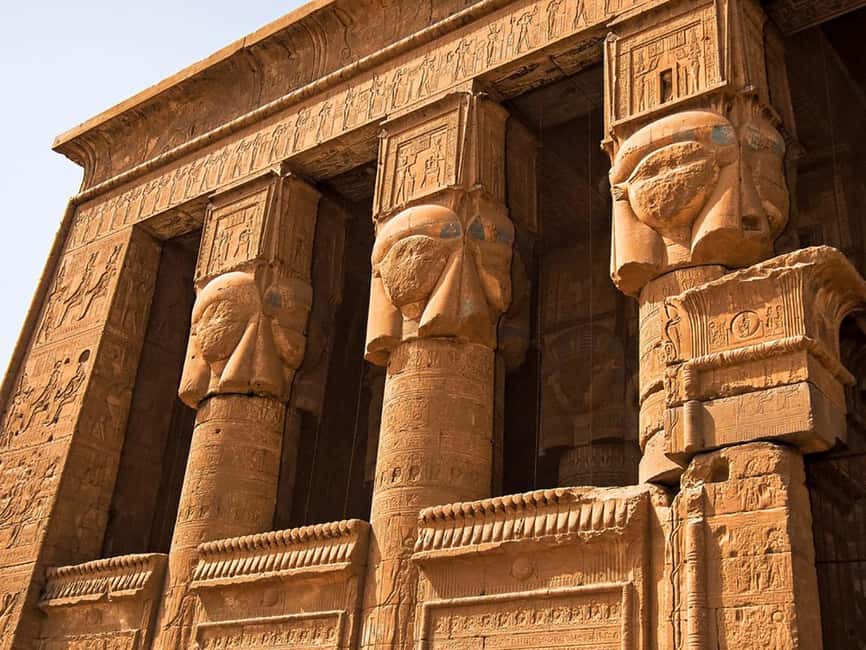
You’ll stop for lunch at a local restaurant, and bottled water is provided during the tour and transfers. Reviews describe the lunch as typical Egyptian and tasty, which is exactly what you want from a day trip like this. You don’t need gourmet; you need fuel you’ll happily eat without stomach drama.
Bring passport or ID card. Police or military checkpoints can check documents, so don’t assume your driver will handle it. Bring sunglasses and comfortable clothes, and consider some cash for any small extras that aren’t included.
Languages are listed as English, German, French, Italian, Spanish, and Arabic. So you should be able to match your guide to your comfort level. If you’re less confident with basic site names, having your guide in a language you can follow makes a big difference to your understanding.
Guides like Aziz and Omran: why the explanations change your photos
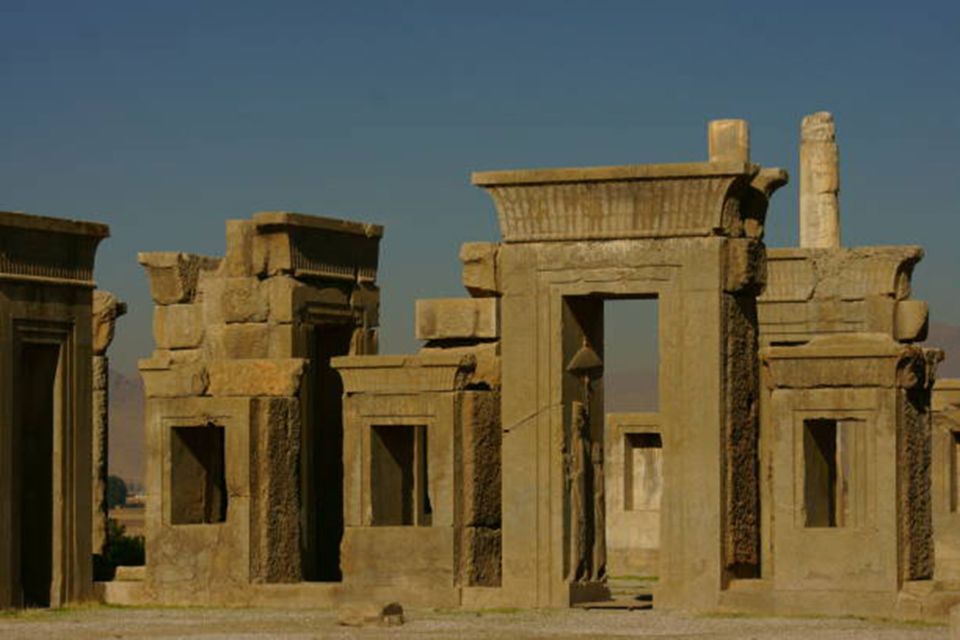
A lot of Egypt travel is the same at the start: stone, sun, carvings, questions. What separates a good day trip from a memorable one is what your guide helps you notice.
People highlight guides such as Omran for real insights and going beyond the standard route. Other names like Aziz and Walid come up for detailed explanations and a careful, friendly approach. That kind of guidance helps you connect the religious themes—Osiris and Hathor—with what you physically see on the walls and in the layout.
Here’s what to do to get maximum value:
- Ask your guide one “why does it matter” question at each main stop.
- Spend an extra minute at the places your guide points out as symbolic.
- When the guide mentions a specific theme like underworld belief or royal legitimacy, watch how art repeats that theme.
When that works, the trip stops being a checklist and becomes understanding.
Price and value: is $199 really fair for this route?
At $199 per person, this day trip from Hurghada isn’t cheap, but it also isn’t random. You’re paying for a lot:
- Hotel pickup and drop-off within Hurghada city limits
- Entrance fees to the mentioned sights (Abydos Temple, Seti I/Osireion area, Dendera Temple Complex)
- A lunch at a local restaurant
- Bottled water during transfers
- An Egyptologist tour guide
- Service charges and taxes
The biggest cost driver is the travel time and the remote geography. Driving to Abydos and Dendera from the Red Sea coast means real hours on the road and real coordination. That’s also why the trip only makes sense if you want both Abydos and Dendera in one day.
There’s also a location catch: pickup from outside Hurghada city limits (like Makadi Bay, Sahl Hasheesh, El Gouna, Safaga, Soma Bay) may cost extra—10 € per person.
So the value question is simple: if you want both complexes in one shot with a guide, this price is competitive. If you’d rather go slower or do only one site, you might shop for different options.
Who should book this Abydos–Osireion–Dendera tour?
This tour is best for you if you:
- want major temple sites without coordinating separate day trips,
- enjoy learning symbols—Osiris, Hathor, kingship—through guided explanations,
- can handle long drives and a full day schedule.
It’s less ideal if you have mobility limitations or serious health concerns, or if you’re traveling with young children. The tour is physically demanding because you’ll be walking, standing, and moving at multiple historic locations over a long day.
If you’re a solo traveler, this kind of private guided structure can be a comfort, since you’re not stuck in a chaotic group vibe. One review specifically emphasized feeling safe and accepted, with the guide and driver making the experience smooth.
Should you book it?
Book this tour if you want a guided, meaningful day that connects Abydos (Osiris) to Dendera (Hathor), with major temple details like Seti I’s reliefs and the Dendera ceiling on your list. The $199 price starts to feel fair when you factor in the guide, entrances, lunch, and the long-distance logistics.
Skip it if your priority is a short, easy outing, or if long driving and heat would stress you out. Also consider that Osireion may be viewed from above rather than fully entered, so treat it as a “see and understand” stop, not a walk-in underground bath.
FAQ
FAQ
What’s included in the tour price?
Hotel pickup and drop-off (within Hurghada city limits), entrance fees to the listed sights, lunch at a local restaurant, bottled water during tours and transfers, an Egyptologist tour guide, and all service charges and taxes.
How long is the drive from Hurghada?
The trip involves extended driving time, about 4–5 hours each way.
Is pickup available outside Hurghada city limits?
Pickup is included within Hurghada city limits only. For hotels in Makadi Bay, Sahl Hasheesh, El Gouna, Safaga, or Soma Bay, there may be an extra charge of 10 € per person.
Which sites are visited on this day trip?
You visit Abydos Temple, the Osireion Bath area behind the Temple of Seti I, and the Dendera Temple Complex.
Is lunch included?
Yes, lunch at a local restaurant is included.
What languages are available for the guide?
The tour is offered in English, German, French, Italian, Spanish, and Arabic.
What should I bring, and are there luggage restrictions?
Bring your passport or valid ID, sunglasses, comfortable clothes, and cash. Luggage or large bags are not allowed.
Is the Osireion Bath entered during the tour?
On this tour, you can expect to see the Osireion Bath from above rather than entering it.