REVIEW · CAIRO
Cairo: Private Luxor Day Tour with Entrance fees by Flights
Book on GetYourGuide →Operated by Nice Tours · Bookable on GetYourGuide
Luxor in one day sounds crazy, and that is why it works. You fly in from Cairo, get a private guide, and hit the West Bank tombs and the big East Bank temples without wasting hours on a bus. If you end up with a guide like Manal or Hamdy, expect clear, patient explanations and a pace that fits your questions.
I really like that the tour is built around your time: round-trip flights are included and you’re picked up door to door in an air-conditioned car. Then you get a proper break in the middle with lunch and a felucca sail on the Nile, not just another temple-hop.
One possible drawback: it’s a long, early day. Even when everything runs smoothly, Luxor’s heat and the number of stops can make you feel rushed if you’re the type who likes to linger.
In This Review
- Key highlights to know before you go
- Flying Cairo to Luxor: Why this day trip feels practical
- Price and logistics: What you’re really paying for at $410
- The early pickup grind: How the morning works from Cairo or Giza
- Valley of the Kings and the Hatshepsut terraces: The West Bank payoff
- Medinet Habu, Colossi of Memnon, and lunch: A smart mid-day reset
- Nile felucca ride and East Bank arrival: When the pace softens
- Karnak and Luxor Temple: How to enjoy two temple giants in one day
- Flights back to Cairo: Finishing strong instead of dragging home
- Who this private Luxor day trip is best for
- Should you book this Cairo to Luxor Private Day Tour?
- FAQ
- What time is pickup in Cairo or Giza?
- Are round-trip flights to Luxor included?
- Is lunch included in the tour price?
- Are entrance fees included for the historical sites?
- Is the tour private?
- What sites and activities are included during the day?
- Do I need to provide flight details after booking?
- Can I cancel, and is there a pay-later option?
Key highlights to know before you go
- Round-trip flights included so you actually have time for the main sights
- Door-to-door AC transfers from Cairo or Giza
- West Bank + East Bank in one shot: Valley of the Kings, Hatshepsut, Karnak, and Luxor Temple
- Felucca on the Nile adds a slower, scenic break
- Lunch and entrance fees included, so you can budget more calmly
Flying Cairo to Luxor: Why this day trip feels practical
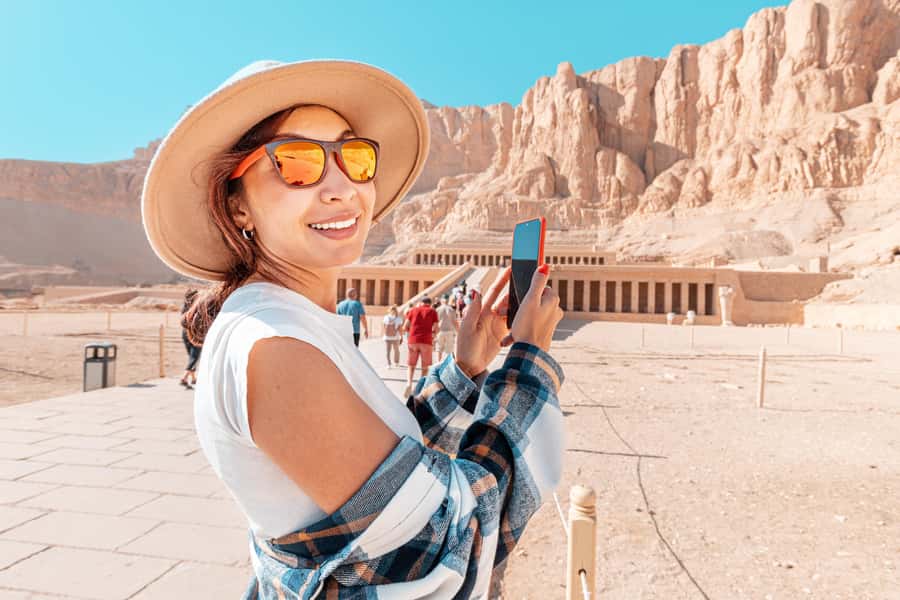
Most Luxor trips from Cairo turn into a time math problem. A flight solves it. In this plan, you leave early from your hotel, fly for about an hour, and then spend the day in Luxor with a guide and private transport doing the heavy lifting.
For me, the value isn’t just convenience. It’s that you’re less likely to skip the big-ticket places because you’re tired, late, or stuck in traffic. You also get a full-feeling itinerary: tombs, temples, lunch, and even a traditional sailboat ride.
If you’re trying to fit Luxor into a short Egypt schedule, this is one of the most realistic ways to do it without turning the trip into a blur.
You can also read our reviews of more private tours in Cairo


Price and logistics: What you’re really paying for at $410
At $410 per person, you’re not just buying sightseeing. You’re buying a whole chain of services: flights, private air-conditioned transfers, an English-speaking guide, entrance fees, lunch, and the felucca ride.
That matters because Luxor is the kind of place where costs add up quickly once you start stacking tickets, transport, and guided entry. Here, most of those essentials are wrapped into the price, which makes planning easier.
There are two things to keep in mind:
- If you want a guide in Spanish, German, or French, there’s an additional cost mentioned.
- Since flights are included, your tour depends on getting the right flight information sent promptly and on time.
For the type of traveler who values time efficiency and a smooth flow, the pricing often feels more “package deal” than “random add-ons.”
The early pickup grind: How the morning works from Cairo or Giza
You’ll get picked up from your hotel in Cairo or Giza at about 6:00 A.M., then head to Cairo International Airport. Expect the morning to feel early because it is. In practice, your exact pickup time can run earlier depending on your flight schedule, but the goal stays the same: beat the busiest parts of the day and maximize Luxor time.
Once at the airport, the flight to Luxor is included and takes about one hour. You’ll arrive, and your guide will be waiting with a plan to start on the West Bank.
Pro tip for comfort: dress in layers. Airports and early rides can feel cooler than the midday sun, especially once you’re out of the car.
Valley of the Kings and the Hatshepsut terraces: The West Bank payoff
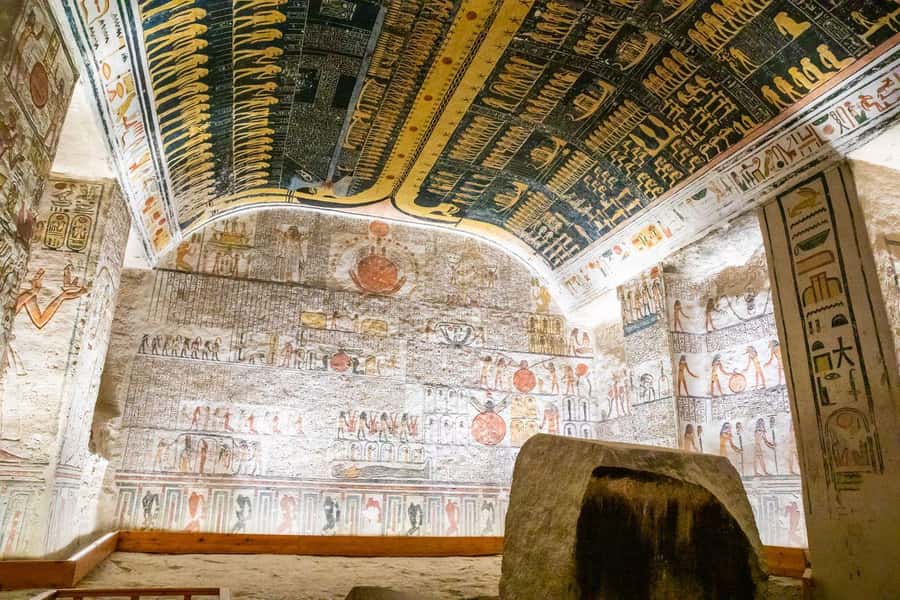
The West Bank is where Luxor feels like Egypt at full volume. Your first guided stop is the Valley of the Kings, also known as the Valley of the Gates of the Kings—where rock-cut tombs were carved for pharaohs and powerful nobles of the New Kingdom, over centuries.
This is also the stop where your guide makes the biggest difference. A good guide helps you understand why the valley matters, what you’re looking at, and how each tomb fits into the bigger story of power, religion, and afterlife beliefs.
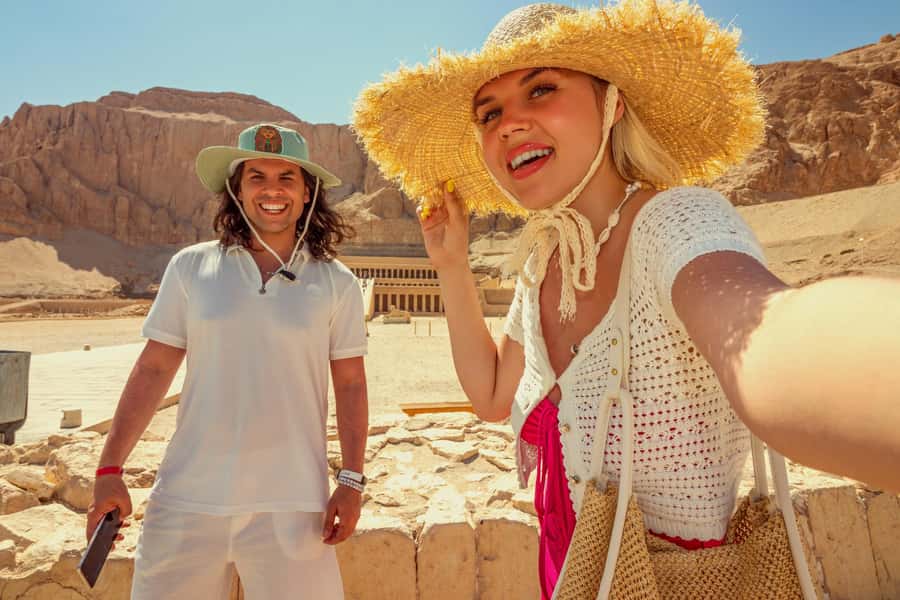
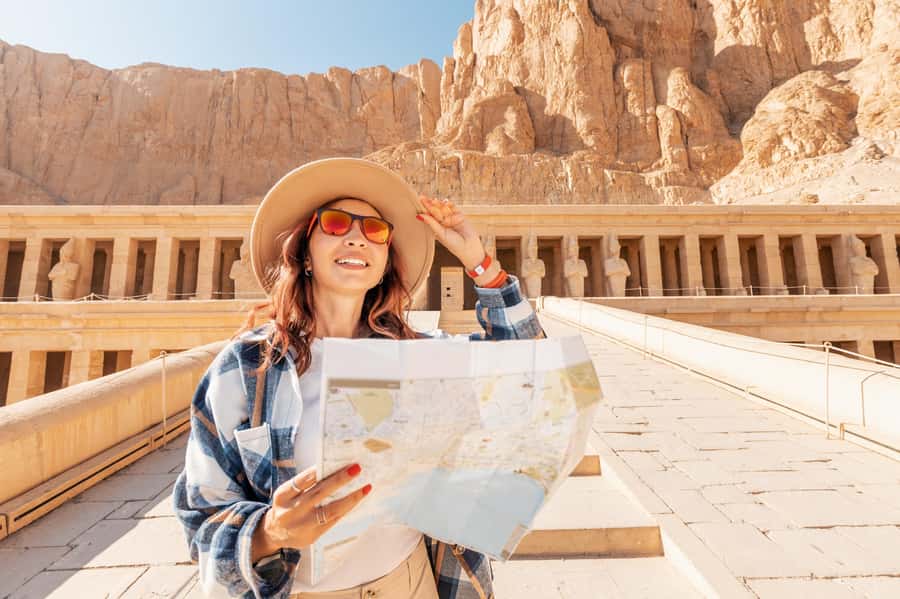
Next comes the Mortuary Temple of Queen Hatshepsut. This is the part many people picture when they imagine ancient Egypt’s architecture: three massive terraces rising from the desert floor up to the cliffs of Deir el-Bahari. Standing there, you start to see that the building isn’t just for worship—it’s also for messaging, visibility, and legacy.
How long you spend inside can vary with tomb access and the day’s flow, so don’t plan anything tight right after this segment. Give yourself time to absorb what you’re seeing and to take breaks if the sun starts hitting hard.
Medinet Habu, Colossi of Memnon, and lunch: A smart mid-day reset
After Hatshepsut, you move to Medinet Habu, where you’ll visit the mortuary temple of Ramses III. The entrance is described as 63 meters wide and 22 meters tall, and you’ll see reliefs showing Ramses punishing prisoners. That big scale plus the storytelling reliefs make it a strong follow-up to Hatshepsut—different era, different flavor, same sense of intention.
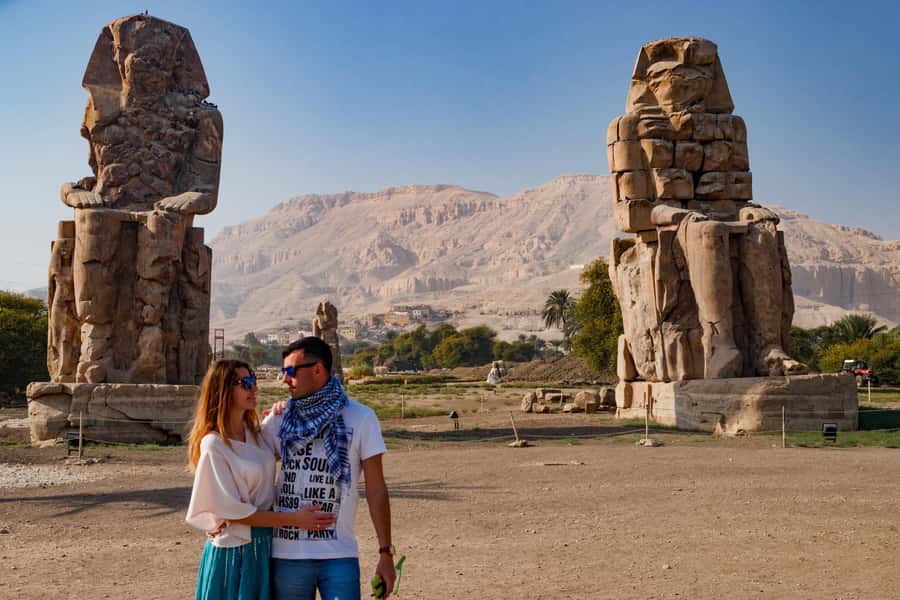
Then you reach the Colossi of Memnon. These massive statues are part of the story of Amenhotep III’s mortuary temple area. Even if you’ve seen photos before, the scale hits differently in person.
You’ll stop for lunch at a local restaurant. This is one of the best parts of the itinerary because it breaks the “heat + stone + walking” cycle. If you’re sensitive to warm weather, lunch is when you reset your energy before the East Bank temples.
Practical move: bring a little patience here. Between photos, guided explanations, and the time needed to move between sites, the middle of the day can feel busy—even when it’s handled well.



Nile felucca ride and East Bank arrival: When the pace softens
After lunch, you sail on the Nile River in a traditional felucca. This is not just a box-tick. It changes your rhythm. Instead of rushing from structure to structure, you’re floating, looking at the riverbanks, and letting Luxor’s setting sink in.
The tour includes you relaxing with a drink as you enjoy the scenery. Even if you’re not a long-sail person, this is a nice sensory break. It also gives you time to breathe before the two biggest temple stops.
Then you shift to the East Bank, which is where the ceremonial and state power of Luxor really comes forward.
If you love photos: shoot some from the boat, then again once you’re back on land. The light and angles can feel completely different.
Karnak and Luxor Temple: How to enjoy two temple giants in one day
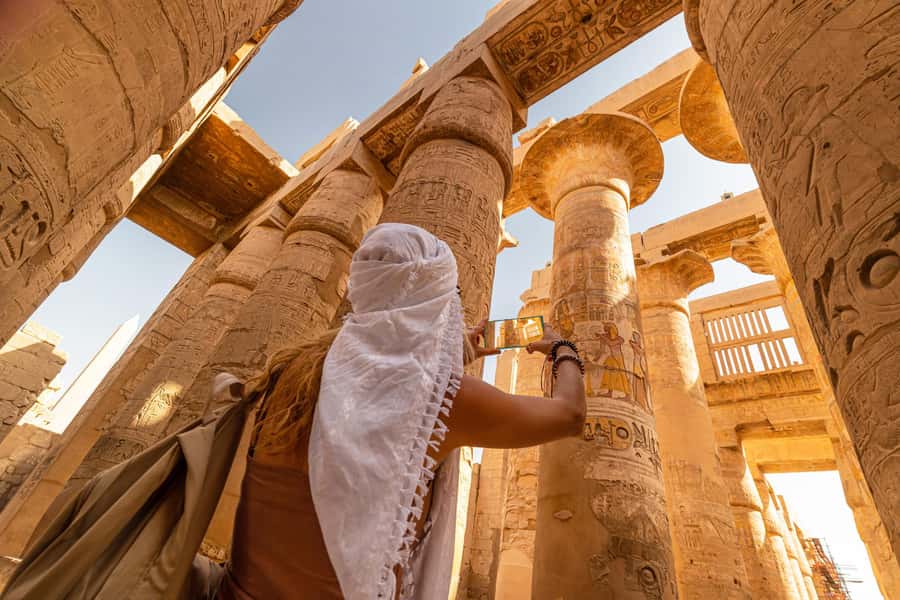
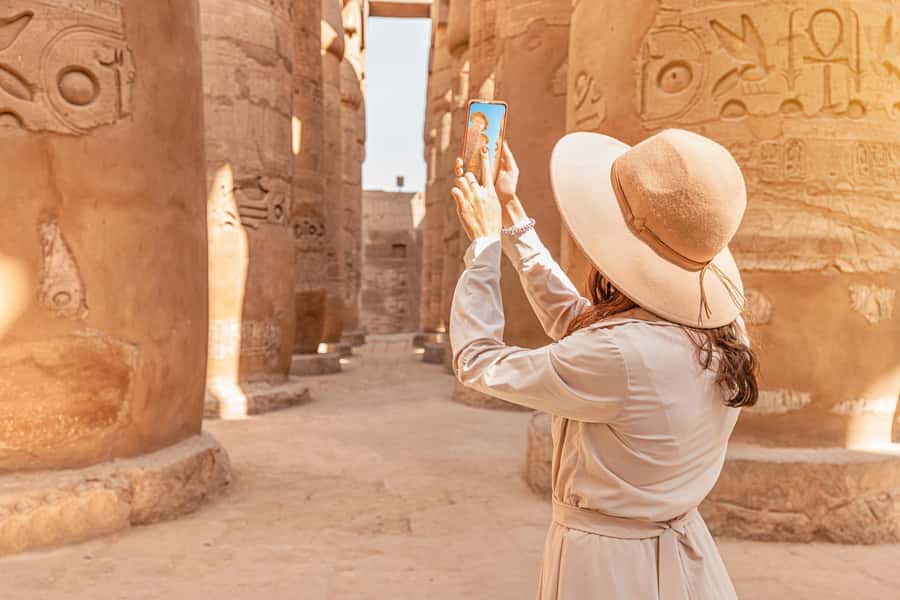
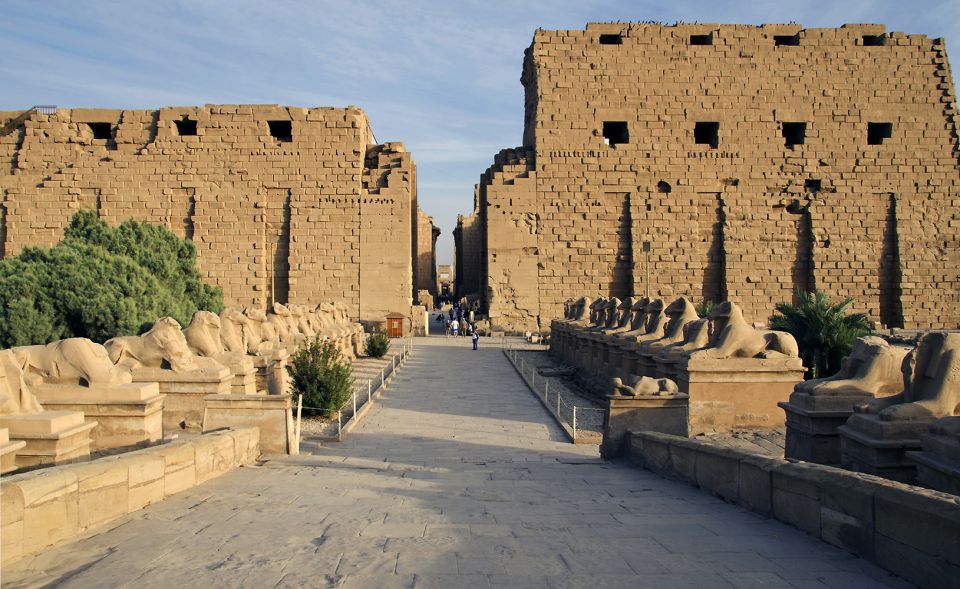
Karnak Temple is the big one. Dedicated to the god Amun and closely linked with Mut and Khonsu, it’s described as the biggest temple in Luxor. This isn’t just one building—it’s a complex of sacred spaces, and it rewards the kind of guided context that explains what you’re seeing.
Your guide role becomes even more important here. Karnak can be overwhelming if you don’t have a framework. With the right explanations, you start to connect columns, halls, and alignments to the way ancient Egyptians thought about divine authority.
After Karnak, you visit Luxor Temple. It was built by Amenhotep III and completed by Ramses II, and it carries that sense of grandeur that makes it feel like a living stage. When you stand there late in the day, it’s easier to imagine how processions and rituals would have worked.
One more time-management point: Luxor Temple and Karnak are big sights with lots of detail. You’ll want to balance listening with wandering. If you feel yourself getting “templed out,” focus on photos and the main areas your guide highlights, then use a little quiet time to sit and absorb the atmosphere.
Flights back to Cairo: Finishing strong instead of dragging home

When you finish the East Bank sites, you’re transferred to Luxor International Airport for the return flight to Cairo (included), again about one hour. After you land, your guide delegate waits outside the airport, and you’re transferred back to your hotel in Cairo or Giza.
This timing keeps the day structured. You’re not stuck figuring out transport at the worst moment, and you’re not forced to choose between staying late at a temple or catching an independent flight.
Because it’s a day trip, you’ll probably feel it in your body by the end—especially if you started early and walked in the heat. Plan for a slower evening back home.
Who this private Luxor day trip is best for
This tour fits you best if:
- You have limited time in Egypt and want Luxor’s top sights without losing a whole day to travel.
- You prefer a private guide so you can ask questions and set your own comfort level.
- You like a full itinerary that includes both the tomb-focused West Bank and the temple-heavy East Bank.
It may not be your best match if:
- You hate early mornings. This is an early-day commitment.
- You need lots of quiet time at each site. The day is intense by design, even when the guide keeps it flexible.
If you’re going with family or mixed ages, the private format helps because a guide can adjust pacing when needed.
Should you book this Cairo to Luxor Private Day Tour?
I’d book it if your goal is simple: see Luxor’s essentials in one day with flights, entrance fees, and meals handled, and still enjoy a Nile break instead of just touring nonstop.
Skip it (or consider a multi-day approach) if you want a slow, unhurried Luxor. The “15 hours” and early pickup are real. You’ll get a lot done, but you’ll also need to accept that you’re cramming history into a single day.
Bottom line: for time-starved visitors, this is strong value. You’re paying for the logistics, the guidance, and the places that define Luxor—then you get a traditional felucca ride to make the whole thing feel like more than a checklist.
FAQ
What time is pickup in Cairo or Giza?
Pickup is scheduled at about 6:00 A.M. from your hotel in Cairo or Giza, then you’ll be taken to Cairo International Airport.
Are round-trip flights to Luxor included?
Yes. Round-trip flight tickets are included, and the flight time is about one hour each way.
Is lunch included in the tour price?
Yes. Lunch at a local restaurant in Luxor is included.
Are entrance fees included for the historical sites?
Yes. Entrance fees to all historical sites are included.
Is the tour private?
Yes. The tour includes private transportation and a professional English guide, with the option to choose other languages for an additional cost.
What sites and activities are included during the day?
You’ll visit the Valley of the Kings, the Mortuary Temple of Hatshepsut, Medinet Habu (Ramses III), the Colossi of Memnon, plus Karnak Temple and Luxor Temple. A felucca ride on the Nile and lunch are included too.
Do I need to provide flight details after booking?
Yes. After you book, the company will reach out to request flight information, and you need to provide it promptly for flight booking.
Can I cancel, and is there a pay-later option?
You can cancel up to 24 hours in advance for a full refund. The tour also offers a reserve now & pay later option.