REVIEW · ALEXANDRIA
Alexandria: Archeological Day Tour
Book on GetYourGuide →Operated by Ramses tours · Bookable on GetYourGuide
Alexandria layers history on a single route. You’ll move from Roman catacombs to the Library of Alexandria, then onward to churches, mosques, and palace gardens—handled by a guided format with air-conditioned driving.
I love two parts of this day. First, the guided descent inside Kom El Shokafa, with its rock-cut, three-level layout that makes the Roman afterlife feel real. Second, the Library experience: the open court where you can see the statue of Alexander the Great and the statue of Ptolemy the First that was found underwater nearby.
The one drawback to keep in mind is that the day can be full-on and the Library has access limits: Alexandria Library is closed Fridays and on public holidays, and the Reading Hall has an extra ticket.
In This Review
- Key Things That Make This Tour Worth Your Time
- Why This 6–7 Hour Alexandria Archaeology Mix Works
- Getting Picked Up and Moving Smart Through Alexandria
- Kom El Shokafa Catacombs: Roman Funerary Architecture Under Rock
- Pompey’s Pillar Photo Stop and the Drive Through Old Alexandria
- Library of Alexandria: The Open Court, the Alexander Connection, and Access Limits
- Roman Alexandria Beyond the Headlines: Kom el-Dekka and the Serapeum Walks
- St. Mark’s Cathedral: Why This “Oldest Church in Africa” Stop Matters
- Montaza Palace Gardens and the Lighthouse Story at Qaitbay
- Abu al-Abbas al-Mursi Mosque, the Corniche, and the Old Harbor Contrast
- Lunch Stops and the Optional Fish-restaurant Break
- Price and Logistics: Is $80 a Good Value?
- Who This Tour Suits Best
- Should You Book This Alexandria Archaeology Day Tour?
- FAQ
- How long is the Alexandria Archaeological Day Tour?
- Is hotel pickup included?
- What major sites do we visit on this tour?
- Are entrance fees included in the price?
- Does this tour skip ticket lines?
- What languages are offered for the guide?
- Is the Library of Alexandria always open?
- Do I need an extra ticket for the Reading Hall?
- Is lunch included?
- Can you enter the excavation sites inside ruins?
Key Things That Make This Tour Worth Your Time
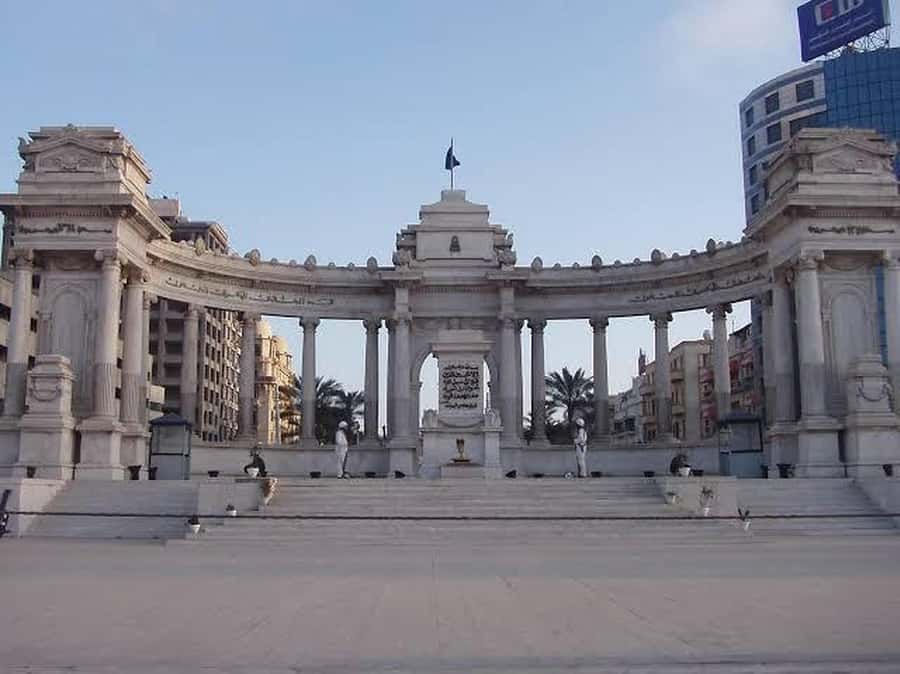
- Kom El Shokafa catacombs: three levels cut into rock, explored with a guide
- Library of Alexandria open-court stop: Alexander the Great and Ptolemy the First statues
- Pompey’s Pillar photo break: a quick stop for a classic Alexandria snapshot
- Old Roman City ruins outside-only: you see villas and amphitheater remains from the exterior
- St. Mark’s Cathedral: visit the oldest church in Africa
- Montaza Palace gardens + Qaitbay Citadel area: palace beauty paired with the lighthouse-site story
Why This 6–7 Hour Alexandria Archaeology Mix Works

This isn’t the kind of tour where you only touch one era. It’s built to show Alexandria as a city that kept rewriting itself—Roman funerary culture, Greek-Egyptian royal memory, early Christian roots, later Islamic architecture, and coastal leisure spaces.
You get a very practical structure: you start with big, visually dramatic stops (catacombs and major monuments), then move through Alexandria’s religious landmarks and historic neighborhoods, and finish with scenic palace grounds and sea views. That pacing matters because Alexandria heat can be real, and a tight schedule helps you see the highlights without turning the day into a marathon of backtracking.
You can also read our reviews of more tours and experiences in Alexandria.


Getting Picked Up and Moving Smart Through Alexandria
The tour starts with hotel pickup in Alexandria and uses an air-conditioned vehicle. That’s more than comfort—it’s a time-saver. Alexandria traffic and midday heat can slow things down, and the best tours reduce wasted time between sites.
In the guide experience, you’ll often see smart route thinking. For example, guides like Karim and Waleed are praised for adapting the order or timing when traffic gets in the way, and for adjusting pacing so the group can handle walking breaks. You also tend to get a driver who focuses on getting you safely from one area to the next, which is a big deal on a packed day.
Practical tip: wear comfortable shoes. The tour includes guided walks at multiple ruins and sites, plus time spent moving between neighborhoods and coastal areas.
Kom El Shokafa Catacombs: Roman Funerary Architecture Under Rock
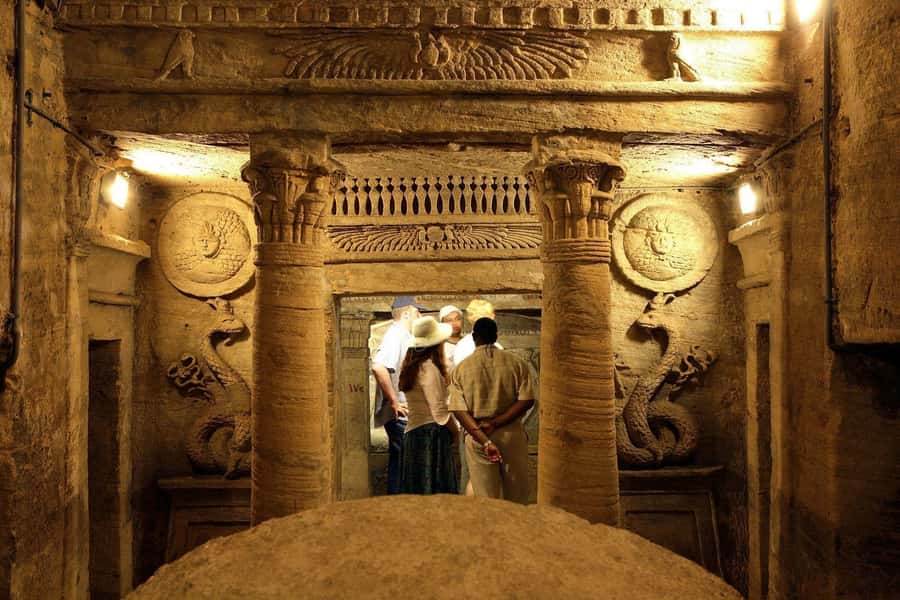
Kom El Shokafa is one of those places where the setting does half the storytelling. You’re not just looking at objects—you’re walking through a Roman cemetery system cut into rock, and the design takes you down through three levels.
What I like about this stop is how different it feels compared with typical “temple ruins.” The catacombs connect architecture, belief, and the practical reality of burial space in a dense ancient city. With a guide, you get the interpretation that turns the stairs and chambers into something with purpose.
Also note the timing psychology: this is a strong first anchor. You’re fresh, the day’s energy is up, and the catacombs are inside, which can be a relief compared with outdoor sun.
Pompey’s Pillar Photo Stop and the Drive Through Old Alexandria
You’ll pass by major city sections and you’ll stop at Pompey’s Pillar for a photo break. It’s not designed to be a long archaeological lecture—think of it as a visual “you’re really in Alexandria” moment.
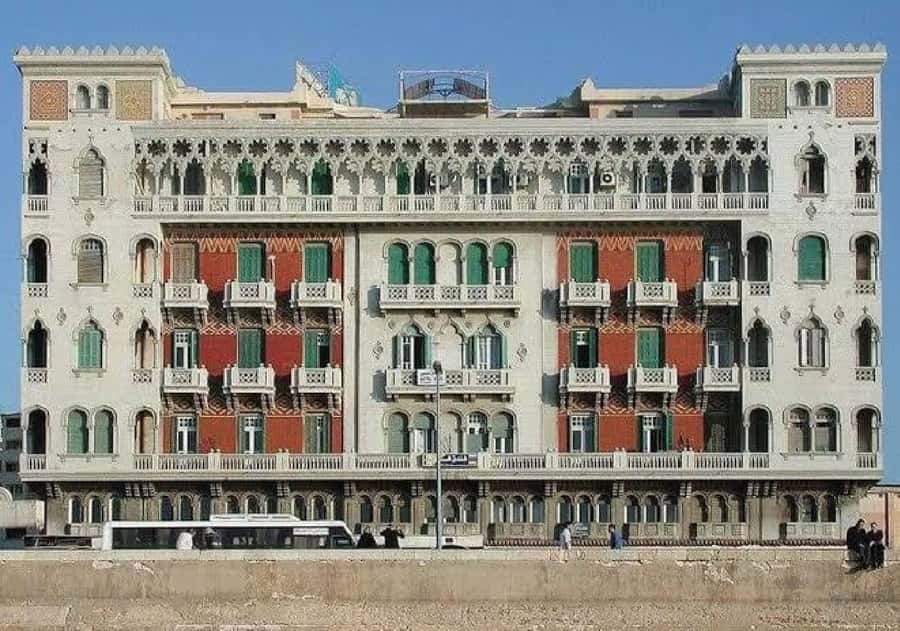
More valuable, though, is what you learn while you’re moving. The drive is part of the experience: you see older downtown areas and historical architecture with Baroque-style designs and Italian/French-style properties. Even if you don’t stop at every building, the car-window context helps you understand that Alexandria isn’t frozen in one ancient moment. It’s a layered city, and the architecture around the major sites reflects the later waves of history too.
If you’re a photo person, bring sunglasses and keep your phone ready. The tour includes multiple photo opportunities beyond Pompey’s Pillar, especially around the sea-facing areas later.
Library of Alexandria: The Open Court, the Alexander Connection, and Access Limits
The Library of Alexandria stop is a headline for a reason. You’ll have a guided visit focused on what the site offers now, including a chance to explore the open court.
From what you can see in that open area, it’s visually tied to the Greek royal world. You can view the statue of Alexander the Great, and you’ll also see the statue of Ptolemy the First, which was found underwater nearby. That detail adds a neat layer to the visit: you’re not only looking at memorials, you’re seeing how archaeology and recovery connect to the story.
There are also museum components mentioned as part of the Library experience, including impressions of the Alexandria museum inside the complex and the President Sadat Museum. Access can vary by day.
Two key notes you should plan around:
- The Library of Alexandria is closed on Fridays and on public holidays.
- The Reading Hall in the Library requires an extra ticket.
So if you’re traveling on a Friday or a public holiday, check your dates early. You can still do plenty of the archaeology-and-palaces side of the tour, but the Library portion may be affected.

Roman Alexandria Beyond the Headlines: Kom el-Dekka and the Serapeum Walks
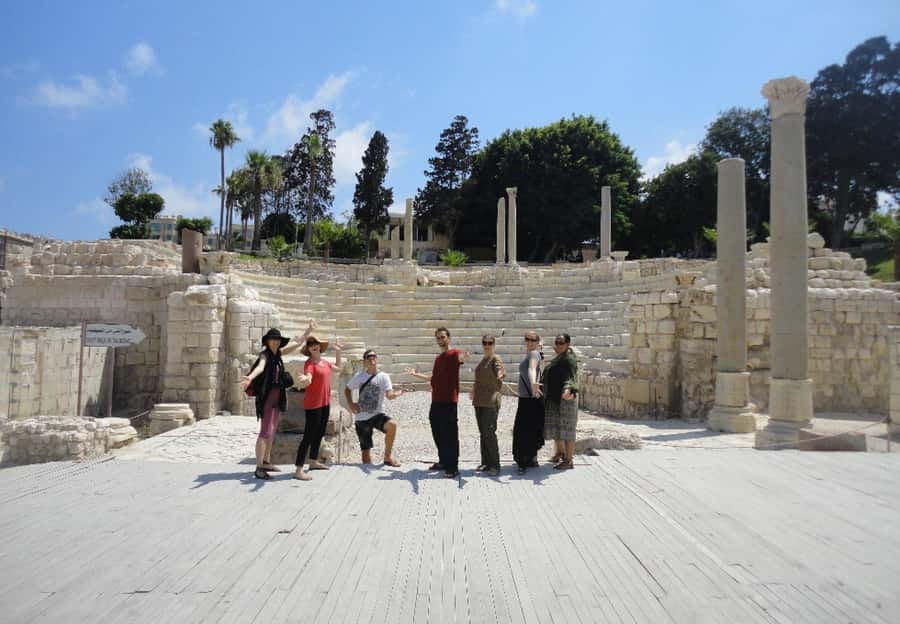
After the big religious-and-museum stop, you shift into Roman-city archaeology. The tour includes the Roman theater in Kom El-Deka with a guided walk, plus the Serapeum of Alexandria with another guided walk.
Here’s the important distinction: the tour emphasizes outdoor views. You can walk by excavation areas of the Old Roman City of Alexandria, including Roman villas, the amphitheater ruins, and other tomb and ruin zones—but it’s not allowed to visit inside those excavation sites. That changes your expectations in a helpful way. You’ll focus on the exterior remains and the layout ideas rather than trying to step into restricted inner spaces.
This part of the day is where you start to connect the dots between Alexandria’s ancient identity and how it physically organized public entertainment, religious spaces, and elite residences. A guide helps you read what you’re seeing quickly, especially when walls and foundations look similar until you know what each area used to do.
St. Mark’s Cathedral: Why This “Oldest Church in Africa” Stop Matters
One of the most human-feeling moments on the tour is St. Mark’s Cathedral. You’re visiting the oldest church in Africa, which gives the day more than archaeology—it adds early Christian continuity in a city famous for many religious layers.
What makes this stop valuable is how it breaks the pattern of “ancient = Roman or Greek.” Instead, you get a different kind of history: a place that became part of a living tradition. Even if you don’t spend hours inside in the way you might at a museum, the significance is clear from the moment you reach the site.
If you like religious architecture and want a break from ruins, this is where the tour balances out.
Montaza Palace Gardens and the Lighthouse Story at Qaitbay
Montaza is a nice change of pace after the dense archaeology. You’ll visit Montazah Royal Palaces Gardens, the royal gardens of King Farouk, and you’ll pause for a photo of King Farouk’s royal palace. You’ll also see the royal beaches of the queens.
This isn’t just pretty scenery. It’s a way to understand Alexandria’s relationship with the Mediterranean—how leisure, power, and coastline culture worked together in different eras. When you then drive toward Qaitbay Castle, you get a direct historical link.
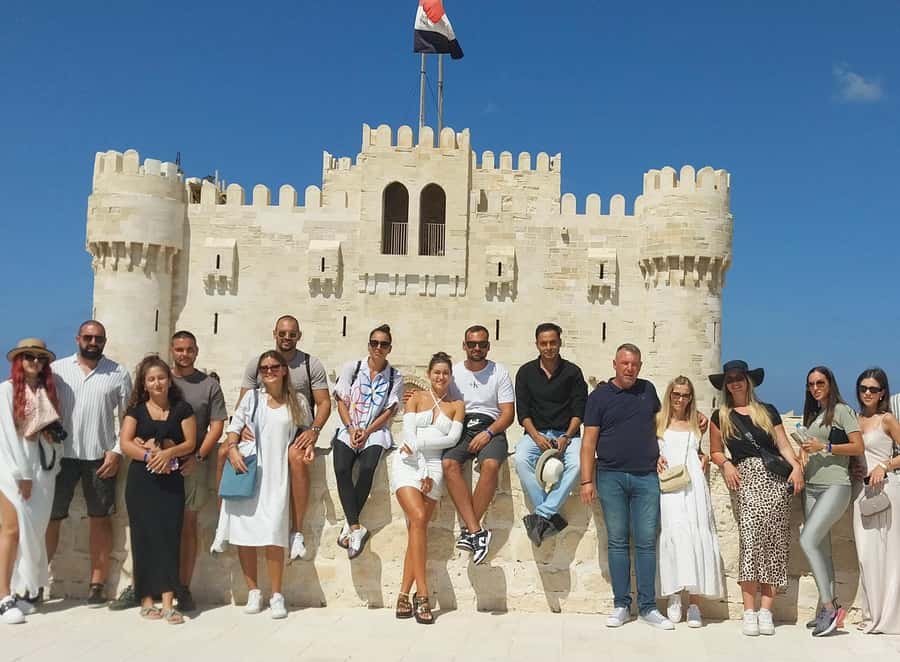
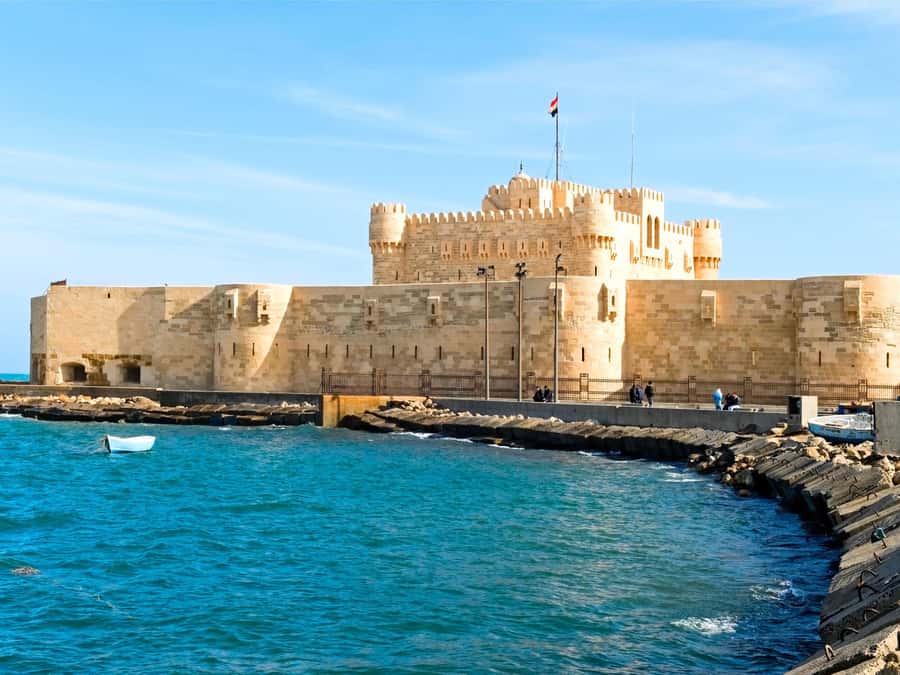
Qaitbay Citadel is presented as being built on the same site as the ancient Lighthouse of Alexandria, one of the Seven Wonders of the Ancient World. You’re not touring the Lighthouse itself (it’s not intact in the way that phrase might suggest), but the site connection gives the “wow” factor without pretending everything still exists.
Bring patience for coastal photo time. The day is scheduled, but you’ll likely want a few extra minutes to capture sea views and the fortress-area vibe.
Abu al-Abbas al-Mursi Mosque, the Corniche, and the Old Harbor Contrast
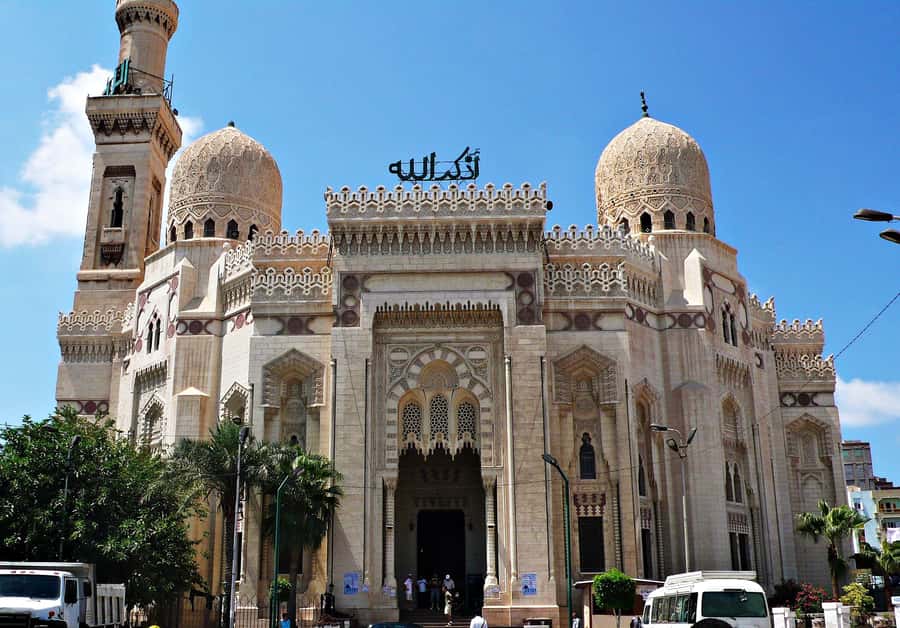
The tour ends with more atmosphere than pure archaeology. You’ll visit Abu al-Abbas al-Mursi Mosque, described as the prettiest and biggest mosque in the city, and then you’ll see the corniche and old harbor area.
One of the most striking contrasts here is that “strangest sight” outside the mosque: an old funfair where children play on antique-style rides and eat candy floss. It’s a reminder that sacred spaces and everyday life share the same neighborhoods in Alexandria.
The old harbor scene adds another layer. You can see fishing boats, men fishing, and traditional fishermen making nets. That’s useful context even if you’re not there for anthropology. It helps you picture Alexandria as a working coastal city, not only an archaeological exhibit.
Lunch Stops and the Optional Fish-restaurant Break
Food planning is part of making this day enjoyable. The schedule includes an optional lunch stop at a modern fish restaurant, and it also lists a local restaurant lunch in the itinerary.
In practice, this tends to work well because it breaks the walking and touring rhythm. One review also points to a baked fish lunch at a restaurant overlooking waves—exact places can vary with timing and group flow, but the intent is consistent: eat something local and refreshing, then get back into the sightseeing mode.
Tip: if lunch is optional for your group, decide early. A day like this can shift depending on Library access and traffic, so you’ll want to keep your energy.
Price and Logistics: Is $80 a Good Value?
At $80 per person for a 6–7 hour day, you’re not paying just for a driver. The tour includes:
- air-conditioned transfers,
- an expert guide,
- and service charges and taxes,
- plus entrance fees if the option is selected,
- and “skip the ticket line.”
That matters because Alexandria’s top stops often involve time costs: ticketing, entry procedures, and waiting. If the entrance-fee option is selected, you’re buying less friction and more guided time at each stop.
The value also comes from the range. You’re seeing catacombs, a major library area with statues, Roman-city ruins outside-only, a major cathedral, a palace-garden complex, and a lighthouse-site fortress area—within one day. It’s the kind of itinerary that makes sense if you’re limited on time and want a structured route.
Who This Tour Suits Best
This is ideal if you:
- want a guided, interpretation-heavy day rather than hopping between sites alone,
- like Roman and Greco-Egyptian connections (catacombs plus Library court statues),
- care about religious history beyond one era (St. Mark’s plus mosques),
- and prefer a mix of archaeology with real city atmosphere (corniche and harbor).
If you’re someone who prefers unhurried museum-style pacing, you might find the day packed. It’s designed for coverage, not for long lingering at every stop.
Also, plan around dates: if your trip lands on a Friday or a public holiday, the Library closure will change the feel of the day.
Should You Book This Alexandria Archaeology Day Tour?
Yes—if you want a one-day framework that hits Alexandria’s biggest “story points,” this tour is a strong bet. The catacombs, the Library open-court focus on Alexander and Ptolemy, and the mix of St. Mark’s plus Montaza and Qaitbay make it feel like more than a checklist.
Before you book, do two things:
- confirm your travel dates so you’re not surprised by Library closures on Fridays and public holidays,
- and make sure you’re comfortable with a busy walking day and a few exterior-only archaeology viewpoints.
If that sounds like your style, this is a smart way to experience Alexandria’s layers without wasting time.
FAQ
How long is the Alexandria Archaeological Day Tour?
The tour lasts about 6 to 7 hours.
Is hotel pickup included?
Pickup is optional, but you can arrange to be picked up from your hotel or place of residence in Alexandria.
What major sites do we visit on this tour?
The tour includes stops such as the Library of Alexandria, the Catacombs of Kom El Shokafa, the Roman theater in Kom El-Deka, the Serapeum of Alexandria, Qaitbay Citadel, Montazah Royal Palaces Gardens, St. Mark’s Cathedral, and Abu al-Abbas al-Mursi Mosque, with additional photo and pass-by moments.
Are entrance fees included in the price?
Entrance fees are included if the entrance-fees option is selected. The tour also includes transfers, an expert tour guide, and service charges and taxes.
Does this tour skip ticket lines?
Yes, it includes skipping the ticket line.
What languages are offered for the guide?
The live tour guide can be in English, Arabic, or French (subject to availability). If your preferred language isn’t available, you’ll receive English support plus an audio guide in your desired language.
Is the Library of Alexandria always open?
No. The Library of Alexandria is closed on Fridays and on public holidays.
Do I need an extra ticket for the Reading Hall?
Yes. The Reading Hall at the Library of Alexandria has an extra ticket.
Is lunch included?
Lunch appears as an optional stop, with an optional lunch at a modern Fish Restaurant.
Can you enter the excavation sites inside ruins?
No. You can view the excavation areas from the outside, but it’s not allowed to visit inside the excavation sites.