REVIEW · ASWAN
Abu Simble temple trip.
Book on Viator →Operated by Oxen of Egypt Tours · Bookable on Viator
4:00 am turns the clock into a plan. This Abu Simbel trip is interesting because you’re chasing one of Egypt’s most dramatic temple sights, built for Ramses II and his wife Nefertari, then moved to keep it safe when the water level rose. I love how the schedule starts early and runs the day efficiently, and I love that the price covers an air-conditioned ride plus bottled water and snacks. The main drawback to flag up front: site admission tickets are not included, so you’ll want to budget for entry before you go.
This is set up as a private tour, so your group stays together and you can ask questions without a lecture-hall vibe. The guide experience seems to be a big deal here, especially if you meet Samar, whose English gets praise for being clear and patient, with a historian’s way of explaining what you’re looking at.
In This Review
- Key things to know before you go
- 4:00 am from Aswan: the real reason this trip works
- What you actually get for the $110 price
- Comfort that pays off on a long day
- Abu Simbel’s two temples: why you’ll want to slow down
- What the guide does with your attention
- The relocation story: the stone moved, but the meaning stays
- Timing and the rhythm of the day
- Admission timing: plan for the extra step
- Guide quality: the difference between seeing and understanding
- Logistics that matter: private group, pickup, and where to meet
- Who this trip suits best (and who might want a different option)
- The “value” question: ticket extra, but essentials included
- Should you book this Abu Simbel tour?
- FAQ
- FAQ
- What time does the Abu Simbel tour start?
- How long is the Abu Simbel trip?
- Is pickup included?
- Is the site admission ticket included in the price?
- What is included in the tour price?
- Is this a private tour?
- Is a mobile ticket provided?
- Are there group discounts?
- What is the cancellation window?
- Where is the meeting point?
Key things to know before you go
- 4:00 am departure: You’re trading sleep for daylight and a smoother day plan.
- AC vehicle + bottled water + snacks: Comfort is handled, so you can focus on the temples.
- Two temples in one complex: Ramses II’s temple and Nefertari’s temple are part of the same visit.
- Relocation story matters: The move to higher ground changes how you interpret the site.
- Admission ticket not included: You’ll need to add entry fees to the $110 price.
- Private group feel: Only your group participates, which makes the guide Q&A more personal.
4:00 am from Aswan: the real reason this trip works
If you’ve ever done a day trip that felt rushed, you know the cure: leave early. This one starts at 4:00 am, which is early enough that you’ll either love it (because you get time) or grumble quietly (because, well, it’s 4:00 am). The payoff is that your visit to Abu Simbel happens with less of that end-of-day scramble.
The total time is about 8 to 9 hours, which is a long block—but the structure helps. You’re not “hopping” between five stops. Instead, the day is built around one major destination, so your brain stays on the same theme: monumental stone, carved royal faces, and a very specific historical story.
You can also read our reviews of more tours and experiences in Aswan.
- 4-Days Nile Cruise From Aswan To Luxor including Abu Simbel and Hot Air Balloon
★ 5.0 · 3,142 reviews

What you actually get for the $110 price
At $110 per person, this is one of those trips where you should look at value in what’s included, not just what’s not. You’re paying for a guide, an air-conditioned vehicle, bottled water, and snacks—basically the core logistics that make a long drive tolerable.
The big watch-out is also the key line: admission tickets for the site are not included. That means the total cost of your day trip will be the $110 plus the entry fee at the complex. If you’re budgeting carefully, treat the listing price as the “tour and transport” portion, not the “all-in” ticketed price.
Comfort that pays off on a long day
Because you’re leaving so early and spending most of the day in transit and on site, the included comfort matters. The AC vehicle is a practical win in Egypt’s heat. Bottled water and snacks are also useful because it prevents the common problem of arriving tired and hungry, then paying extra for whatever is closest.
That doesn’t mean you should ignore planning. It just means the trip is built so you can stay focused on the main event instead of managing the basics.
Abu Simbel’s two temples: why you’ll want to slow down
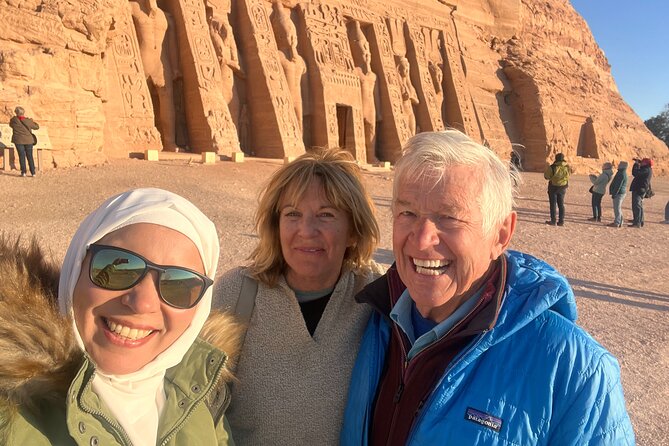
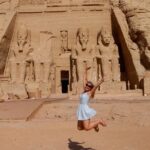
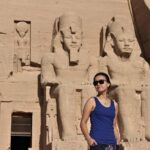
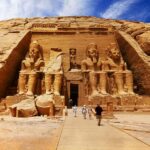
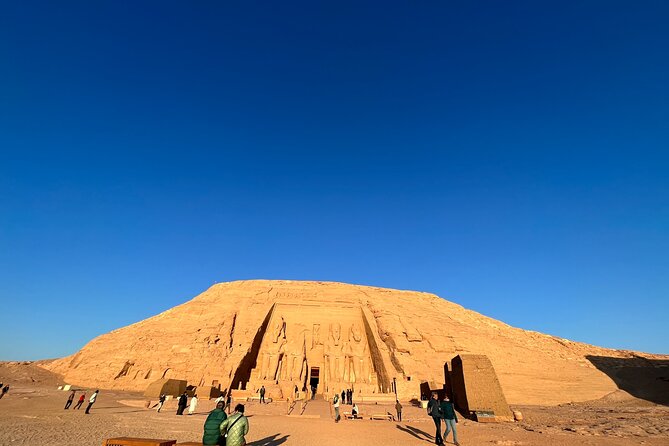
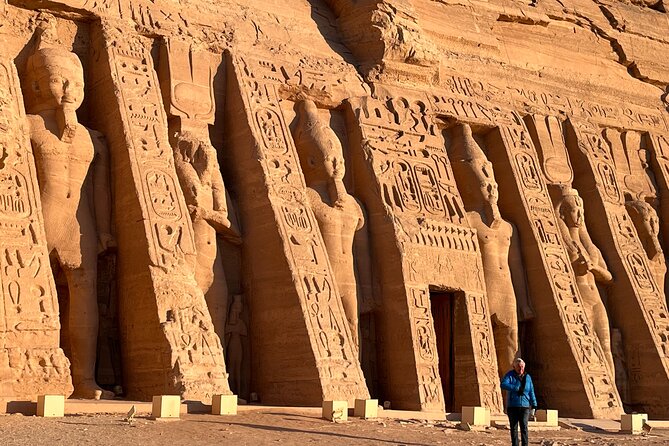
The main stop is the Abu Simbel Temple Complex, and the reason people make the drive is simple: it’s monumental. Built during the reign of Ramses II, the complex was dedicated to him and to Queen Nefertari, his first wife.
A key detail that changes your viewing experience: it’s divided into two temples. One is for the king and the other is for his wife. That makes your visit feel more like comparing two viewpoints rather than seeing one giant room and calling it a day.
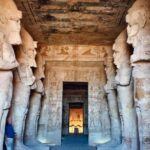
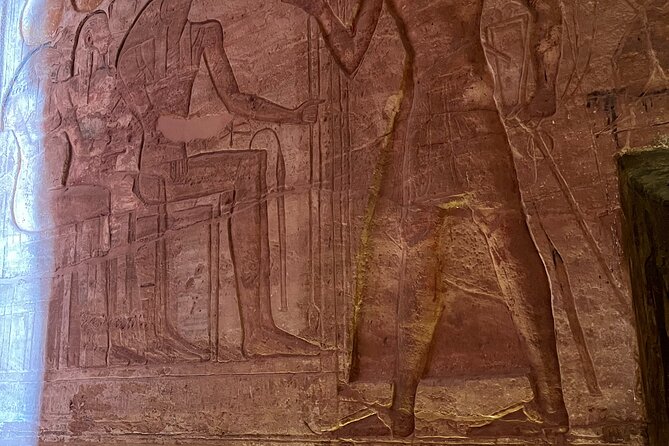
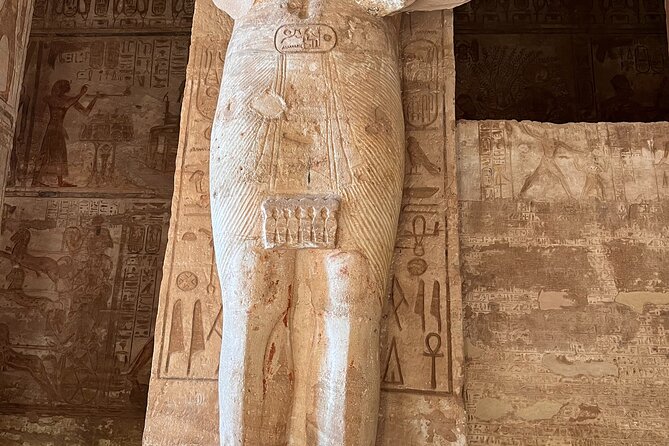
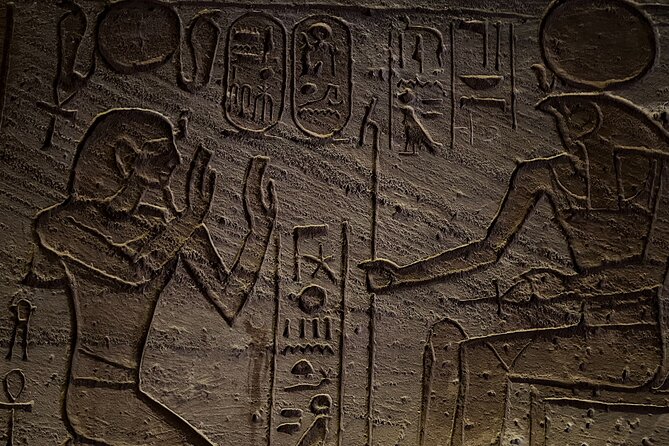
Even the way the description frames it suggests what to look for once you’re inside: you’ll see colored chambers and an impressive panorama. When a place emphasizes colored chambers, it usually means details that don’t read well from far away. So give yourself a moment to look from doorway to wall to doorway, not just at the biggest faces.
What the guide does with your attention
A good guide is what turns Abu Simbel from photos into understanding. The guide here is positioned as your translator to the story of the site, and the feedback around guides is strongly tied to communication quality. In particular, Samar’s English is repeatedly described as excellent, with patience for questions, and a feel for history that makes the explanations land.
You’ll get more out of this complex if you let the guide set a few “frames” for you, like who Ramses II was portraying himself as, why Nefertari’s temple matters, and what you’re actually seeing in the layout.
- 4-Days Nile Cruise From Aswan To Luxor including Abu Simbel and Hot Air Balloon
★ 5.0 · 3,142 reviews


The relocation story: the stone moved, but the meaning stays
One of the most fascinating parts of this trip isn’t carved into the walls—it’s carved into the history of how the site survived. The temples were dismantled into blocks and moved to the top of the mountain because they were going to disappear under water as a lake formed behind it.
That relocation detail is not just trivia. It changes how you stand in front of the complex. You’re not only looking at royal art. You’re looking at a survival project, where ancient blocks were reassembled so the monument could live in a new location.
When you hear that while you’re there, you start noticing things differently. You may look at the scale and ask how anyone could coordinate that kind of move. You might also pay closer attention to the symmetry and the way the two temples relate, because the whole point of relocation was to preserve what could still be preserved.
Timing and the rhythm of the day
This is a full-day commitment, and the rhythm is built around the early departure. Once you start at 4:00 am, the schedule has to protect the main visit window at Abu Simbel. That’s why this trip stays focused on the complex as the main stop.
The downside of a focused schedule is you’ll have fewer “buffer” moments. If you’re the type who likes lots of stops and wandering time, you might find the day is structured more than you expected. On the other hand, if you come for Abu Simbel specifically, this structure keeps the trip from diluting your attention.
Admission timing: plan for the extra step
Since admission tickets are not included, you’ll want to plan for that extra step on the day. In practice, that means arriving ready to handle entry procedures so your day doesn’t compress into a late start inside the complex.
If the tour uses a mobile ticket, it’s smart to treat your phone like it matters: keep it charged and easy to access. That kind of small preparation can remove stress when entry time comes.
Guide quality: the difference between seeing and understanding
I’ll be blunt: in Egypt, the best part of many tours is not the monuments themselves. It’s how quickly you learn to read them.
The feedback tied to the guides in this program is about English clarity, patience, and a historian approach. Samar comes up again and again as a standout name, described as having excellent English and being patient with questions. There’s also mention of fun humor, professionalism, and a steady, kind manner.
That combination is important at Abu Simbel, because it’s easy to focus only on the iconic exterior and miss what’s going on inside. The colored chambers and the two-temple layout reward attention. When a guide can explain what you’re looking at in a way that’s easy to follow, the entire visit becomes more satisfying.
Also, if you like asking questions, a guide who stays calm and answers without rushing you makes the experience feel personal, not transactional.
Logistics that matter: private group, pickup, and where to meet
This is described as a private tour/activity, which means only your group participates. That’s a big deal for comfort and for pace. You won’t get stuck with the slowest walker in the group, and you won’t feel like you have to keep up with someone else’s itinerary style.
Pickup is listed as offered, and the meeting point is said to be near public transportation. Practically, that tells you the operation is designed to work whether you’re using local transit to get close or whether you’re being collected.
The trip also uses a mobile ticket feature. That’s convenient, but it also means your phone is part of your “travel kit.” If you tend to run low on battery, handle that before the morning of the tour.
Who this trip suits best (and who might want a different option)
This Abu Simbel outing is built for people who want one “big thing” and want to do it properly. It’s especially suitable if you like guided context, since the entire experience is set around learning what you’re seeing.
It says most travelers can participate, which likely means the main challenge is not a technical one. The real test here is the early wake-up and the long time window. If you’re sensitive to early mornings, you might find the 4:00 am start hard.
It also helps if you’re comfortable spending much of your day focused on a single site rather than moving around constantly. This tour is not a scattershot itinerary. It’s a centered one.
The “value” question: ticket extra, but essentials included
Let’s talk money honestly. You pay $110 per person, and the included value is clear: guide, air-conditioned vehicle, bottled water, and snacks. For a destination that requires a big day block, those included basics are what keep costs predictable beyond the entry ticket.
The trade-off is also clear: the temple admission ticket isn’t included. So the final cost will be the $110 plus whatever the site ticket adds.
If you’re already planning to pay for entry anyway, this setup can feel fair. You’re not paying extra for a long list of included stops you might not care about. You’re paying for a guided, transport-supported day that concentrates on Abu Simbel’s most important spaces.
And if you care about understanding what you’re looking at, the guide component becomes the true differentiator. With guides like Samar mentioned for strong English and patience, you’re buying more than transportation. You’re buying a translation of the stones.
Should you book this Abu Simbel tour?
If Abu Simbel is the highlight on your Egypt plan, I think this is a smart way to do it. The day is structured around one core complex, you get AC comfort, water, snacks, and a guide, and the guide feedback points to clear English and patient explanations from names like Samar.
I’d hesitate only if the early 4:00 am start sounds miserable to you, or if you need an all-in ticket price with zero extra costs. Since admission isn’t included, you’ll want to confirm your budget for site entry ahead of time.
FAQ
FAQ
What time does the Abu Simbel tour start?
The tour starts at 4:00 am.
How long is the Abu Simbel trip?
It lasts about 8 to 9 hours.
Is pickup included?
Pickup is offered.
Is the site admission ticket included in the price?
No. Admission tickets for the mentioned site are not included.
What is included in the tour price?
Included items are a tour guide in the mentioned languages, an air-conditioned vehicle, bottled water, and snacks.
Is this a private tour?
Yes. Only your group will participate.
Is a mobile ticket provided?
Yes. The experience includes a mobile ticket feature.
Are there group discounts?
Group discounts are listed as a feature.
What is the cancellation window?
Free cancellation is available, and you can cancel up to 24 hours in advance for a full refund.
Where is the meeting point?
The meeting point is near public transportation.
You Might Also Enjoy
More Tour Reviews in Aswan
- 4-Days Nile Cruise From Aswan To Luxor including Abu Simbel and Hot Air Balloon
★ 5.0 · 3,142 reviews