REVIEW · ASWAN
4Day 3Night Nile Cruise from Aswan to Luxor Abu Simbel
Book on Viator →Operated by Etro tours · Bookable on Viator
Nile nights and temple mornings. This 4-day, 3-night Aswan-to-Luxor cruise strings together major sites with an English-speaking Egyptology guide and smooth boat-and-coach transfers. I especially like that the ship handles your overnight comfort and most meals, so you’re not constantly planning logistics. I also love the early Abu Simbel pickup, because it’s the kind of sight that resets your Egypt expectations in one go.
One drawback to plan for: many temple stops list entrance fees as not included, and Abu Simbel is a long day with a very early start (pickup around 4:30). Add tipping for cruise staff, guides, and drivers, and you’ll want a simple budget buffer even if the base price is clear.
In This Review
- Key things I’d circle before you go
- Aswan arrival, High Dam, and Philae by motor boat
- Unfinished Obelisk and Philae timing: how to make the first day easier
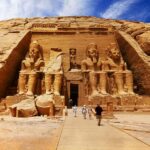
- Abu Simbel from Aswan: the 4:30 pickup that pays off
- Kom Ombo and Edfu: Sobek and Horus, plus an onboard show
- Luxor Temple and Karnak in one day: your biggest New Kingdom vs. Middle-to-Ptolemaic contrast
- Valley of the Kings, Hatshepsut at Deir el-Bahari, and Colossi of Memnon to finish
- Price and value: what $295 covers, and what to budget for
- Guides and service quality: what the onboard team is like
- Who this cruise fits best (and who should think twice)
- Should you book the Aswan to Luxor Nile cruise?
- FAQ
- Is pickup from Aswan included?
- Does the tour include Abu Simbel?
- What meals are included on the cruise?
- Are temple entrance fees included?
- Is there a guide during the visits?
- Can I cancel for a full refund?
Key things I’d circle before you go
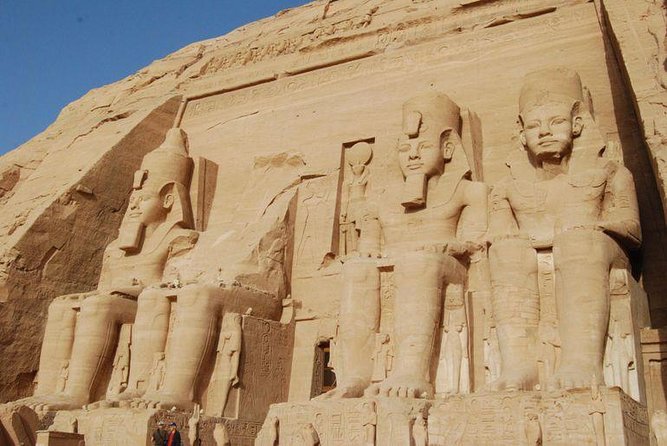
- Abu Simbel at first light with a shared small-group ride and English guide
- Philae reached by motor boat, plus time for High Dam and the Unfinished Obelisk
- Kom Ombo + Edfu Horus in the middle of the cruise, not as an afterthought
- Luxor Temple and Karnak tackled in one full day on the west-to-east axis
- A full west bank finale with Valley of the Kings, Hatshepsut, and Colossi of Memnon
- Meals and onboard programming included, including dinner and an Egyptian folkloric show
Aswan arrival, High Dam, and Philae by motor boat
The trip starts in Aswan with meet-and-assist and a private, air-conditioned van transfer to your Nile cruise ship. Check-in is set for before noon, and you’ll begin with lunch onboard, so you’re not stuck waiting around hungry. After lunch, you’ll head to the High Dam and then continue on to the Philae Temple area.
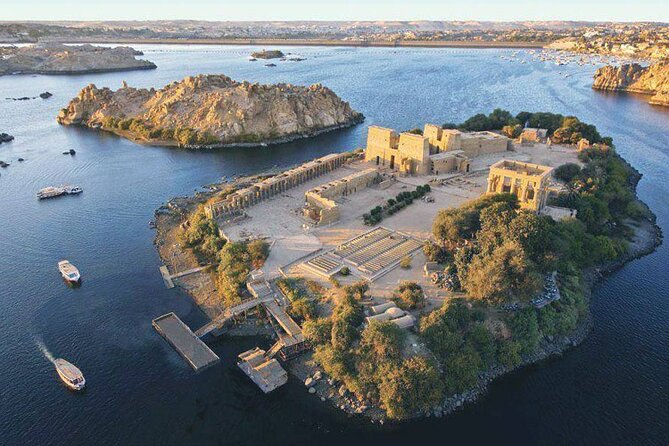
What I like about this first day is the pacing. You get a modern landmark first, the High Dam, built starting in 1960 under President Gamal Abdel Nasser to control Nile flooding. Then you shift into ancient Egypt mode with Philae on the river, reached by motor boat as part of the day’s included plan.
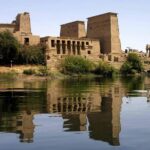
Philae is dedicated to Isis, and the temple complex is closely tied to the Graeco-Roman period. Even if you’re not a hardcore history person, you’ll feel the payoff quickly because Philae is one of those places where setting and carvings reinforce each other. I also appreciate that the day includes the Unfinished Obelisk, a red granite project attributed to Amun Ra that shows what ancient planning and stonework looked like mid-process.
Back on the ship, you’ve got free time in Aswan at night. That matters, because most of your energy for this cruise is going to be spent outdoors and on the go. If you use that evening well, you’ll come back to your cabin refreshed instead of running on fumes.
You can also read our reviews of more boat tours in Aswan
- 4-Days Nile Cruise From Aswan To Luxor including Abu Simbel and Hot Air Balloon
★ 5.0 · 3,142 reviews
Unfinished Obelisk and Philae timing: how to make the first day easier
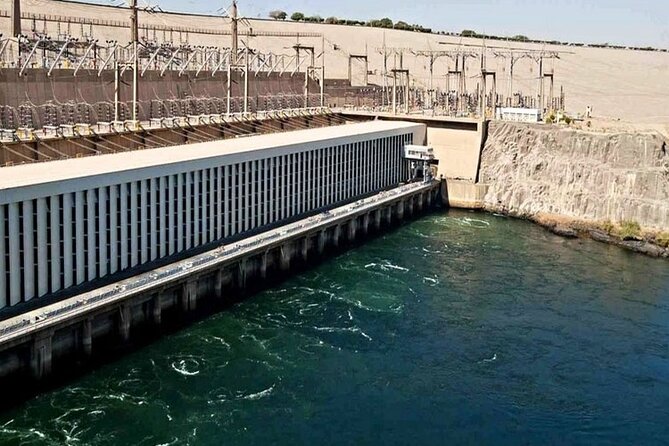
This schedule is packed, but the structure is sensible. After lunch onboard, you’re covering the High Dam and then heading to Philae by boat, which helps avoid the feeling that you’re constantly hopping between transport modes. The day ends with you back at the ship, with additional meals included (afternoon tea and dinner are listed as part of your onboard rhythm).
One practical note: Philae and the surrounding areas are outdoors and on the water. You’ll want comfortable walking shoes, sun protection, and a light layer for when the air shifts. If you’re the type who hates heat, plan to hydrate early and often, because you’ll be moving in the day.
The Unfinished Obelisk is a smart add-on. A fully finished monument can be impressive, but an unfinished one can be more educational. You get a sense of method, materials, and ambition, and it helps you see the difference between what survives and what got altered or stopped.
I’d also keep expectations realistic: temple time is time in the open, and Philae’s beauty is tied to its riverside location. Your best photo opportunities will be when the light is kind, so don’t treat every minute as a camera-only minute. Walk it in first, then photograph with purpose.
Abu Simbel from Aswan: the 4:30 pickup that pays off
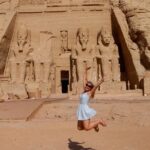
The second day is where the cruise shows its biggest advantage: you’re not trying to DIY Abu Simbel after you’ve already traveled. You’ll be picked up at around 4:30 for a sharing small-group trip, with arrival around 8:00. That early departure is your trade-off, but the reward is a quieter, more focused experience once you’re there.
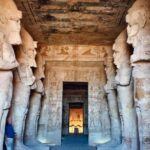
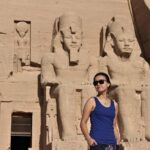
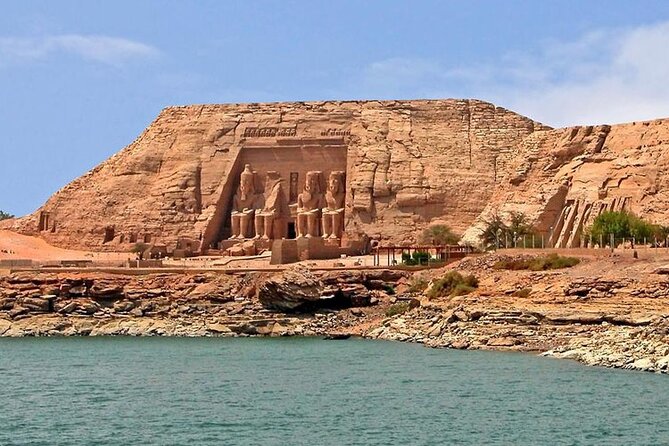
Abu Simbel is famous for the two massive rock temples built during the reign of Ramses II in the 13th century BCE. Standing in front of that scale changes how you picture ancient Egypt. It’s not just that the temples are big; it’s that the carvings and architectural details are meant to be read at close range too.
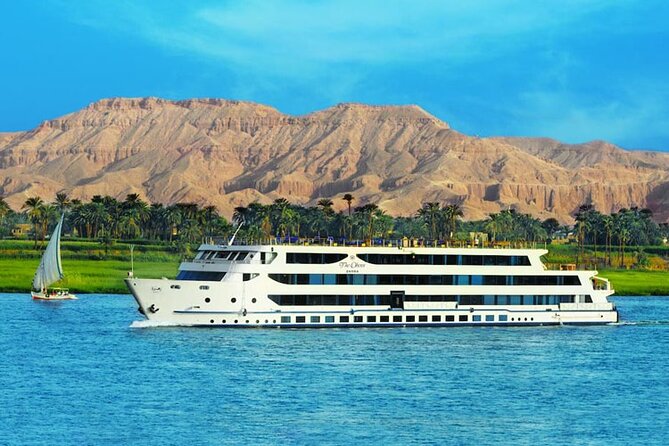
Once you finish your visit, you head back to the cruise by noon for lunch onboard, then sailing onward toward Kom Ombo and the overnight stop near Edfu. In other words, Abu Simbel doesn’t swallow the entire day. It’s a concentrated win, then you’re back in cruise mode.
A small-group ride can be a positive. You get shared transport without the chaos of a massive crowd tour. Still, you’re up early, so sleep in the first night matters. If you’re booking with friends, try not to schedule anything late the evening before your Abu Simbel morning.
Kom Ombo and Edfu: Sobek and Horus, plus an onboard show
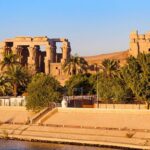
After returning from Abu Simbel, your day continues with a visit to Kom Ombo. This temple stands out because it’s associated with two gods, Sobek and Haroeris, worshiped there at different times. It’s a strong contrast from the singular focus many visitors expect from Egyptian temple sites, and it gives you a more complete picture of how religion could be organized along the river.
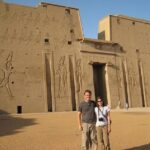
Then you shift to Edfu, where the main highlight is the Temple of Horus. Edfu is known for being one of the best-preserved temples in Egypt, and you can feel that in the clarity of the reliefs and the structure of the spaces. You also get a short, fun extra in the schedule: chariot riding to the temple area.
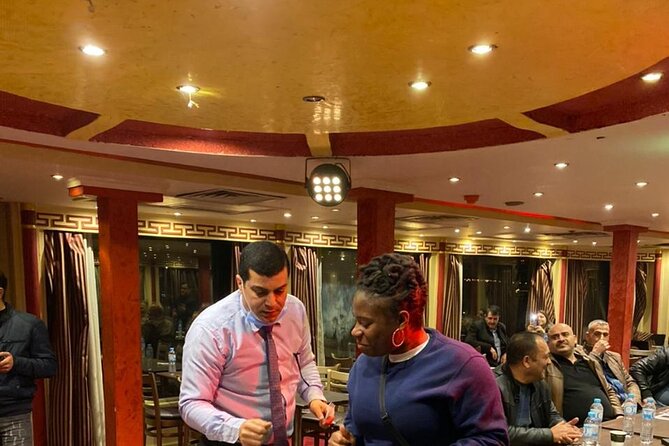
Back on the cruise ship, you’ll eat lunch on board and enjoy river views from the deck during the afternoon. Dinner is served on the ship, and at night there’s an Egyptian folkloric show party operated by staff. I like including something like this because after a full day of temples, it gives your brain a break without turning the night into a hunt for nightlife.
One more practical thought: the cruise day after Abu Simbel still includes visits and walking. Plan to keep your pace steady and comfortable. A few slow minutes, a water break, and a shaded stop often do more for enjoyment than trying to power through for the last photo.
Luxor Temple and Karnak in one day: your biggest New Kingdom vs. Middle-to-Ptolemaic contrast
The third day is built around Luxor, with visits to Luxor Temple and the massive Karnak Temple Complex. It’s a high-impact day because you’re covering two different “feeling” types of sacred space.
You start at Edfu’s Temple of Horus in the morning, then move into Luxor later with Luxor Temple. Luxor Temple is dedicated to Amun and was built in phases from the New Kingdom period into later eras, with work continuing until the Ptolemaic period. When you walk through, it helps to imagine how the temple acted like a center for religious festivals, not just a museum stop.
Karnak is where the scale goes up again. The complex is dedicated to Amun and grew over nearly 2,000 years, spanning Middle Kingdom through Ptolemaic time. It includes many temples, chapels, pylons, and obelisks, with a hypostyle hall famous for its 134 columns. If you’re trying to grasp why Karnak is often listed among the world’s great temple sites, that column hall is the “oh, so that’s why” moment.
This day is long, but it’s also efficient in a good way. You don’t need to transfer between multiple hotels or coordinate separate tickets in different areas on your own. You’re moving through the biggest hits of Luxor with a guide to connect the dots.
If you’re a person who gets temple-fatigued, take breaks on purpose. Karnak can be overwhelming in the best way, so plan to pause, read what you can, then move on rather than trying to absorb everything at once.
A few more Aswan tours and experiences worth a look

Valley of the Kings, Hatshepsut at Deir el-Bahari, and Colossi of Memnon to finish
The fourth and final day is on the west bank side, starting after breakfast with check-out around 8:00. You’ll visit the Valley of the Kings, where pharaohs and powerful nobles of the New Kingdom were buried in elaborate tombs. The valley is known for the intent to keep tombs secret, and many tombs are decorated with scenes from mythology and daily life.
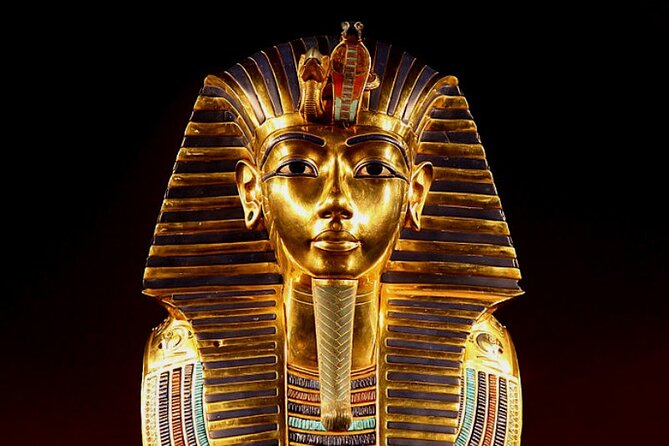
This is also where you’ll hear the famous name Tutankhamun connected to the tombs in the valley. Even if you can’t see every single tomb, the scale of the burial idea stays impressive. It’s not just “a bunch of tombs.” It’s a plan for power, belief, and memory.
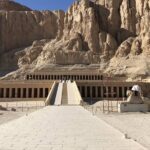
Next comes Temple of Hatshepsut at Deir el-Bahari. Hatshepsut was a female pharaoh, and her temple is known for terraces and colonnaded courtyards, with well-preserved reliefs and inscriptions. The temple’s ramp and the way it sits in tiers make it one of those stops where the architecture does half the storytelling even if you only catch the highlights.
You also finish with the Colossi of Memnon, two huge stone statues carved from single blocks and nearly 20 meters tall. In the schedule, this stop is listed as a quick 15 minutes and admission free, which I think is a smart way to close. You get the signature forms without squeezing the last day too tight.
Your cruise ends around 14:00, with transfer to Luxor Train Station, Luxor Airport, or a Luxor hotel for your final departure. That timing is useful if you’re continuing onward the same day.
Price and value: what $295 covers, and what to budget for
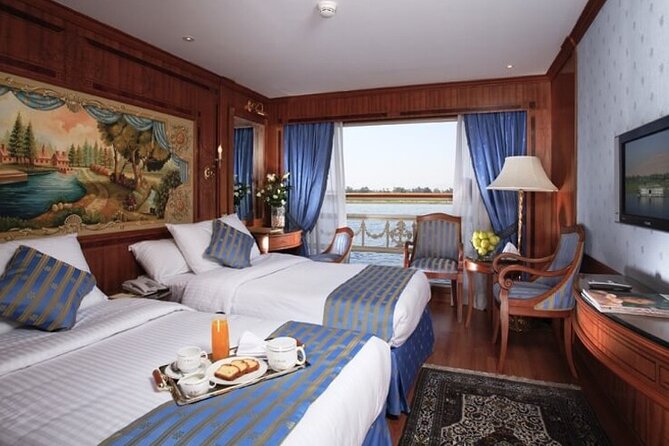
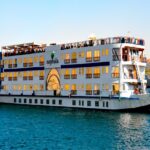
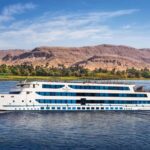
At $295 per person, you’re paying for more than “a boat and a few tickets.” What you’re actually buying is the combo of a 5* standard Nile cruise for 3 nights, guide time in English, and a structured set of transfers between major sites.
Included items that matter in real life:
- Meet-and-assist at arrival and departure
- A private English-speaking Egyptology guide
- Transport round-trip
- Meals: 3 breakfasts, 3 lunches, 3 dinners, plus afternoon tea mentioned onboard
- Motor boat to the Philae temple area
- Sharing small-group transfer and guide for Abu Simbel
- All fees and taxes (as stated)
What’s not included is also important:
- Entrance fees for temples and sites that list admission as not included
- Tipping for cruise staff, guides, and drivers
- Any extras not mentioned in the schedule
So the best way to judge value is this: you’re paying to remove the constant hassle. You’re not figuring out transportation between Aswan and Luxor while also trying to line up temple entry times. That’s the real cost savings in energy, not just in money.
If you’re budgeting, I recommend setting aside a separate fund for entrance fees and tips so you don’t feel surprised at the sites. The base price gets you the backbone: ship comfort, planning, and guided context. The extra costs are more about access and human help.
Guides and service quality: what the onboard team is like
A big part of why these trips feel smooth comes from the human layer. In the guide role, names like Ahmed and Muhammad come up for strong English and good explanations at the temples. If your guide is Ahmed, you can expect a focus on history and making sense of what you’re seeing, not just reciting dates.
On the ship side, the service names Hussain (room attendance), Amer (reception), and Amman (restaurant) appear in the kind of praise that points to responsiveness. Even if your roles differ, this is a sign the crew interaction is part of the experience, not an afterthought.
The cruise also includes entertainment that keeps the night from feeling empty after a heavy day. The Egyptian folkloric show is run by the onboard staff, which means it’s built into your schedule rather than something you must find independently.
If you value comfort and good communication, this is the type of tour where it shows. A good guide makes temples easier to understand. A helpful cabin and dining team makes the days less exhausting.
Who this cruise fits best (and who should think twice)
This is a great fit if you want a structured “greatest hits” route without doing the heavy planning yourself. It’s also ideal for first-time visitors who want a guide to connect High Dam and Philae to Kom Ombo and Edfu, then on to Luxor Temple and Karnak, and finally the west bank with Valley of the Kings and Hatshepsut.
It’s less ideal if you hate early mornings. Abu Simbel starts with pickup around 4:30, and that kind of timing isn’t negotiable if you want to see it properly. It can also be a tough fit if you’re sensitive to long days of walking, since multiple temple sites happen across consecutive days.
The small-group approach to Abu Simbel is a plus if you don’t want a chaotic crowd vibe. At the same time, your day is still a shared experience, so you’ll want to stay flexible about pacing and photo opportunities.
Should you book the Aswan to Luxor Nile cruise?
If you want one decision that reduces trip stress while maximizing temple time, I’d lean yes. The combination of an English-speaking guide, cruise comfort for 3 nights, and the “major sites in order” flow from Aswan to Luxor is exactly the kind of trip that rewards first-timers and repeat visitors alike.
Book it if you’re excited by the idea of comparing temples across eras: Philae’s island setting and Isis connection, Kom Ombo’s two-god focus, Edfu’s preservation, Karnak’s long build history, and the west bank burial story. You’ll also appreciate the onboard rhythm of breakfasts, lunches, dinners, plus the included folkloric show at night.
Think twice if you already know you’ll struggle with early wake-ups or you hate adding entrance fees and gratuities at the last minute. With a small budget buffer and a good mindset for long days, the trade-offs feel fair.
FAQ
Is pickup from Aswan included?
Yes. The tour includes meet-and-assist upon arrival and departure, plus transport by private air-conditioned van for the transfers in the program.
Does the tour include Abu Simbel?
Yes. You’ll take a shared small-group trip with an English-speaking tour guide, with pickup around 4:30 and return by noon.
What meals are included on the cruise?
Lunch is included three times, breakfast is included three times, and dinner is included three times, all onboard the Nile cruise.
Are temple entrance fees included?
No. Entrance fees are listed as not included, except for a couple of notes in the schedule such as admission marked free for the Unfinished Obelisk and Colossi of Memnon.
Is there a guide during the visits?
Yes. The tour includes a private Egyptology English-speaking tour guide.
Can I cancel for a full refund?
You can cancel up to 24 hours in advance for a full refund, and changes inside 24 hours of the start time are not accepted.
You Might Also Enjoy

More 4-Day Experiences in Aswan
More Boat Tours & Cruises in Aswan
- 4-Days Nile Cruise From Aswan To Luxor including Abu Simbel and Hot Air Balloon
★ 5.0 · 3,142 reviews
More Tour Reviews in Aswan
- 4-Days Nile Cruise From Aswan To Luxor including Abu Simbel and Hot Air Balloon
★ 5.0 · 3,142 reviews