Southern Egypt has a way of speeding up time.
This 3-night Nile cruise from Aswan strings together the big names (Aswan High Dam, Philae, Kom Ombo, Edfu, and Luxor’s temples) with a private Egyptologist guide and A/C vehicle transfers. I especially like how the sightseeing is planned with real breaks on the water so your day doesn’t feel like one long sprint. One possible drawback: the boat experience can be mixed, with some cabins and common areas showing their age.
On the plus side, I really like that lunch is included each day (so you’re not hunting for food between stops), and the guide work tends to be practical, with just enough detail to make the sites make sense. In past experiences with Sheba Tours, people have also praised Sheba’s support and safety focus, including help from Gabriel coordinating smooth airport transfers. Still, think of this as a history-and-temples cruise more than a guaranteed five-star ship stay.
In This Review
- Key things to know before you go
- How this Aswan-to-Luxor cruise actually feels
- Aswan day: High Dam, Philae Temple, and the Unfinished Obelisk
- High Dam views and why it matters
- Philae Temple and the Isis connection
- The Unfinished Obelisk: a real “making-of” moment
- What I like about this Aswan sequence
- Kom Ombo and Edfu: Sobek and Horus plus a chariot ride
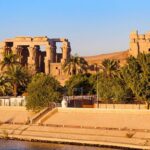
- Kom Ombo’s dual-god setup
- Lunch on the ship’s sun deck
- Edfu Temple of Horus: one of the best-preserved hits
- Chariot riding: short, fun, and very “Egypt”
- Evening onboard
- Luxor West Bank: Valley of the Kings, Hatshepsut, and Colossi of Memnon
- Valley of the Kings: royal tombs in the making
- Temple of Queen Hatshepsut at Deir el-Bahari
- Colossi of Memnon: scale you feel
- Afternoon free time
- Dinner and overnight
- Luxor East Bank: Karnak and the Temple of Luxor
- Karnak Temple Complex
- Temple of Luxor
- Your guide matters more than you think
- Food, evenings, and the ship’s reality check
- Price and value: is $450 per person a good deal?
- Best fit: who should book this Nile cruise
- Should you book this tour?
- FAQ
- What’s the duration of the tour?
- When does the tour start?
- Where does the experience begin?
- Is pickup included?
- Is there a private Egyptologist guide?
- Are entrance fees to the sites included?
- Is lunch included during the days of sightseeing?
- What is not included in the price?
- Is this tour only for your group?
- Is there free cancellation?
Key things to know before you go
- Private Egyptologist guidance: You get English-speaking explanations on the ground, not just a checklist of stops.
- A/C private transfers: Comfort on the road matters in Egypt heat, and this includes it.
- Onboard lunch daily: Fewer meal hassles, less time wasted, easier pacing.
- Big temple lineup on two river days: Aswan sights first, then Kom Ombo/Edfu, then Luxor East and West Bank.
- Ship comfort varies by boat: Reviews mention both friendly service and older facilities, so set expectations.
How this Aswan-to-Luxor cruise actually feels
This is the kind of Nile cruise where you get a strong “temples + river” rhythm. Most of your time is spent on land for major sites, then you’re back on board with time to breathe—watching the river slide by, eating onboard, and letting your feet recover.
The pacing is also built around avoiding midday pain. Even if the exact timing can shift, the pattern stays the same: early enough to make temple visits work, then sailing and onboard meals to reset. If you like your sightseeing structured but not frantic, this format is a good match.
You’re also traveling with a private setup (your group only). That tends to make it easier to ask questions, move at a comfortable pace, and avoid the stress of getting swept along with a crowd.
You can also read our reviews of more boat tours in Aswan
- 4-Days Nile Cruise From Aswan To Luxor including Abu Simbel and Hot Air Balloon
★ 5.0 · 3,142 reviews
Aswan day: High Dam, Philae Temple, and the Unfinished Obelisk
Day 1 starts with arrival help in Aswan. You meet a representative and transfer by private A/C van to your cruise ship. Check-in happens before noon, so you’re not stuck waiting around all day.
Then you shift into Aswan’s “engineering and old-world spirituality” mood.
High Dam views and why it matters
The stop at the High Dam is a smart opener because it puts the Nile into a modern context. You learn how the dam—built in 1960 under President Gamal Abdel Nasser—is tied to controlling Nile flooding. Even if you’ve seen photos, being there helps the scale sink in. It’s not just a landmark. It’s a story about how Egypt manages water.
Philae Temple and the Isis connection
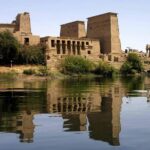
After that, you sail by motorboat to Philae Temple. This is one of those places where the river location is part of the meaning. Philae was erected during the Graeco-Roman period and dedicated to the goddess Isis. It’s a different vibe from the huge quarry-and-ruins feeling of other sites. Here, details and worship symbolism come through more clearly when you’re guided on-site.
The Unfinished Obelisk: a real “making-of” moment
The day ends with the Unfinished Obelisk, made from red granite and dedicated to a pharaoh (as described in the program). This stop is genuinely fascinating if you like process—because you’re seeing a monument that didn’t reach completion. You can’t help but think about the tools, planning, and stubborn human ambition behind it.
- 4-Days Nile Cruise From Aswan To Luxor including Abu Simbel and Hot Air Balloon
★ 5.0 · 3,142 reviews
What I like about this Aswan sequence
It’s well-balanced: modern engineering first, then sacred temple by the water, then a quarry-side “how it was done” stop. If you’ve only ever read about ancient Egypt, this set of sights helps it feel hands-on.
Kom Ombo and Edfu: Sobek and Horus plus a chariot ride
Day 2 is the classic middle stretch of an Aswan-to-Luxor cruise. You begin with breakfast onboard, then head out with your guide.
Kom Ombo’s dual-god setup
Kom Ombo is special because it’s tied to two sets of worship: Sobek and Haroeris. That duality keeps you from viewing the temple as one-note. Your guide’s job here is key—explaining why the layout and symbols fit those deities, and how the site functioned in the region.
Lunch on the ship’s sun deck
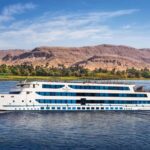
Back on board, you eat lunch on the sun deck. This sounds simple, but it’s practical travel design: you’re fueled without losing momentum. Plus, sitting with Nile views after temple walking is a nice way to keep your energy steady.
Edfu Temple of Horus: one of the best-preserved hits
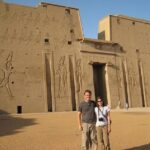
In the afternoon you go to the Temple of Horus in Edfu. It’s described in the program as one of Egypt’s best-preserved temples, and that fits the usual reason people love Edfu: the structure holds together visually. With the right explanation, you’ll notice carvings and layout details more than if you show up cold.
Chariot riding: short, fun, and very “Egypt”
You also get chariot riding as part of the Edfu experience. This is less about history facts and more about atmosphere and local flavor. If you’re okay with a quick ride as a break from walking, it’s a fun add-on. If you hate anything that feels like a performance, you might want to keep it short and focus on the temple.
Evening onboard
Dinner is on board, and there’s an Egyptian folkloric show party by the ship’s staff. For many people, this is the easiest way to round out the day: you get the culture signal without needing to leave the boat again at night.
Luxor West Bank: Valley of the Kings, Hatshepsut, and Colossi of Memnon
Day 3 shifts from river-scene comfort into serious Luxor “royal cemetery” territory.
After breakfast onboard, you go to Thebes on the West Bank. This is where Luxor earns its reputation. Even if you’ve seen pictures, standing in the area makes you understand why these sites were built for eternity.
Valley of the Kings: royal tombs in the making
You visit the Valley of the Kings, described as the royal cemetery for kings and rulers. The guide’s explanations matter a lot here. Without help, it can feel like “more tombs.” With help, you start connecting the purpose, symbolism, and why the valley layout works the way it does.
Temple of Queen Hatshepsut at Deir el-Bahari
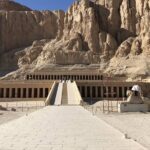
Then you go to the Temple of Queen Hatshepsut. The program notes it as one of Egypt’s most wonderful examples of architecture. That’s not hype—it’s one of those temple spaces where the shapes and terraces actually read in your brain once you know what to look for.
Colossi of Memnon: scale you feel
You also see the Colossi of Memnon, tied to Amenhotep III. These are huge statues, and they make it easy to grasp ancient Egypt’s “bigger-than-life” habit. It’s a strong photo stop, but it’s also a great way to get your bearings after tomb-and-temple walking.
Afternoon free time
Lunch brings you back to the ship, and the afternoon is free. That’s important. You’ll want the downtime to cool off, review photos, and recover from walking. Don’t rush this part. Luxor days add up.
Dinner and overnight
Dinner and overnight stay are on board. You’ll likely feel the difference between “I did the sites” and “I’m still on a cruise.” This section is where that Nile cruising element really shows.
Luxor East Bank: Karnak and the Temple of Luxor
Day 4 is your Luxor “classic highlights” finish.
You check out after breakfast. Then you tour the East Bank by private A/C van with your guide. This side of Luxor often feels more open and ceremonial than the West Bank, and the flow tends to be more straightforward.
Karnak Temple Complex
You visit the Karnak Temple Complex first. It’s described as the biggest complex, and that size can overwhelm you fast. The practical win here is having an Egyptologist guide to point out what’s worth your attention so you don’t spend the day just staring at walls.
Temple of Luxor
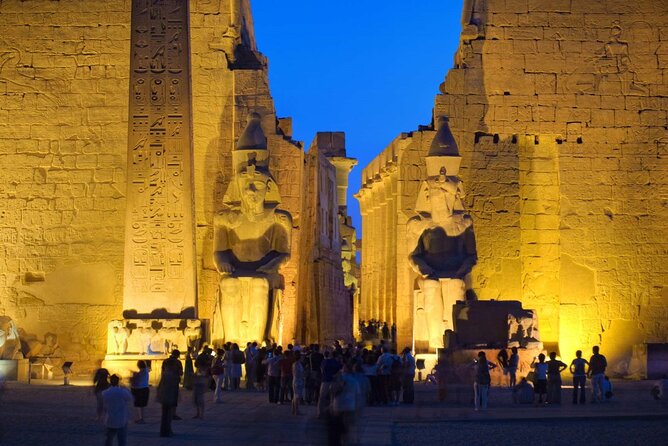
You end at the Temple of Luxor, built in the 12th dynasty and completed by Ramses II. The guide helps connect what you see with the rulers and purposes behind the construction, so it feels less like a random set of ruins.
After the tour, you get transferred by private A/C van to your location in Luxor where services end.
Your guide matters more than you think
This tour’s biggest value is that it includes a private Egyptologist English-speaking guide. That isn’t just for “facts.” It changes how you experience the sites.
On temple days, the guide helps you read symbols, layouts, and the logic of each complex. It turns a stop from something you simply walk through into something you understand. And because it’s private, you can ask questions without feeling rushed.
Names that show up in the support side include Gabriel from Sheba Tours, praised for arranging airport pick-up and drop-off smoothly and helping people feel safe in Egypt. Another name that appears is Ahmed Mohamed ELAMIN, mentioned as a ship manager who is present to help ensure guest satisfaction. Those details matter because they point to on-the-ground responsiveness, not just a ticket and a schedule.
Food, evenings, and the ship’s reality check
Let’s talk about the part people often forget to check: the boat itself.
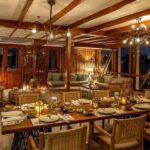
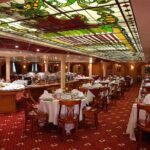
The program includes 3 nights’ accommodation on board, with breakfast, lunch, and dinners described during the days. Reviews mention that food quality can be surprisingly good, and service from staff can feel warm and helpful. Some also praise specific ship experiences like MS Princess Sarah and Princess Sarah II, with cabins facing the river and comfortable beds.
But there’s also a clear theme in the less-flattering feedback: some boats are older and need an overhaul. People describe hard beds, deep tubs that are tough to step in and out of, small pools, and dated bathrooms and decor. Wi‑Fi is mentioned as not working for some cabins, and one review even mentions unprofessional spa behavior.
So here’s my practical advice: treat this cruise as a temple + river experience first, and view the ship as functional accommodation with variable comfort. If your main priority is luxury cabin comfort, you’ll want to read recent ship-specific reviews for the vessel you’re assigned (since you can’t guarantee which boat you’ll get from the info provided here).
Price and value: is $450 per person a good deal?
At $450 per person for 3 nights, this cruise sits in the “mid-priced but structured” zone. The value comes from the mix:
- Private Egyptologist guidance on major sites
- Entrance fees included
- All transfers by A/C private vehicle
- Onboard lunch included each day
- Cruise lodging for 3 nights
- Meet-and-assist support upon arrival and departure
When you add those up, it’s not just paying for a room on the river. You’re also paying to have logistics handled and to have guided access to key temples.
What could reduce value for you? If you’re very sensitive to cabin comfort, and you end up on a boat with worn bathrooms or uncomfortable bedding, you may feel the $450 more sharply. That’s why setting expectations helps: this is a history-heavy itinerary where the ship is the base between excursions.
Best fit: who should book this Nile cruise
This tour is a strong match if you:
- Want a guided introduction to Aswan and Luxor without piecing everything together yourself
- Like organized temple visits but still want downtime onboard
- Appreciate an Egyptologist explanation to make the sites click
- Prefer fewer meal hassles thanks to onboard lunch
It might feel less ideal if you:
- Care most about modern luxury cabin comfort and spa-level amenities
- Want a guaranteed five-star ship experience every time
- Strongly dislike any “older boat” feel (carpets, bathrooms, stairs, pool size, etc.)
Should you book this tour?
I think you should book this tour if your priority is the sequence of major southern Egypt sights with real guide time, and you’re happy treating the ship as your home base rather than your main attraction.
I’d hesitate if you’re cabin-comfort picky. In that case, I’d focus on confirming the exact ship and checking the latest reviews for that specific vessel. The itinerary side looks solid; the ship side is where expectations can clash.
If you do book, come with the right mindset: early starts, temples you can actually understand with a guide, and evenings where the Nile does the talking.
FAQ
What’s the duration of the tour?
The tour runs about 4 days, with 3 nights on board the Nile cruise.
When does the tour start?
The start time is listed as 11:00 am.
Where does the experience begin?
You begin in Aswan, with meet-and-assist service upon arrival and pickup by a private A/C vehicle to the cruise ship.
Is pickup included?
Yes. Pickup/meet-and-assist is included, along with transfers by modern air-conditioned deluxe vehicles.
Is there a private Egyptologist guide?
Yes. The tour includes a private Egyptologist guide who speaks English for the excursions.
Are entrance fees to the sites included?
Yes. Entrance fees to all sights in and between Luxor and Aswan are included.
Is lunch included during the days of sightseeing?
Yes. Lunch is included each day on board.
What is not included in the price?
Tips are not included (optional).
Is this tour only for your group?
Yes. It’s described as a private tour/activity, so only your group participates.
Is there free cancellation?
Yes. You can cancel for a full refund if you cancel up to 24 hours in advance of the experience’s start time.
If you tell me your travel month and whether cabin comfort or guided depth matters more to you, I can help you decide if this is the right fit—or what to check before you book.
You Might Also Enjoy

More Boat Tours & Cruises in Aswan
- 4-Days Nile Cruise From Aswan To Luxor including Abu Simbel and Hot Air Balloon
★ 5.0 · 3,142 reviews
More Tour Reviews in Aswan
- 4-Days Nile Cruise From Aswan To Luxor including Abu Simbel and Hot Air Balloon
★ 5.0 · 3,142 reviews