REVIEW · HURGHADA
Luxor & Kings’ Valley Private VIP Tour with Pick up
Book on Viator →Operated by Memnon Reisen · Bookable on Viator
Luxor in a single day starts before sunrise, and it’s a smart way to taste Ancient Thebes without a multi-night commitment. I like that this is a true private tour with a licensed Egyptologist guide, so you can ask questions and go at a pace that fits your group. I also like that lunch and entrance fees are included, which removes a big chunk of stress when you’re trying to make the most of a long day.
The main drawback is the time commitment: expect an early start around 5:30am and a day that can run roughly 13 to 15 hours, with about 4 hours each way of driving from Hurghada to Luxor. If you dislike early wake-ups, you’ll feel it.
In This Review
- Key points to know before you go
- Hurghada to Luxor: the early-start tradeoff (and how the private car helps)
- Karnak Temple Complex: where New Kingdom power takes form
- Crossing the Nile: switching from temples to tomb country
- Valley of the Kings: the afterlife plan behind the royal tombs
- Hatshepsut at Deir el-Bahari: terraces, power, and a queen-pharaoh’s story
- Colossi of Memnon: two giants that face the rising sun
- Your private Egyptologist: what you gain when the guide runs the show
- Price and value: is $245 per person actually fair?
- Timing and pacing: how to survive 13 to 15 hours without feeling rushed
- What’s included, what isn’t, and what you should bring
- Should you book this Luxor and Valley of the Kings VIP tour from Hurghada?
- FAQ
- What time does the tour start?
- How long is the Luxor and Valley of the Kings private tour?
- Is pickup included from Hurghada?
- What sites are included in the itinerary?
- Are entrance fees and tickets included?
- Is lunch included?
- Are drinks included with lunch?
- Is this tour private or shared?
- What is the cancellation policy?
Key points to know before you go
- Private Egyptologist guide: you get tailored explanations at each stop, not just a timed walk-through
- UNESCO sites in one sweep: Karnak, Valley of the Kings, Hatshepsut at Deir el-Bahari, and the Colossi of Memnon
- Most major costs covered: lunch, entrance fees, and tickets are included
- Big early-morning logistics: pickup is early, and the drive is long, but private transport helps
- Nile crossing to shift worlds: you’ll go from eastern-bank temples to west-bank tomb and mortuary areas
- Comfort and flow matters: many groups report regular breaks and water/cold drinks during the day
Hurghada to Luxor: the early-start tradeoff (and how the private car helps)
This is an all-day plan, and the day starts with the kind of morning alarm you only set for once-in-a-lifetime sites. Pickup is typically scheduled for around 5:30am, and you’ll spend most of the daylight hours in Luxor’s ancient areas. The drive time is about 4 hours each way, so your total time on the go lands around 13 to 15 hours.
What you get for that early start is a day built around concentration. Instead of dabbling in one temple and calling it a trip, you see multiple landmark areas: Karnak on the east bank, then the west bank tomb and mortuary sites, and finally the Colossi area. And because the transport is private and air-conditioned, you’re not stuck with a long, stop-and-go group shuttle. In real-world terms, that usually means fewer delays and a smoother rhythm to the schedule.
If you’re traveling with kids or you simply don’t do well on low sleep, plan like a grown-up: sleep early the night before, keep your carry-on simple, and treat this as a full-day “mission,” not a casual stroll. I’d also plan to be flexible with your energy level. Even with good pacing, this is still a long day.
You can also read our reviews of more private tours in Hurghada



Karnak Temple Complex: where New Kingdom power takes form
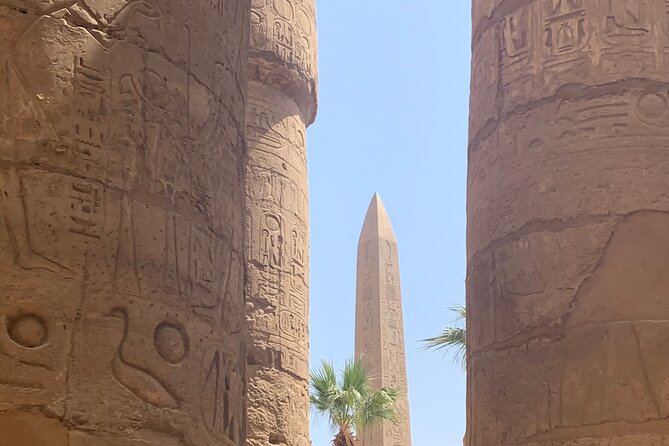
Karnak is the kind of place that turns your brain into a history student for a few hours. This vast complex is the main state sanctuary of the New Kingdom, and it served the Theban triad: Amun-Ra, his wife Mut, and their son Khons. The site is located in modern Karnak, just a short distance from Luxor on the east bank of the Nile.
On this tour, you’ll spend about 2 hours at Karnak with a private Egyptologist guide. That matters, because Karnak isn’t one single temple you can “check off.” It’s a sprawling mix of temples, chapels, pylons, and decayed structures stacked together like a civilization in layers. A guide helps you make sense of why certain spaces matter, what specific architectural choices were meant to communicate, and how the complex functioned in ancient Egyptian state religion.
Practical tip: Karnak can feel bright and busy, so I suggest wearing a hat and using sun protection. Also, bring a small amount of patience. Even when everything is well-organized, this is a major site and you’ll see plenty of other visitors. Having a guide who can point out what to focus on keeps the experience from becoming sensory overload.
Crossing the Nile: switching from temples to tomb country
One of the most useful things about this day trip is the change of scenery built into it. You’ll travel across the Nile to reach the west-bank sites, where the atmosphere shifts from temple worship spaces into burial and mortuary landscapes. That matters because Karnak and the Valley of the Kings aren’t just different locations—they represent different parts of the ancient Egyptian worldview.
Your schedule keeps that transition purposeful. After Karnak, you go toward areas like Deir el-Bahari (Hatshepsut’s temple) and the Valley of the Kings, where the story becomes about preparation for the afterlife—ritual, mummification, and the belief that pharaohs would join the gods.
Crossing the Nile in context helps you understand why the west bank was so charged. If you’ve only ever seen Luxor from postcards, this part is where it starts to feel real. The Nile becomes a dividing line in how people lived, worshiped, and planned for what came next.
Valley of the Kings: the afterlife plan behind the royal tombs
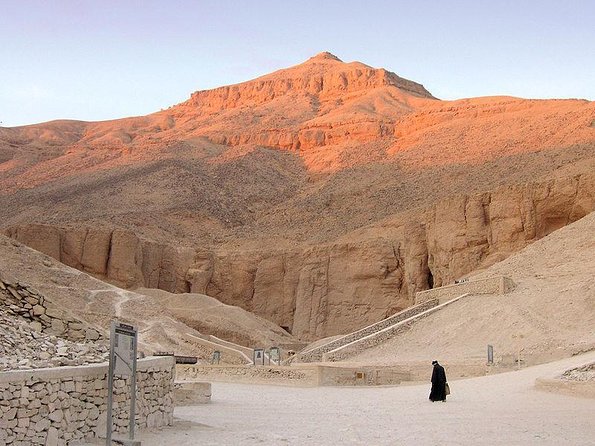
The Valley of the Kings is one of the places you can’t really understand without a guide explaining the bigger picture. This is where most New Kingdom pharaohs were buried, spanning the 18th, 19th, and 20th dynasties. Names you’ll hear often include Thutmose II, Tutankhamun, and Ramses.
Here’s why it sticks with people: the tombs weren’t just graves. They reflect elaborate preparation for an afterlife where continuing life was promised, and where pharaohs were expected to become one with the gods. Mummification was part of the plan, aimed at preserving the body so the soul could reanimate it in the next world.
You’ll spend about 2 hours in the Valley of the Kings. That’s enough time to understand the layout and meanings behind what you’re seeing, without rushing you into a checklist mood. Still, it’s worth managing expectations: tomb interiors and paths can feel time-limited depending on what you choose to view.
Practical note: wear supportive shoes. Even if the tour is well-run, you’ll be walking on uneven ground and moving between viewpoints. Also, go in with curiosity. If your guide points out symbolism and burial beliefs, the Valley feels less like a set of rooms and more like a message written in stone.
Hatshepsut at Deir el-Bahari: terraces, power, and a queen-pharaoh’s story
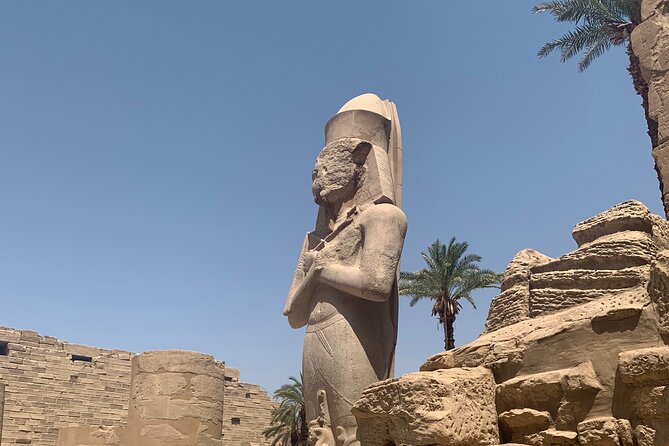
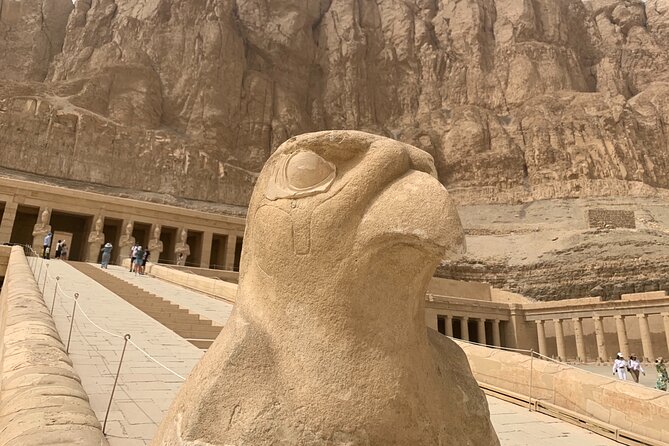
If Karnak is about scale, Deir el-Bahari is about intention. Temple of Hatshepsut is one of the most striking architectural masterpieces in the Luxor west-bank area, and you’ll spend about 2 hours here.
This temple was built by Queen Hatshepsut, who became pharaoh. It’s known as Djeser-djeseru (often referenced as the Holy of Holies). A key detail that a good guide will connect for you: the temple sits directly across the Nile from Karnak Temple, tying the east-bank sanctuary world to the west-bank mortuary world.
You’ll also hear about Senenmut, the chief steward of Amun, credited as the architect/designer figure connected to the project. And Hatshepsut’s story lands in a very human way. You’ll learn that she was a beloved ruler from her time, not just a name on a museum card.
What to expect on the ground: the terrace design draws your eyes up and outward. It’s the kind of setting where you’ll understand why people take photos, but it’s also the kind of place where listening matters. As your guide explains the political and religious meaning behind the construction, the architecture starts telling a story—not just impressing you.
A few more Hurghada tours and experiences worth a look
- Swimming with Dolphin VIP Snorkeling Sea Trip With Lunch and Transfer – Hurghada
★ 4.5 · 1,104 reviews





Colossi of Memnon: two giants that face the rising sun
The day doesn’t end with a grand temple door; it ends with something quieter and oddly powerful: the Colossi of Memnon. You’ll spend about 20 minutes here, and since the time is short, it’s a good stop for a breath and a final mental snapshot.
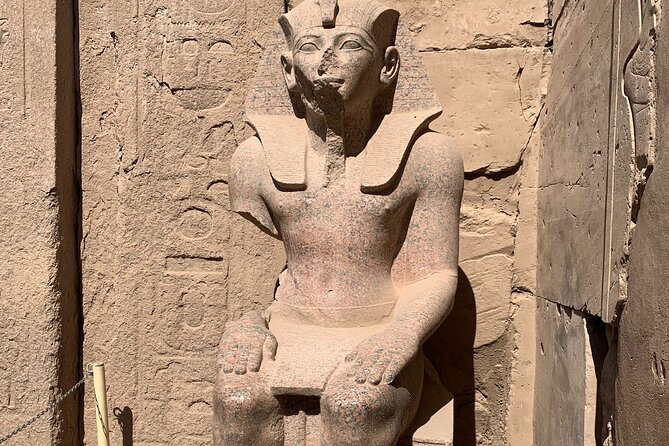
Important fact: these are often associated with Memnon, but they actually depict Pharaoh Amenhotep III. Two massive stone statues, built in the 14th century BC, have stood for thousands of years in the necropolis of Thebes on the west bank area across from modern Luxor.
They’re seated, with Amenhotep III’s hands on his knees and his gaze directed east, toward the river and the rising sun. That direction is the kind of detail your guide will connect to ancient ideas about kingship, time, and the relationship between the living world and divine order.
Because the stop is brief, I’d treat it like a closing scene. If you take a moment to look carefully, the statue proportions and positioning start to make sense. You’ll feel the scale more than you’d expect from a quick photo.
Your private Egyptologist: what you gain when the guide runs the show
This is where the tour earns its label VIP. A private tour means you’re not relying on generic audio or trying to catch up with a group that’s already moving. You’re with a professional licensed Egyptologist guide, and that changes the experience.
From the way the day tends to run, guides like Harbi (also spelled Harbie/Harby in different write-ups), Ramada, Nasch, and others are praised for turning monuments into stories. You’ll also likely notice that a good guide handles practical issues—keeping the schedule flowing, explaining what you’re seeing in context, and steering you away from the most distracting shopping pressure.
One standout theme in the feedback is the sense of being looked after: safe, smooth driving; quick attention to details; and a guide who helps make sense of what you’re seeing rather than just pointing at it. Many groups also mention that guides actively helped with navigating sellers and hawking behavior, which matters because Luxor is crowded enough without turning your day into a negotiation.
I’ll be honest: the guide quality isn’t guaranteed across every tour operator. But with this setup, the guide is central to the value. If you’re choosing between a coach tour and private, this is why private usually wins.
Price and value: is $245 per person actually fair?
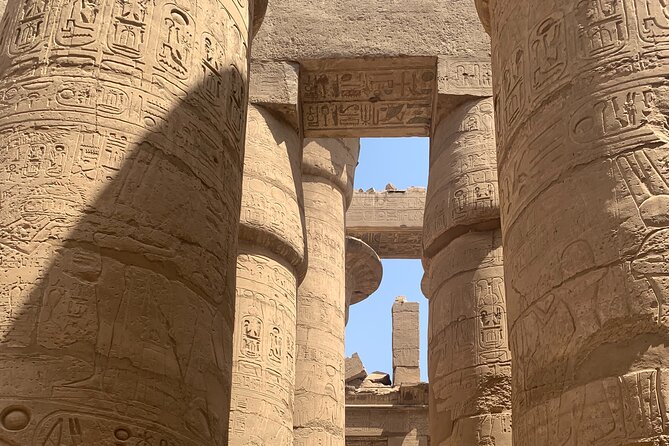
At $245 per person, this day trip isn’t “cheap,” but it isn’t built like a budget transfer either. The value comes from the bundle:
- Private air-conditioned vehicle for the full drive
- Professional licensed Egyptologist guide
- All entrance fees for the sites you visit
- Lunch included
- Tickets handled (mobile ticket)
When you compare that to piecing together transport, tickets, and a guide separately, the included structure starts to make sense. The big cost driver is the long private day itself: the vehicle, time, and guide labor across multiple major UNESCO-listed stops.
One thing to plan for: drinks in the restaurant are not included. That’s common, but it can surprise people who assumed everything with lunch meant drinks too. If you tend to drink a lot of water or prefer sodas, budget a little extra.
Also, the tour offers group discounts, so if you’re traveling with family or friends, the per-person value can improve. And because pick-up is included, you avoid the annoyance of meeting points and last-minute taxi bargaining while you’re half asleep.
Timing and pacing: how to survive 13 to 15 hours without feeling rushed
This tour is long by design. The schedule is built around covering Karnak, Valley of the Kings, Hatshepsut, and Colossi—so yes, you’ll feel the day clock. Many groups report early pickup around 4:30am to 5:30am and returns later in the day (one example mentioned return around 6:45pm). Expect a long day even with private transport.
The good news: in practice, private tours can reduce the worst kind of stress. You’re less likely to get stuck waiting for other groups. And many reviews mention comfort breaks during the day plus water and cold drinks. While you shouldn’t count on every extra detail, it’s a reassuring sign that the routine is designed to be human, not just efficient.
What you should control: your stamina. Eat breakfast before pickup if you can. Pack sunscreen and something light for the morning chill. And keep your expectations realistic: you’re seeing highlights, not living there.
If you want maximum enjoyment, treat each site like a mini-lesson. Give yourself permission to slow down for a few minutes when the guide explains something interesting. Those are the moments you’ll remember on the flight home.
What’s included, what isn’t, and what you should bring
Included on the tour:
- Pickup and private air-conditioned vehicle
- Lunch
- All fees and taxes
- Tickets for the listed sites
- Professional licensed Egyptologist
- Mobile ticket
Not included:
- Drinks at lunch (you’ll buy them at the restaurant)
Things you should bring (practical, based on how these sites work):
- Comfortable walking shoes
- Sun hat and sunscreen
- Sunglasses
- A light layer for early morning and time in AC
- Cash/card for drinks and any small incidentals
One more practical note: restroom access can be a question at major monuments. Even when the tour is organized, you might encounter places where restrooms require a small fee. If that matters to you, use comfort breaks when they’re offered.
Should you book this Luxor and Valley of the Kings VIP tour from Hurghada?
Book it if:
- You want multiple UNESCO highlights in one day
- You prefer a private setup with a guide who can tailor the explanations
- You’re okay with a very early start and a long driving day
- You value having entrance fees and lunch included so you can focus on the monuments
Skip it (or at least reconsider timing) if:
- You hate early mornings and long days
- You want a relaxed schedule with lots of free time
- You’re sensitive to fatigue from long driving stretches
If you’re a first-timer to Luxor and you want the big names—Karnak, royal tomb country in the Valley of the Kings, Hatshepsut’s terrace masterpiece, and the Colossi—this is one of the most efficient ways to do it from Hurghada without turning the trip into a logistics headache.
FAQ
What time does the tour start?
The tour start time is 5:30am.
How long is the Luxor and Valley of the Kings private tour?
The duration is listed as 13 to 15 hours (approximately).
Is pickup included from Hurghada?
Yes, pickup is offered, and the tour is described as a private activity.
What sites are included in the itinerary?
The tour includes Karnak Temple, the Valley of the Kings, Temple of Hatshepsut at Deir el Bahari, and the Colossi of Memnon.
Are entrance fees and tickets included?
Yes. The tour includes tickets of the mentioned sites and all entrance fees are included.
Is lunch included?
Yes, lunch is included.
Are drinks included with lunch?
No. Drinks in the restaurant are not included.
Is this tour private or shared?
It’s private. Only your group will participate.
What is the cancellation policy?
You can cancel for a full refund up to 24 hours before the experience’s start time.