REVIEW · CAIRO
Giza Pyramids and Sphinx Day Tour
Book on Viator →Operated by Book My Egypt Tours · Bookable on Viator
Giza without the hassle feels like magic. This private driver half-day cuts through the chaos and gets you to the Pyramids and Sphinx at a pace that actually works. Two things I really like: direct hotel pickup and drop-off (no public-transit puzzle), and the option to upgrade with a guide, entry fees, and even lunch if you want more context than time allows.
The main thing to plan for is simple: it’s a hot site, and you’ll be walking. One review note hit home—if you’re not in good physical shape, this route may feel like a lot, even though the stops are timed.
In This Review
- Key points before you go
- Private driver logistics that actually matter around Giza
- The half-day route: how you fit pyramids, sphinx, and viewpoints into 4 hours
- Great Pyramid of Giza: the one you’ll remember most (and why 1 hour helps)
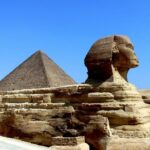
- The Great Sphinx: a quick 30 minutes with big visual payoff
- Menkaure and Khafre pyramid complexes: what you’re really seeing in 30-minute chunks
- Menkaure complex
- Khafre complex
- Cheops (Khufu) and the Giza Plateau: the view that turns scattered stops into a scene
- Entry fees and upgrades: how to judge value beyond the $5 headline
- Heat and walking reality check: choosing the right timing and pace
- Who this private Giza tour fits best (and who should think twice)
- Should you book this Giza Pyramids and Sphinx day tour?
- FAQ
- How long is the Giza Pyramids and Sphinx day tour?
- Is hotel pickup and drop-off included?
- Are entrance fees included?
- Can I add a guide or lunch?
- Is this a private tour?
- What should I expect in terms of comfort and walking?
Key points before you go
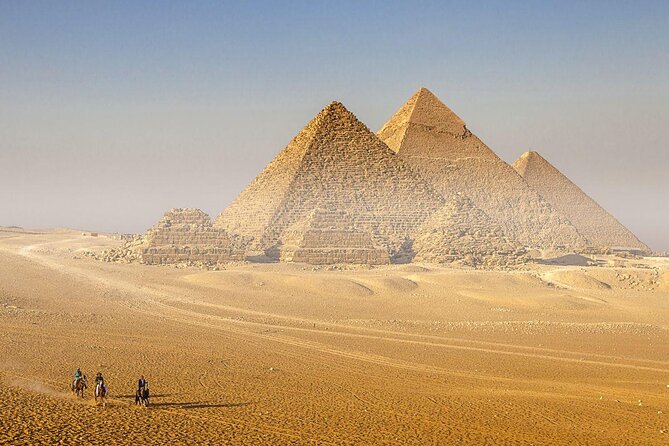
- Private round-trip transport from your Cairo or Giza hotel saves time and stress.
- Flexible upgrades let you add a guide and handle entry fees your way.
- Short, timed stops keep the day manageable: roughly an hour at the Great Pyramid and shorter blocks at each complex.
- Photo-friendly pacing: good guides know where to slow down and where crowds build.
- Heat and walking are real—plan for comfort, not just sightseeing.
Private driver logistics that actually matter around Giza
Giza can be tricky. Public transit is not the quick, easy answer, and group tours can feel like you’re marching between photo spots. This style of tour fixes that with your own private transportation plus hotel pickup and drop-off, so your day starts and ends on your schedule instead of someone else’s.
The vehicle is air-conditioned and comes with bottled water, which sounds basic until you’re standing in the sun. You also get a mobile ticket, which helps you move through the day without hunting for paper confirmations.
You’ll still be outside most of the time, so think of this as a “half-day” that’s more like a well-timed outing than a lounge session. That’s not a complaint—it’s just how Giza works, and it helps you set expectations.
You can also read our reviews of more tours and experiences in Cairo.

The half-day route: how you fit pyramids, sphinx, and viewpoints into 4 hours
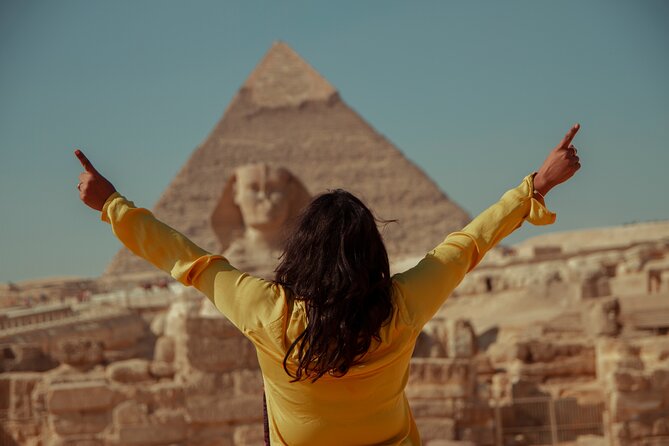
The flow is built to see the big icons without trying to do everything. The tour lasts about 4 hours, with multiple timed stops around the Giza Plateau.
Here’s the practical rhythm: you start at the Pyramids of Giza, then hit the Great Sphinx, and then move through a sequence of pyramid complexes—Menkaure, Khafre, and the Great Pyramid of Cheops—before ending with plateau time and a panoramic viewpoint.
What makes this route smart is that you’re not stuck in one place for hours. You get enough time to look, orient yourself, and take photos, then you move on before the heat and crowd energy gets worse.
Also, the order helps. Seeing the pyramids first makes the Sphinx feel like the main scene. Then the later temple-complex stops help the whole site start to make sense as more than just three big pyramids.
Great Pyramid of Giza: the one you’ll remember most (and why 1 hour helps)
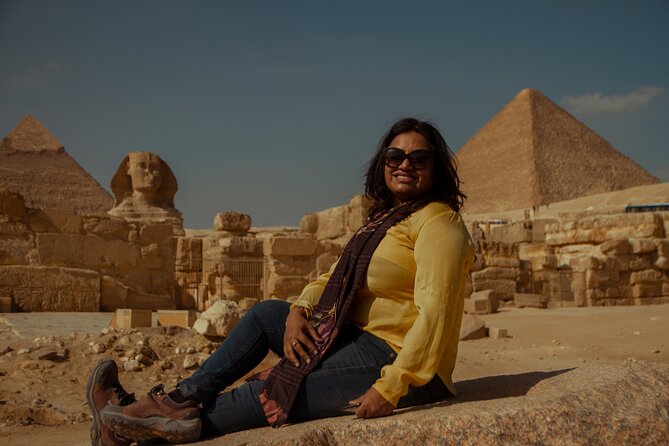
This stop is the Great Pyramid of Giza, also known as the Pyramid of Khufu (Cheops). It’s described as the oldest and largest pyramid in the Giza complex, and it’s tied to the Seven Wonders idea because it’s the one that still looks remarkably intact compared with the others.
You get about an hour here, and that timing is important. One hour is long enough to take in the scale, walk around for angles, and still have energy left for the next stops. It’s also long enough that if you want to shoot photos from different sides, you can do it without feeling rushed every 30 seconds.
If you’re the type who likes to “get your bearings fast,” this is your moment. Once you understand where the pyramid sits relative to your viewpoint, everything else around the plateau clicks.
The Great Sphinx: a quick 30 minutes with big visual payoff
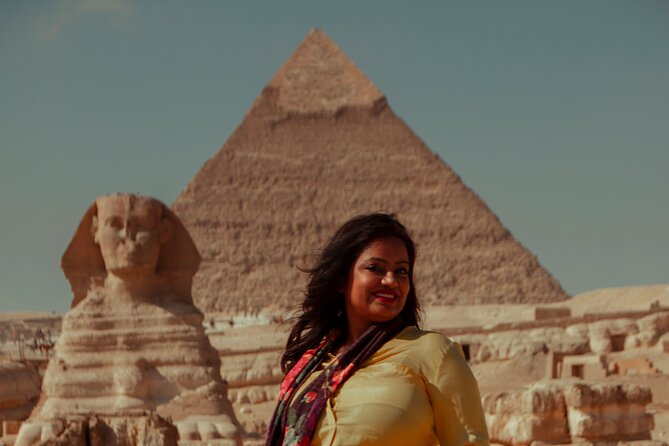
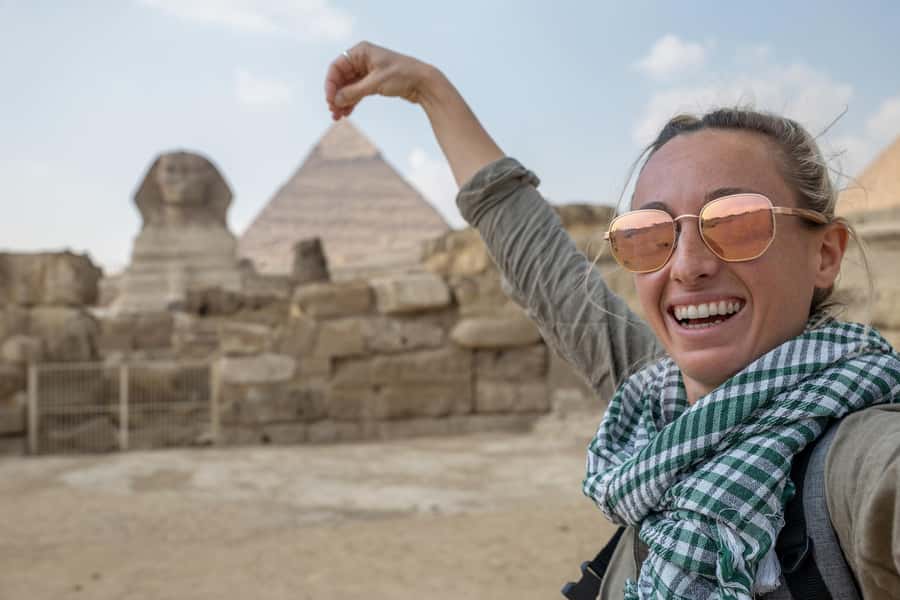
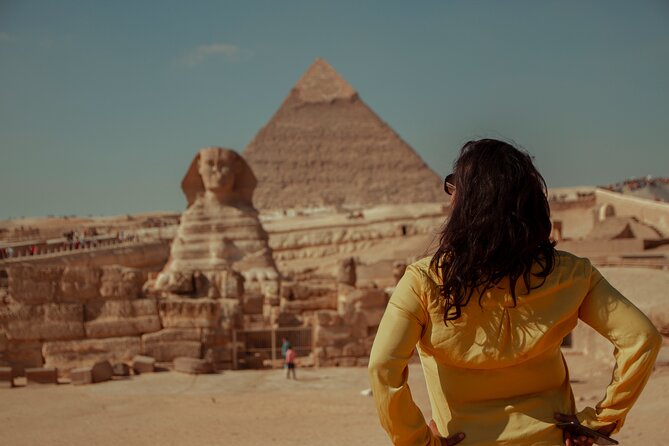
The Great Sphinx is a limestone statue of a reclining sphinx, with a lion’s body and a pharaoh’s head. It faces west to east and is generally believed to represent Khafre.
Even with only about 30 minutes, this stop can feel like the climax of the tour because the Sphinx is so visually commanding. You don’t need a long academic lecture to appreciate it; you need time to step back, look, and compare it to the pyramids.
One practical tip: if you’re there for photos, treat this like a composition stop. Move to a few positions, line up the Sphinx with a pyramid in the background if you can, then stop chasing perfect shots. You’ll have a better overall experience if you save your stamina for later viewpoint time.
Menkaure and Khafre pyramid complexes: what you’re really seeing in 30-minute chunks
After the Sphinx, the tour moves into the Menkaure and Khafre areas. These are not just “more pyramids”—they’re complexes made of several parts, including valley temples, causeways, and mortuary temples.



Menkaure complex
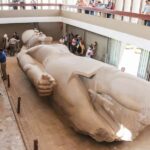
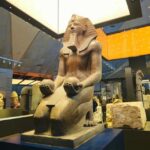
Menkaure’s complex includes a valley temple and other associated structures. The description notes that the valley temple once contained statues and that during the 5th Dynasty a smaller ante-temple was added.
In real-world terms, 30 minutes is enough to notice layout and “function,” even if you’re not going into every detail. You’re using the time to understand the site shape: temples are where people would gather and process, and causeways connect zones. When you see it once, the whole Giza site stops being random.
Khafre complex
Khafre’s complex is described as including the valley temple and the Sphinx temple, along with a causeway and mortuary temple. It also mentions statues found in a well in the valley temple area.
This stop is valuable because it ties directly back to the Sphinx. When you connect the Sphinx to its temple context, your mental picture gets stronger, not weaker. It’s the difference between seeing a statue and understanding why the statue matters here.
Cheops (Khufu) and the Giza Plateau: the view that turns scattered stops into a scene
You’ll also visit the Great Pyramid of Cheops (Khufu) area. The description notes that Khufu’s complex includes valley temple elements and that parts of the site are under later village development, so it’s not a simple “open museum” vibe.
After that, you get time on the Gizeh Plateau and a panoramic view. The plateau is a limestone platform in the Western Desert edge of the Nile Valley and is part of a UNESCO World Heritage setting described as including worker-village elements and industrial complex traces.
Two numbers matter here: the plateau is elevated about 60 meters above sea level, and the whole area is extensive. That scale is why the panoramic viewpoint stop matters. Without it, the day can feel like a checklist. With it, you start seeing why these structures were built where they are.
This is also where you’ll likely feel the temperature most. If you want a “cooling strategy,” this is the time to slow down, take shade where you can, and drink your water. You’ll enjoy the views more if you don’t arrive at the end of the tour already drained.
Entry fees and upgrades: how to judge value beyond the $5 headline
This tour shows a price of $5 per person, which is a tempting hook. But your real value depends on what your chosen option includes, because entry fees are optional and a guide is optional too.
Here’s the way to think about it:
- If you choose the option that includes entry fees, you’re getting the benefit of not having to manage the ticket process during a short day. The information also says entry fees include basic area only.
- If you skip entry fees and handle them yourself, you might save money—but you take on some uncertainty and extra steps while you’re already in the thick of Giza logistics.
- If you add a guide, it can transform a “see the big things” day into a “understand what I’m looking at” day—especially for the temple-complex stops that are easy to overlook.
The guide impact shows up clearly in the experiences shared. Ahmed Hamdy is praised for pacing the trip to group needs and for explaining things clearly, plus helping with photos. Hazem is praised for taking pictures and for steering the group toward quieter places. Tamer is highlighted for being polite, and for making a last-minute booking feel like a win, in part due to how the day was handled.
If you go with just transport and no guide, you’ll still see the highlights. But if you want the site to make sense in a short amount of time, paying for a guide option is usually the smarter value.
One more practical note: tipping isn’t included. That matters for budgeting, even if you keep it simple.
Heat and walking reality check: choosing the right timing and pace
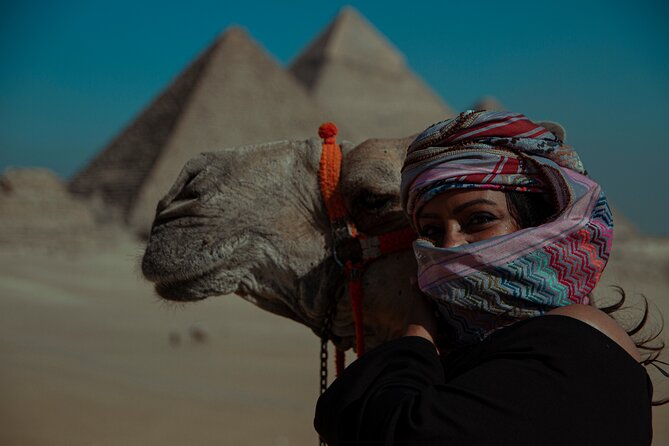
One review summed it up: it’s hot, and you walk a lot. That doesn’t mean the tour is a poor choice. It means you need to treat it like a physical outing and pack for comfort.
The good news: the tour offers choice of departure times to match most body clocks. That’s not just marketing. If you can choose a start time that avoids the worst sun angle for you, you’ll get a calmer, more enjoyable day.
What I recommend you bring (based on the conditions you’ll face, not on promises you can’t verify):
- Comfortable walking shoes you’ve already used
- Sun protection for your face and neck
- A hat or cap
- A small plan for water breaks
Even with air-conditioned transport, you won’t be in the car for most of the experience. So the key is to manage your energy early, not salvage it later.
Who this private Giza tour fits best (and who should think twice)
This is a strong pick if you want:
- Private convenience: only your group, picked up and dropped off at your hotel
- A realistic half-day plan rather than a long, exhausting day
- The option to upgrade with a guide and entry fees
- A photo-friendly approach with pacing that supports you, not just the clock
The tour also gets praise for working well for a family with a one-year-old toddler, suggesting that professional handling and comfort matter, especially when someone needs extra patience.
Who should think twice:
- If you have mobility limits or you hate walking in heat, the short blocks won’t erase the reality that you’re moving around a site.
- If you want in-depth exploration of each complex, four hours can feel short, because the stops are timed and designed to cover multiple areas.
Should you book this Giza Pyramids and Sphinx day tour?
Book it if your priority is smart logistics plus the big icons. You’re getting a private round-trip driver, a tight route across Giza, and upgrades that let you decide how much help you want for entry and context.
Skip it or reconsider if you want a slow, lingering, museum-style experience, or if walking in heat is a deal-breaker for you. In that case, you might be happier with a different format that spends more time on fewer stops.
If you do book, pick your upgrade option based on your style. If you want maximum meaning in minimal time, adding a guide is usually where the extra value goes. If you’re mostly after the visuals and you’re comfortable managing entry, the base approach can still work well.
FAQ
How long is the Giza Pyramids and Sphinx day tour?
The duration is about 4 hours.
Is hotel pickup and drop-off included?
Yes. The tour includes hotel pickup and drop-off, plus private transportation in an air-conditioned vehicle.
Are entrance fees included?
Entry fees are optional. The tour information also notes that admission is included for the stops, but it says entry fees include basic area only and can vary depending on the tour options you choose.
Can I add a guide or lunch?
Yes. You can upgrade to add a guide, entry fees, and a restaurant lunch.
Is this a private tour?
Yes. It’s a private tour/activity, and only your group participates.
What should I expect in terms of comfort and walking?
You should expect to walk at the site and spend most of the experience outdoors, and heat is a real factor. Comfortable, practical clothing and shoes help a lot.