REVIEW · CAIRO
From Hurghada: Day Trip to Valley of the Kings in Luxor
Book on Viator →Operated by Balloons first trip · Bookable on Viator
Luxor in one packed day. You get the big names: Karnak Temple and the Valley of the Kings, plus Colossi of Memnon and Hatshepsut in a single-day loop. It is a lot of walking and a lot of story, which is exactly why a good guide matters on this route.
I like that the tour uses an informative Egyptologist and a guide to connect the monuments into one clear picture. You are not just ticking boxes; you are learning why each site looks the way it does and what it meant in its time.
One drawback to plan around: entry fees and drinks are not included, even though lunch is. So your final day budget can be higher than the headline price.
In This Review
- Key highlights you’ll actually feel
- From Hurghada to Luxor: the day-trip rhythm
- Karnak Temple: the warm-up that makes everything click
- Lunch in Luxor: a real reset mid-day
- Optional felucca ride: a Nile moment without the pressure
- Colossi of Memnon: big stone faces and an instant story
- Valley of the Kings: where the details matter
- Hatshepsut’s Temple: meeting a major female ruler
- What you’re paying for (and what you still need to budget)
- Guide and driving: the difference between a good day and a great one
- Who this Luxor day trip suits best
- Should you book this Luxor day trip from Hurghada?
- FAQ
- How long is the day trip?
- Do you get hotel pickup from Hurghada?
- What major Luxor sites does the tour include?
- Is the felucca ride included?
- Is this tour private or shared?
- What’s included in the price?
- Are entry fees and restaurant drinks included?
- What is the cancellation policy?
Key highlights you’ll actually feel

- Egyptologist + guide: the history is explained in a way that stays tied to what you’re seeing
- Karnak Temple first: start at the temple complex that makes Luxor make sense
- Valley of the Kings focus: you tour the royal necropolis without feeling lost
- Felucca ride is optional: a classic Nile crossing over to the City of the Dead
- Private group setup: only your group joins, so the pace can feel more comfortable
- Lunch included in Luxor: a real break in the middle of a full day
From Hurghada to Luxor: the day-trip rhythm
This is built as a true day trip: pick-up from your hotel in the Hurghada area, then a drive up to Luxor to see the monuments that usually take several visits. It is a long day by nature, so the best mindset is simple: show up ready for early energy, then let the sites do the talking.
The transfers are in an air-conditioned bus, and the tour is designed around convenience: pickup is included, and you receive a mobile ticket. That matters because Egypt’s best sightseeing days can be ruined by logistics. Here, you’re mostly spared the hassle of figuring out timing and transport on your own.
Also, this is not a shared scramble. It is a private tour/activity, meaning it is only your group. That can help you ask questions, adjust walking pace a touch, and keep your day feeling more human and less like a queue.
A few more Cairo tours and experiences worth a look



Karnak Temple: the warm-up that makes everything click
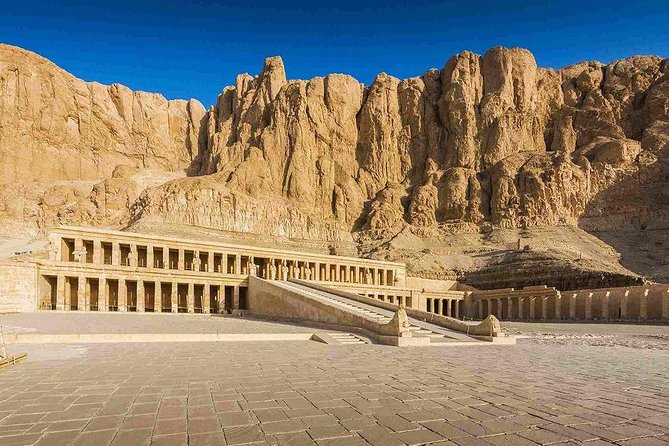
Karnak is one of those places where your first instinct is to look up and keep looking up. This visit is scheduled after you arrive in Luxor, before lunch, so you get to hit the site with fresh attention rather than museum fatigue.
What makes Karnak especially valuable on this itinerary is that it sets context. When you move from Karnak into the rest of Luxor’s monuments, the layout of power and worship starts to feel logical. The Egyptologist-style explanations help you notice patterns you might otherwise miss: how different parts relate to each other, and why the whole complex is more than just a big pile of columns.
A practical note: Karnak can be a heat-and-sun test. Dress light, protect your head, and don’t plan on lingering in one spot too long. Short pauses for photos are great. Extended stops can turn into energy drains fast.
Lunch in Luxor: a real reset mid-day
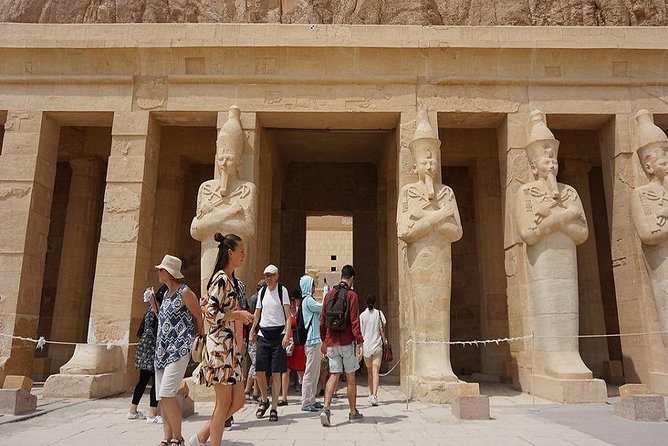
After Karnak, you get lunch at a local restaurant in Luxor. Lunch being included is a genuine value point because it prevents the usual day-trip problem: wandering around hungry while your schedule crawls forward.
Keep expectations realistic. The tour includes lunch, but drinks are not included. If you like a bottled water bottle habit, budget for it. And if you’re sensitive to timing, eat at a steady pace. You want to feel refreshed, not stuffed.
This lunch break also gives you a small chance to regroup mentally. The monuments you’ll see next are darker in mood and grander in scale: the Valley of the Kings and Hatshepsut. A proper meal in between helps you stay sharp for the rest of the day.
Optional felucca ride: a Nile moment without the pressure
One of the classic Luxor add-ons here is the felucca ride, described as optional. If you choose to do it, it is a sailing boat experience typical in Egypt, used to cross the Nile toward the City of the Dead area.
Even though it is optional, I love this kind of interlude because it changes the tempo. After temples and monuments, you get movement, open air, and a brief visual reset. It is not just transport; it is a chance to see Luxor from the river side for a while.
The main consideration is time and comfort. Boat rides can involve sun and wind, and you may be balancing your energy. If you are the type who prefers staying in monument mode, you can skip it. If you want something that feels authentically Egyptian and scenic, it is worth picking.
Colossi of Memnon: big stone faces and an instant story
After the river crossing (if you take it), you arrive at the Colossi of Memnon. These are described as the last remnants of the Temple of Amenophis III, and you see them for what they are: huge stone figures that dominate the area.
What works here is the mental bridge. Standing in front of these colossi, you can grasp scale quickly. Even if the original temple is gone, the surviving statues tell you the ambition and power that once stood behind them. A good guide helps you connect the size to the message—this was not a small-state project.
It is also a nice change from temple walls. Instead of walking through rooms or courtyards, you look at monumental forms and let them anchor the next stops. Think of this as your visual breather before the more intense tomb-focused experience.



Valley of the Kings: where the details matter
The Valley of the Kings is the headline site for many people. Here, you get to see it as part of a route that already gave you context with Karnak and the surrounding Luxor area.
What I like about pairing it with the rest of the day is pacing of meaning. You’re not dropped into a tomb landscape cold. The Egyptologist explanations help you understand what you’re looking at—how royalty was represented, why these tombs were placed where they were, and what the architecture and ornamentation were trying to do.
A practical tip: go in expecting stairs, uneven paths, and a lot of walking. Even when entry varies by what you choose to see inside, the outdoor environment still takes time and energy. If you have mobility concerns, plan to communicate early with your guide so they can help you find a realistic walking rhythm.
Hatshepsut’s Temple: meeting a major female ruler
After the Valley of the Kings, the itinerary includes the Temple of Hatshepsut. This is a big deal for a simple reason: it is tied to one of Ancient Egypt’s female rulers, and it shows up on this route as a must-see stop rather than an optional side interest.
This stop tends to hit differently than tombs. Tombs often feel like final resting places, while Hatshepsut’s temple is about representation, power, and the public-facing version of rule. When you visit it after the Valley, it can feel like you’re switching modes—from the afterlife story to the earthly image-making story.
If you’re the kind of person who likes to compare eras and styles, this part of the day gives you something to chew on. You’ll notice how the monument language changes depending on what it is trying to accomplish.
What you’re paying for (and what you still need to budget)
The price is $43.60 per person, which is a strong entry-point for a day trip that includes pick-up, transfers, lunch, and professional guiding. The private-group setup also matters here. You are not paying just for transport; you’re paying for someone to organize the day and explain what you’re seeing.
But do not assume all costs are included. Drinks at the restaurant are not included, and entry fees for the advertised attractions are listed as not included. That means your final total depends on what you choose to enter and the specific site fees on the day.
Also, the experience notes include an entry-fee note saying admission ticket is free, while the separate included/excluded section says entry fees are not included. That is the kind of mismatch you should resolve at booking. Message the operator before you go, so you don’t arrive expecting entry to be covered and then find out it is not.
Guide and driving: the difference between a good day and a great one
The quality of the day-trip experience often comes down to two things: how the driving is handled and how the history is told. In the feedback for this kind of route, the driving and guiding are repeatedly praised for being friendly and well-organized.
A name that comes up is Mirna, highlighted for knowing her history and explaining it clearly. That is the kind of guide who helps you understand the monuments instead of just watching impressive structures go by.
English communication is also mentioned as a plus in the feedback, which you’ll appreciate if you want answers on the spot. Even with an Egyptologist, a guide who speaks well can make the difference between seeing details and understanding them.
Who this Luxor day trip suits best
This is a good fit if you want Luxor’s top monuments without planning transport, tickets, and timing on your own. It is also a smart choice if you like learning while you walk, since the Egyptologist and guide are part of the package.
It is especially ideal for people staying in or near Hurghada who want a structured day packed with the biggest sites: Karnak Temple, Valley of the Kings, Colossi of Memnon, and Hatshepsut’s Temple.
If you prefer slow travel, deep tomb-by-tomb exploration, or lots of extra museum time, this day trip may feel rushed. But if your goal is to see the Luxor essentials in one organized day, it hits that goal.
Should you book this Luxor day trip from Hurghada?
I’d book this if you want a guided, first-timer-friendly Luxor highlights day with a real history interpreter and a built-in lunch break. The private-group format also makes it feel less stressful than shared tours.
Before you pay, do two quick checks:
- Ask what entry fees you should expect, since the included/excluded info is a bit contradictory.
- Decide early about the optional felucca ride so you can plan your time and energy.
If those boxes are handled, this is a strong-value way to experience Luxor’s most famous monuments without spending your whole trip figuring out logistics.
FAQ
How long is the day trip?
It’s listed as 1 day (approx.).
Do you get hotel pickup from Hurghada?
Yes. Pickup is offered, and you’re collected from your hotel before driving to Luxor.
What major Luxor sites does the tour include?
You’ll visit Karnak Temple, the Valley of the Kings, the Colossi of Memnon, and the Temple of Hatshepsut.
Is the felucca ride included?
The felucca crossing is described as optional.
Is this tour private or shared?
This is a private tour/activity, meaning only your group participates.
What’s included in the price?
Inclusions listed are private tour with private car and your own guide (if option chosen), all transfers in an air-conditioned bus, an informative Egyptologist, a guide, and lunch at a restaurant in Luxor.
Are entry fees and restaurant drinks included?
No. All entry fees to the attractions are listed as not included, and drinks in the restaurant are also not included.
What is the cancellation policy?
You get free cancellation. You can cancel up to 24 hours in advance for a full refund.