REVIEW · ASWAN
Egypt 9 days- Cairo Pyramids and Nile Cruise from Luxor to Aswan and Abu Simbel
Book on Viator →Operated by Here Egypt Tours · Bookable on Viator
Pyramids, temples, and a Nile cruise in one plan. This 9-day trip strings together Cairo’s big hitters with a classic Luxor-to-Aswan cruise, then caps it off with the long-day wow of Abu Simbel. It’s the kind of itinerary that helps you see major sites without turning every day into “how do we get there?”
I particularly like how much is built into the days without feeling random—Giza, Saqqara, Memphis, then Old Cairo stops before you fly to Luxor. I also like the structure of the cruise itself: you get guided temple time, plus downtime on board (pool time, disco/oriental party events), so the vacation doesn’t feel like nonstop marching.
One consideration: the package covers a lot, but it doesn’t include entrance fees or water/drinks, and the Abu Simbel stop can depend on conditions (there’s a stated refund amount if it’s cancelled due to bad weather).
In This Review
- Key points before you go
- Why this Cairo-to-Aswan plan works so well
- Cairo day 1: arriving, settling in, then meeting Egypt’s pace
- Cairo day 2: Giza pyramids, the Sphinx, Saqqara, and Memphis
- Cairo day 3: Egyptian Museum, Khan el-Khalili, and Coptic Cairo
- Day 4: fly to Luxor, then Karnak and Luxor Temple
- Day 5: West Bank Luxor—Valley of the Kings, Hatshepsut, and Colossi of Memnon
- Day 6: Edfu by horse carriage, plus Kom Ombo’s double temple
- Day 7: Abu Simbel day and Aswan highlights (Philae and the High Dam)
- Day 8: wrap-up in Cairo after checking out and flying back
- Day 9: your final morning and departure options
- Price and value: what $1,498 covers (and what you’ll still pay)
- The guide factor: when a great Egyptologist changes everything
- Logistics that affect your comfort (more than you think)
- Who this tour fits best
- Should you book this Egypt Cairo and Nile cruise?
- FAQ
- How long is the Egypt tour?
- Which cities and regions does the tour cover?
- Are flights included?
- Do you include airport transfers?
- Is Abu Simbel included?
- Are entrance fees included?
- Is the Philae motorboat included?
Key points before you go
- 5-star Nile cruise (4 nights) with meals included, plus cruise facilities like a swimming pool
- Door-to-door airport transfers in Cairo, and flights between Cairo, Luxor, Aswan, and back
- Expert Egyptologist guidance on the ground for the major temple days
- A packed Cairo start: Giza pyramids and Sphinx, Saqqara Step Pyramid, Memphis, Museum, Khan el-Khalili, and Coptic Cairo
- Edfu by horse and carriage and the double temple of Kom Ombo during sailing
- Abu Simbel and Philae are big-ticket days, including a note that the Philae motorboat isn’t included
Why this Cairo-to-Aswan plan works so well
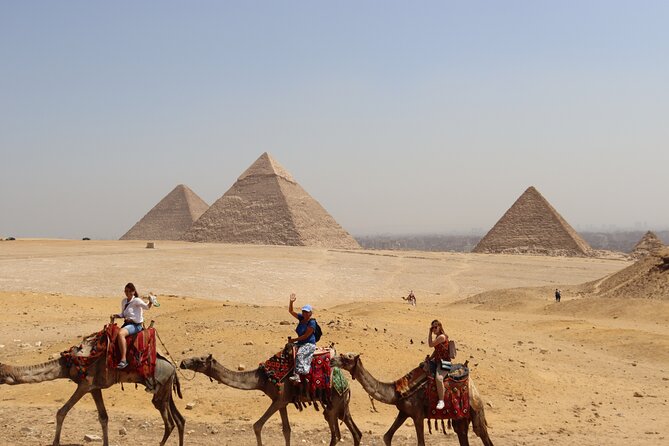
If your goal is to see Egypt’s headline attractions, this route is about as efficient as it gets. You start in Cairo for the iconic skyline views of the Pyramids of Giza and then work through the surrounding “ancient capital” world of Saqqara and Memphis. After that, the trip hands you off to Luxor and the Nile system—so instead of bouncing by car for every mile, you sail and let the geography do the heavy lifting.
The cruise timing matters for sanity. You’re not stuck sightseeing until late every night. Temple days are intense, but the structure gives you a base: check in to the cruise, visit on set days, and still have evenings on board. And yes, you’ll have social events during the cruise (like disco/oriental party nights) if that’s your thing.
Finally, you’re not “alone” in your plan. The tour is set up around qualified Egyptologist guidance, plus private tour guides for the sites listed. That’s a big deal in Egypt, where the difference between seeing stone and understanding stone is often an hour of explanation.
You can also read our reviews of more boat tours in Aswan
- 4-Days Nile Cruise From Aswan To Luxor including Abu Simbel and Hot Air Balloon
★ 5.0 · 3,142 reviews

Cairo day 1: arriving, settling in, then meeting Egypt’s pace
On arrival, you’re met to handle formalities and transferred straight to your Cairo hotel. That first transfer sounds basic, but it’s actually one of the most valuable parts of the whole deal—when you land tired, the last thing you want is figuring out transportation while you’re already jet-lagged.
Then you’re given an overnight in Cairo, which sets you up for an early, full day the next morning. You’re working with an itinerary that expects you to move quickly, so having that first night to reset is part of the value.
Cairo day 2: Giza pyramids, the Sphinx, Saqqara, and Memphis
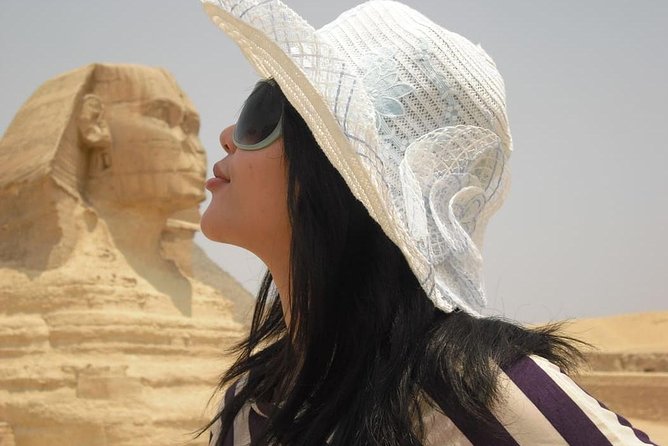
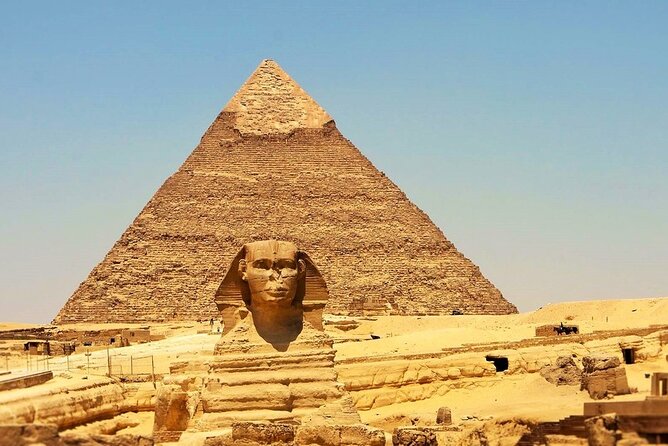
This is the day most people come for. You start with the Pyramids of Giza and the Sphinx. The highlight is not just looking from the outside—it’s the chance to explore the Great Pyramid and also go inside the queen pyramid (as offered in the tour description). That kind of access changes the experience; you stop thinking of pyramids as scenery and start seeing them as engineered spaces.
You’ll also have time for photos and views—because the reality is, you can’t come all the way to Giza and skip the picture part. After Giza, the day shifts to the Saqqara Step Pyramid (Djoser/Zoser). This is a smart pairing: the pyramids at Giza are apex icons, while Saqqara shows the older evolutionary form, built as a development from earlier mud-brick structures.
Then you roll onward to Memphis, described as Egypt’s first capital. Even if you only spend time seeing ruins and stone fragments, the point is to connect the dots between ruling centers and the monuments that followed them.
Practical tip: this is a long temple day. Wear shoes you can walk in for hours, and keep a water bottle handy (since water/drinks aren’t included).
Cairo day 3: Egyptian Museum, Khan el-Khalili, and Coptic Cairo
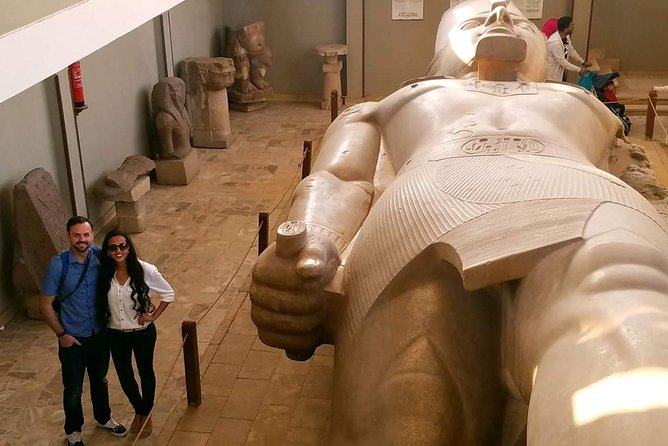
After pyramids-and-stone, Cairo turns cultural. You’ll visit the Museum of Egyptian Antiquities (the Egyptian Museum), which is noted for an enormous collection (with many items in storage and a representative amount displayed). The value here is timing and guidance: the museum can be overwhelming if you’re left to wander. With a guide, you get a path through the chaos.
Next comes Khan el-Khalili, a major souk in historic Islamic Cairo. This is where you get the atmosphere of old Cairo life—snack smells, shop rhythms, and the kind of street scene that makes your photos feel like a story instead of a postcard.
Then you head to Coptic Cairo, covering sites such as the Babylon Fortress, the Coptic Museum, and churches including the Hanging Church and the Greek Church of St. George. The tour framework also mentions the tradition of the Holy Family visiting this area. Even if your focus isn’t religion, it’s a powerful contrast to the pharaoh world you’ve been seeing.
Day 4: fly to Luxor, then Karnak and Luxor Temple
Early on Day 4 you transfer to the airport for your flight to Luxor. Luxor is where the ancient world feels closer because the temples sit right in the modern city’s shadow.
Once you arrive, your guide is waiting with a sign by your name—small detail, but it reduces stress fast.
On the east bank, you’ll see Karnak Temple, described as dedicated primarily to Amun and dating back as early as 2000 BC. Then you go to Luxor Temple, constructed around 1400 BCE and tied to “southern sanctuary” in its Egyptian name. These two stops work as a team: Karnak is scale and density, while Luxor Temple is more approachable in the way it reads as a coherent sacred space.
By lunch time, you check into the Nile cruise, then you rest and refresh. There’s also an evening disco event on board. I like this because it gives you a gentle start—Luxor can feel intense on arrival, but the cruise evening helps you land.
- 4-Days Nile Cruise From Aswan To Luxor including Abu Simbel and Hot Air Balloon
★ 5.0 · 3,142 reviews


Day 5: West Bank Luxor—Valley of the Kings, Hatshepsut, and Colossi of Memnon
The big shift on the cruise is crossing to the west bank. This is where the itinerary leans into the “Indiana Jones” imagination people arrive with—Valley of the Kings, plus the west bank memorial landscape.
You’ll visit the Valley of the Kings (also called the Valley of the Gates of the Kings). It’s part of the Theban necropolis and laid out in two valleys (east and west). Your guide’s role matters here because it’s easy to look at rock walls and miss what you’re seeing.
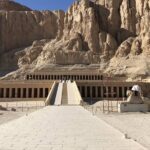
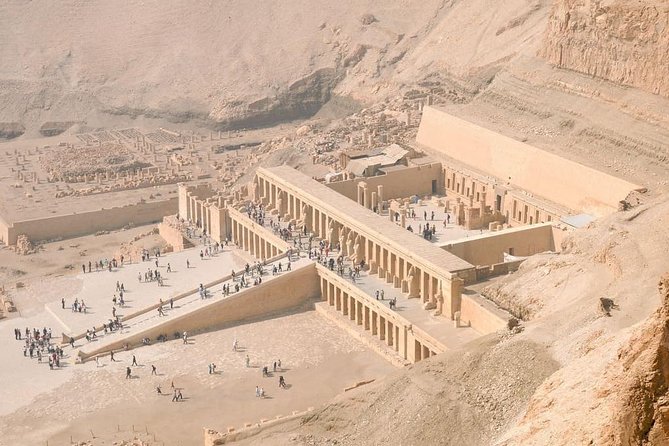
Then comes the Mortuary Temple of Hatshepsut, described as built for the 18th Dynasty pharaoh Hatshepsut, on the cliffs at Deir el-Bahari near the valley. After that, you see the Colossi of Memnon—two massive statues of Pharaoh Amenhotep III that have been standing for thousands of years.
One note: this is a day with a lot of walking and heat exposure. Your cruise schedule typically builds in sailing and down time later, but you still want to move efficiently. Light layers help because temple mornings and afternoon sun can feel very different.
Day 6: Edfu by horse carriage, plus Kom Ombo’s double temple
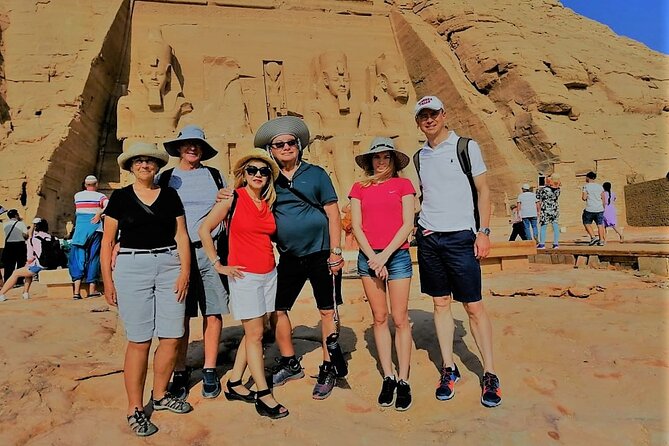
Day 6 continues the classic Nile rhythm: breakfast, then temple time, then sailing.
First up is the Temple of Horus at Edfu, described as one of the most beautiful and preserved temples in Egypt. The tour includes a horse and carriage ride to reach the temple area. It’s not only a cute transport detail; it also changes the pace. You’re not just in a vehicle racing between points—you’re passing through the day’s human-scale scenery.
As you sail, you’ll stop for local Egyptian tea on the cruise sun deck. That’s a small included comfort that helps the cruise feel like more than transportation.
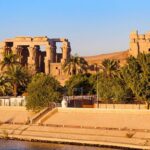
Later in the day you visit Temple of Kom Ombo, described as an unusual double temple with two halves: the southern half dedicated to the crocodile god Sobek, and links to other deities. The itinerary frames it around the Ptolemaic period, which helps explain why the temple reads different from earlier pharaonic forms.
Day 7: Abu Simbel day and Aswan highlights (Philae and the High Dam)
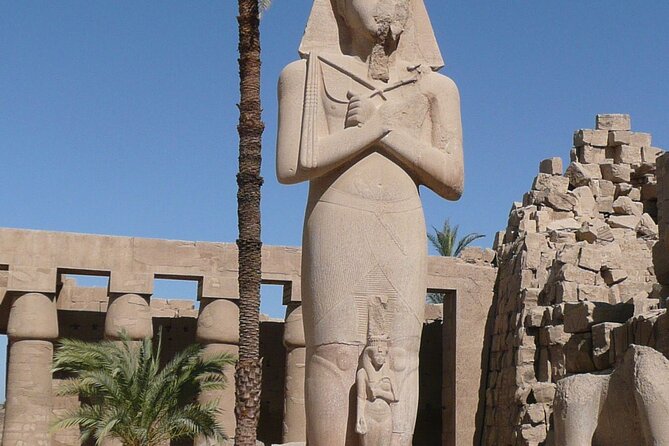
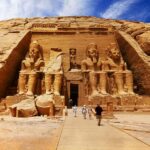
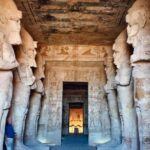
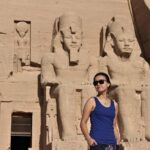
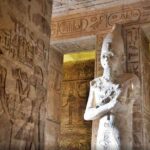
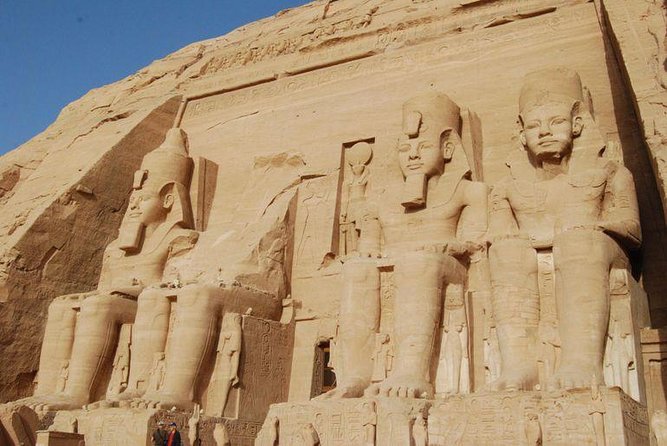
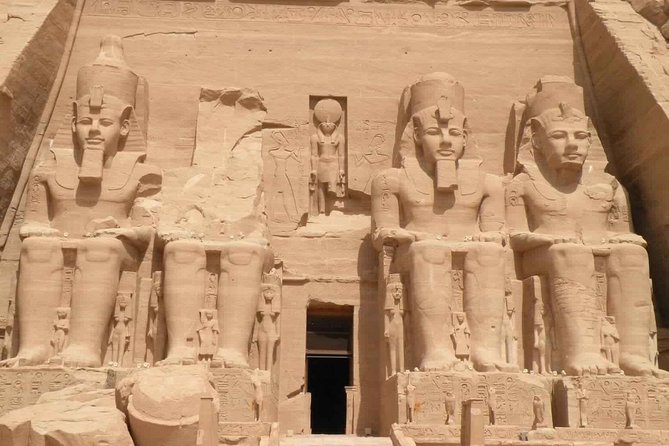
This is the most demanding day on the cruise because of the distance. The itinerary includes Abu Simbel, two massive rock temples near the border with Sudan on the west bank of Lake Nasser. It’s the kind of site that people remember for life because it’s dramatic on arrival and hard to believe it exists where it does.
Then you head back to Aswan. Your lunch is onboard, and you’re given time to rest and refresh—important, because Abu Simbel can be physically tiring even if it’s emotionally thrilling.
After that, you visit Philae, an island in the Aswan Low Dam reservoir downstream of the Aswan Dam. The tour notes that Philae was originally located near the First Cataract and that there’s a temple complex there. One practical detail: the tour data says the motorboat to Philae Temple isn’t included, so you should plan for that extra cost on the day.
Finally, you see the Aswan High Dam. This is where you connect ancient Egypt to modern engineering and the Nile’s current life. It’s a totally different kind of “monument,” but it helps the whole story feel less like isolated sightseeing.
Evening brings an oriental party on board, which is a nice touch if you want a cultural vibe without needing extra planning.
Day 8: wrap-up in Cairo after checking out and flying back
After breakfast on the cruise, you check out and fly back to Cairo. When you arrive, you’re transferred to a hotel for relaxing, with an overnight in Cairo.
This day is intentionally lower pressure. You’ve already done the heavy lifting—Cairo sights, Luxor east bank, Luxor west bank, plus two major temple stops from the cruise. That rest day makes the final day feel like a clean finish instead of a forced sprint.
Day 9: your final morning and departure options
You’ll have breakfast, then you can transfer in comfort either to your destination in Cairo or to Cairo International Airport for departure.
If you’re the type who wants last photos at golden hour, this final flexibility can help. It’s a better feeling than being locked into a fixed departure time with no buffer.
Price and value: what $1,498 covers (and what you’ll still pay)
At $1,498 per person, this isn’t a budget sampler. It’s priced as a mid-to-full value package built around convenience: flights, cruise accommodations, and guided temple days.
Here’s what you’re getting for the money, based on what’s included:
- 4 nights on a 5-star Nile cruise with all meals as in the itinerary
- 4 nights in 5-star hotels in Cairo with breakfast
- Flights Cairo/Luxor/Aswan/Cairo
- Door-to-door transfers from and to Cairo International Airport (and Cairo hotels on request)
- Qualified Egyptologist guide and guided visits to the listed major sites
- Abu Simbel trip
- A set of included activities like horse and carriage in Edfu, plus temple visits at Edfu and Kom Ombo during sailing
- Cruise facilities including a swimming pool
What’s not included:
- Entrance fees
- Water or drinks
- Motorboat to Philae Temple
- Gratuities
- Wi-Fi on the cruise or hotel (extra charge)
So the value equation depends on you. If you hate coordinating logistics—especially flights, internal transfers, and guide timing—this package earns its keep. If you’re a stone-cold “I’ll handle everything myself” traveler, you could potentially pay less by building it solo. But in Egypt, the time you save (and the stress you avoid) often becomes worth the added cost.
The guide factor: when a great Egyptologist changes everything
One of the highest-praised parts of this kind of tour is the guide. In the provided feedback, names like Mohammed Wafa and Mahmoud are called out for making the history feel alive and for answering questions without rushing. On the cruise, guides such as Ahmed and Zakarya are also praised for being friendly, helpful, and genuinely on top of the details.
Even without a famous name attached to your day, the structure matters: Egypt’s timelines and symbolism can be confusing fast. A good guide helps you see why Karnak’s layout matters, why Hatshepsut is a big deal, and what you’re really looking at when you stand in a tomb valley.
If you’re choosing between tours, treat the guide quality as part of the price, not an extra.
Logistics that affect your comfort (more than you think)
This isn’t a small group cram session. The tour notes a maximum of 20 travelers, which usually keeps things organized while still letting you find your rhythm.
Also, you’ll move between Cairo and the Nile with multiple flights. That’s convenient, but it means packing smart matters. Bring travel documents, keep essentials in a day bag, and plan for hot walking on temple days.
One more thing: the tour description notes that cruise schedules and sailing times can sometimes update due to conditions. In real life, that can mean your order shifts slightly. The good news is the itinerary still targets all the listed highlights.
Who this tour fits best
Choose this tour if you want:
- Major sites in one trip without planning every leg
- A guided approach that helps you interpret what you’re seeing
- A classic cruise feel with temple days plus time to relax on board
- Comfort perks like door-to-door transfers and 5-star stays
You might want to reconsider if:
- You’re sensitive to long days in heat and walking
- You strongly prefer total independence and minimal structure
- You already know you’ll skip guided explanation and just want photos (in that case, paying for guided time may feel wasted)
Should you book this Egypt Cairo and Nile cruise?
I’d recommend it if your priority is coverage with less hassle. This itinerary does the core “Egypt greatest hits” sequence—Giza and Sphinx, Saqqara and Memphis, Cairo’s major cultural stops, then Luxor east bank, Valley of the Kings, Edfu and Kom Ombo, the big distances to Abu Simbel, and the Aswan classics like Philae and the High Dam—all while keeping your logistics handled.
Before you book, do one reality check: entrance fees and drinks aren’t included, and Philae may require an additional motorboat cost. If you budget for those basics and you like having an Egyptologist guide you through the sites, this is a strong value way to experience Egypt in a single, well-structured sweep.
FAQ
How long is the Egypt tour?
The tour is listed as 9 days (approximately).
Which cities and regions does the tour cover?
It covers Cairo, Luxor, and Aswan, plus the Abu Simbel area.
Are flights included?
Yes. Flights are included for Cairo/Luxor/Aswan/Cairo.
Do you include airport transfers?
Yes. The tour includes door-to-door transfers from and to Cairo International Airport, and also from Cairo hotels upon request.
Is Abu Simbel included?
Yes, the Abu Simbel trip is included. If the trip is cancelled due to bad weather, the tour data states a $30 USD per person refund.
Are entrance fees included?
No. Entrance fees are listed as not included.
Is the Philae motorboat included?
No. The motorboat to Philae Temple is listed as not included.
You Might Also Enjoy


More Boat Tours & Cruises in Aswan
- 4-Days Nile Cruise From Aswan To Luxor including Abu Simbel and Hot Air Balloon
★ 5.0 · 3,142 reviews
More Tour Reviews in Aswan
- 4-Days Nile Cruise From Aswan To Luxor including Abu Simbel and Hot Air Balloon
★ 5.0 · 3,142 reviews