REVIEW · ASWAN
Aswan: Luxor Day Trip with Sunrise Hot Air Balloon & Felucca
Book on GetYourGuide →Operated by Nice Tours · Bookable on GetYourGuide
Sunrise over Luxor feels like time travel. I like the sunrise hot air balloon over the West Bank, with your Egyptologist guiding you from the start after a quick stop for Egyptian tea. It sets the tone: quiet, early, and totally different from the usual daytime temple rush.
I also like how the day stacks Valley of the Kings tombs and the East Bank temples into one logical circuit, with clear explanations from experts such as Marwa fatafeat elsoker or Ahmed Anwer. The only real consideration is pacing: the day runs long, and if balloon conditions turn bad, you may lose that sunrise flight and spend more time on the ground.
In This Review
- Key Things to Know Before You Go
- What This Luxor Day Trip Really Includes (and Why It’s Worth $260)
- Sunrise Hot Air Balloon Over Luxor’s West Bank: Early Quiet, Big Feelings
- Valley of the Kings: Why the Tomb Walls Still Matter
- Hatshepsut’s Temple: Three Levels, One Female Pharaoh’s Message
- Deir el-Medina (Valley of the Workers): The Human Side of Royal Tombs
- Colossi of Memnon: A Monument That Feels Like a Portal
- Lunch and the Nile Felucca Ride: The Best Reset in the Middle of the Day
- Karnak Temple and Luxor Temple: The East Bank’s Two Moods
- Price and Logistics From Aswan: How to Handle a Long, Full Day
- Who This Trip Is Best For (and Who Might Want a Different Plan)
- Should You Book This Aswan to Luxor Day Trip?
- FAQ
- Is the balloon ride included in the price?
- How long is the trip from Aswan to Luxor?
- What’s included besides the balloon?
- Are entrance fees included?
- What sites will I visit on Luxor’s West Bank?
- What sites will I visit on Luxor’s East Bank?
- How does pickup work if I’m not staying in central Aswan?
- What should I bring for the day?
Key Things to Know Before You Go

- Balloon-first start: sunrise flight over Luxor’s West Bank, then you transition straight into tombs and temples
- Three tombs in the Valley of the Kings: focused visits with hieroglyphs tied to afterlife beliefs
- Hatshepsut’s Temple in limestone terraces: a dramatic three-level design and statues connected to Osiris
- Deir el-Medina’s unusual Final Judgement carvings: a rare look at how people pictured judgment day
- Karnak plus Luxor Temple: big sweeping ritual spaces, then a more intimate (but powerful) state-temple feel
- Felucca on the Nile after lunch: a slow reset between the West and East Bank sites
What This Luxor Day Trip Really Includes (and Why It’s Worth $260)
You’re paying for a full, high-impact day that connects three big “pillars” of Luxor: the West Bank tomb world, the East Bank temple world, and a Nile boat to break up the intensity. When you add in hotel pickup and drop-off from Aswan, a private air-conditioned vehicle for the long drive, an English-speaking Egyptologist-style guide, lunch, and snacks with Egyptian tea, the price starts to make practical sense.
This is not a “wander at your own pace” day. It’s an organized, interpretation-heavy plan. If you like learning while you walk—especially about symbols, burial ideas, and how pharaohs used temples and monuments to project power—you’ll feel like the day moves efficiently.
That long day is also the trade-off. Luxor’s highlights are spread out across banks and entrances, so you’re going to spend time in the vehicle as you go, even though the comfort is handled well.
You can also read our reviews of more tours and experiences in Aswan.
- 4-Days Nile Cruise From Aswan To Luxor including Abu Simbel and Hot Air Balloon
★ 5.0 · 3,142 reviews

Sunrise Hot Air Balloon Over Luxor’s West Bank: Early Quiet, Big Feelings
The experience begins before most of Luxor is awake. You’ll get picked up in Aswan, travel toward Luxor, then meet your guide at a café where you can try Egyptian tea before the flight. That small moment matters. It helps you shift from travel mode into “this is happening now” mode.
Once you’re in the balloon, the magic is the perspective. You’re drifting over the archaeological zone while the light changes fast. From the air, the West Bank isn’t one block of ruins. It’s a pattern—valleys, temple shapes, and a spread of sites that makes the whole area feel intentionally planned, not random.
On a personal note, I like balloon days because you get the rare combination of calm and wow. You’re not just seeing a monument; you’re seeing how the region sits in the broader geography around Luxor.
Reality check: the balloon is weather-dependent. One booking reported the sunrise balloon ride being canceled due to bad conditions, and the rest of the day shifted accordingly. If sunrise flying is your top priority, keep some flexibility in your expectations.
Valley of the Kings: Why the Tomb Walls Still Matter
After you land, the day turns serious in the best way. The first major stop on the West Bank is the Valley of the Kings, where you’ll explore three important tombs. The key here isn’t quantity. It’s what the tombs represent.
You’ll see walls covered with hieroglyphs, and your Egyptologist guide will connect the text to what Ancient Egyptians believed about the afterlife. That context changes everything. Without it, hieroglyphs can feel like decoration. With it, they feel like a plan—an organized set of ideas meant to protect, transform, and carry someone into the next world.
A practical tip: wear comfortable shoes. Even when the route isn’t extremely long, tomb interiors can be cool and the steps can add up. And bring sunglasses or a hat—light outside can be strong even when you start early.
Hatshepsut’s Temple: Three Levels, One Female Pharaoh’s Message
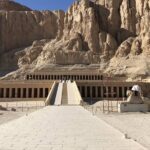
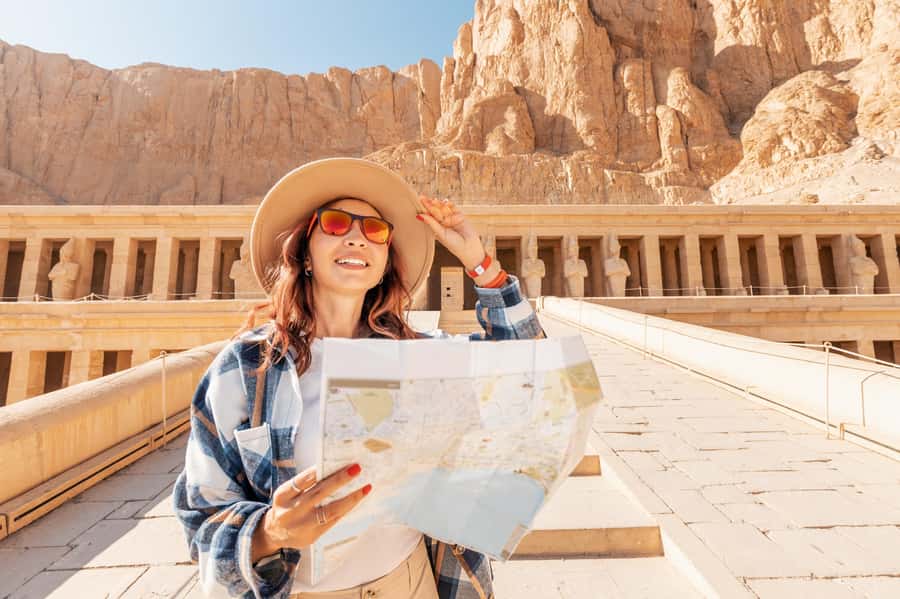
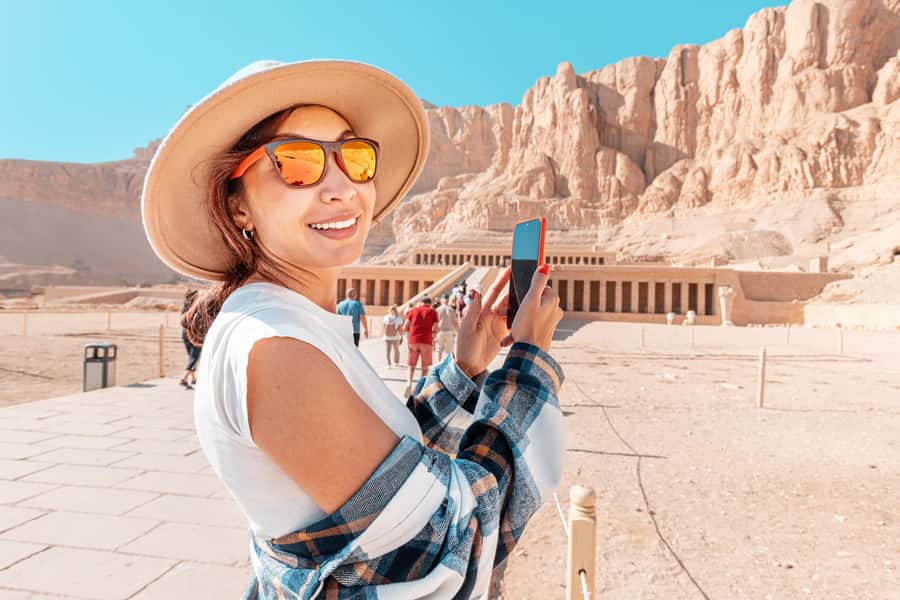
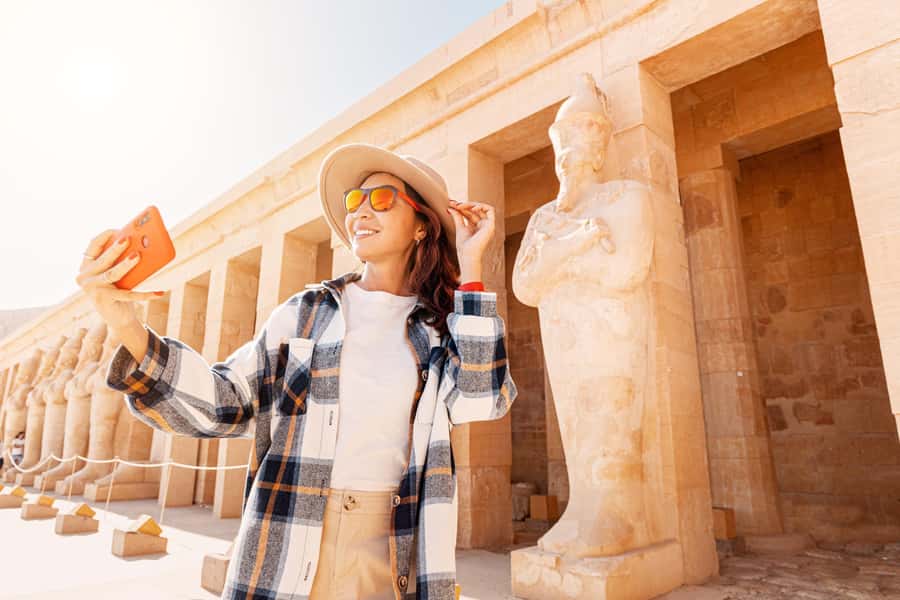
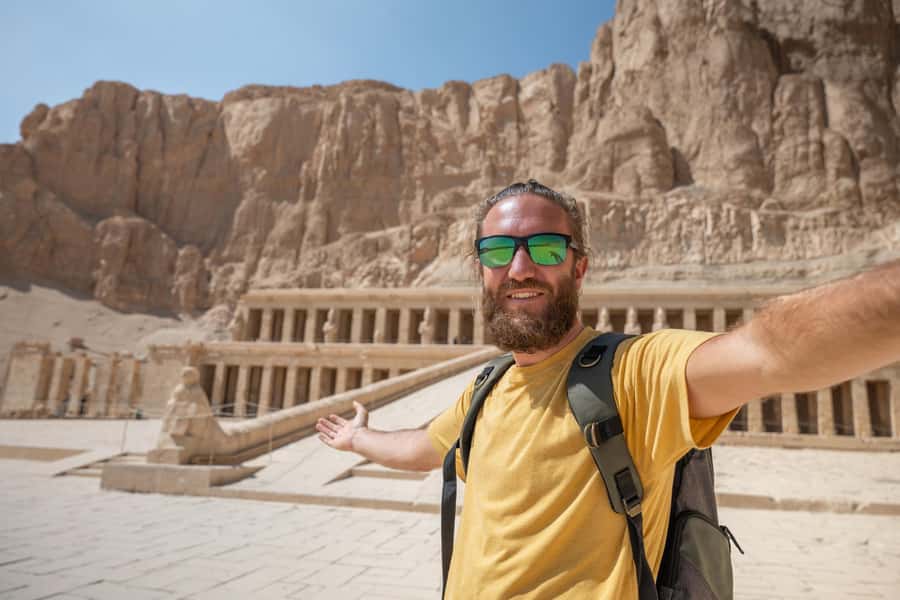
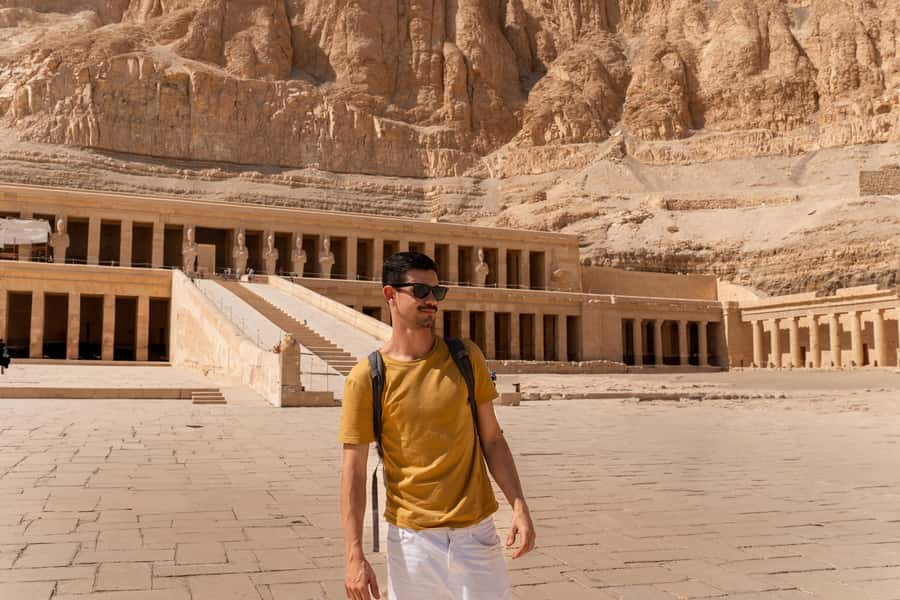
Next comes one of Luxor’s most memorable ruins: the Temple of Hatshepsut. This isn’t just a temple. It’s a statement in stone. The site is built across three floors, with open balconies cut from limestone, and it includes statues connected to Osiris as well as Queen Hatshepsut herself.
Hatshepsut is especially compelling because she was the only female pharaoh mentioned in the tour’s focus. When your guide points out what she was trying to communicate, the temple stops being a pretty backdrop. It becomes political theater—proof that power could be claimed, represented, and preserved through architecture.
If you like photos, this is one of your best stops for angles. Those terraces create natural layers, so you’ll get a sense of depth that’s harder to find in some other sites.
Deir el-Medina (Valley of the Workers): The Human Side of Royal Tombs
Then you shift from royal royalty to the people who built it: Deir el-Medina, also known as the Valley of the Workers. This is where artisans and workers connected to the royal tombs would live.
Your guide will likely frame it as the support system behind the grand tomb projects. Instead of only looking at kings and queens, you start seeing everyday specialists—people who had skills, routines, and their own sacred spaces.
The temple stop here includes something unusual: the Temple of Deir el-Medina is dedicated to Hathor, and it’s described as the only temple in Egypt where you can see carvings of the Final Judgement. That’s a big deal if you care about what Egyptians thought would happen to souls. It also gives your day a thematic thread: afterlife ideas first in the Valley of the Kings, then judgment imagery at Deir el-Medina.
A few more Aswan tours and experiences worth a look


Colossi of Memnon: A Monument That Feels Like a Portal
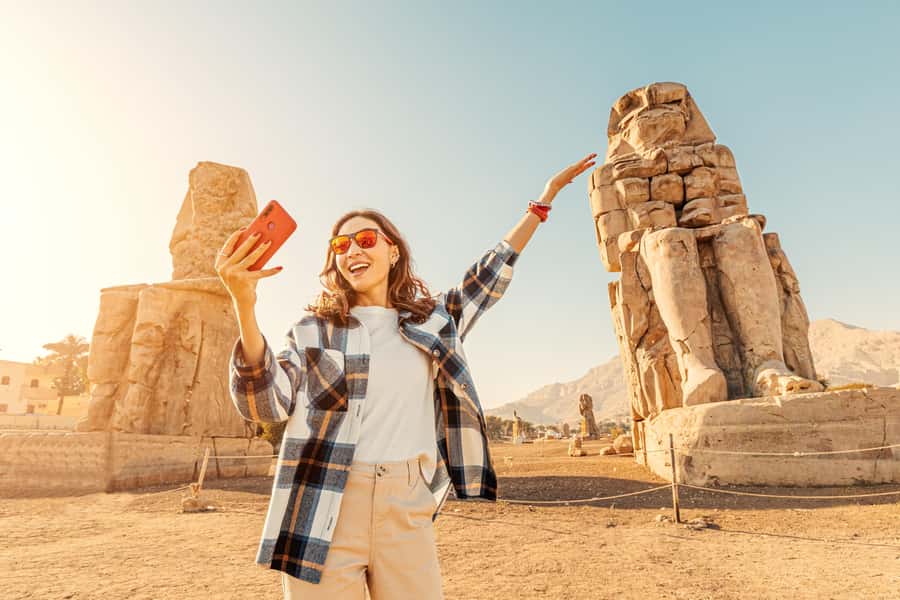
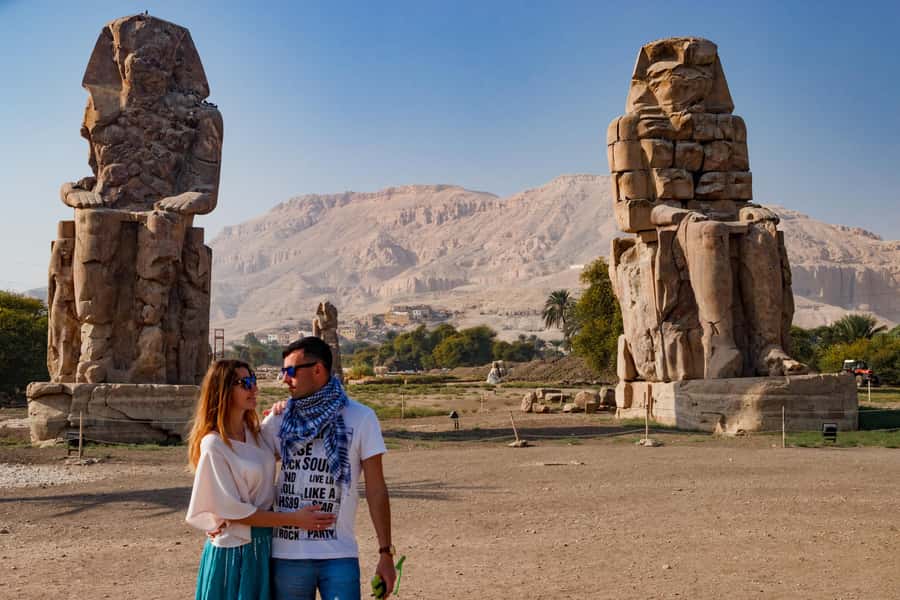
The next stop is the Colossi of Memnon, connected with the mortuary temple of Amenhotep III. You’ll see huge seated statues—one of those scenes that makes even serious museum lovers pause.
What I like here is the contrast. After the text-heavy tomb walls, you get massive sculptural forms. Instead of reading hieroglyphs, you’re responding to scale and posture. It’s a reminder that Egyptians didn’t only tell stories in ink and carvings. They built them into stone and dimension.
This stop can be brief compared to the temples and tombs, so use it as a photo-and-thought break. Look at the edges, the way the statues sit, and how they anchor the rest of the West Bank experience.
Lunch and the Nile Felucca Ride: The Best Reset in the Middle of the Day
By lunch time, your feet and brain have both earned a breather. Lunch is included at a local restaurant, and the day is designed so you eat before the boat ride.
Then comes the felucca ride on the Nile River. This is one of the smartest parts of the itinerary because it slows your pace. Temples and tombs demand attention. The Nile boat asks for a different kind of focus: watching the water move and noticing the river corridor as part of the real-world setting for the monuments.
After the felucca, you cross back over to the East Bank. That timing matters. It helps you psychologically switch from “West Bank burial landscapes” to “East Bank power temples” without feeling like you’re rushing straight from stone to stone.
Karnak Temple and Luxor Temple: The East Bank’s Two Moods
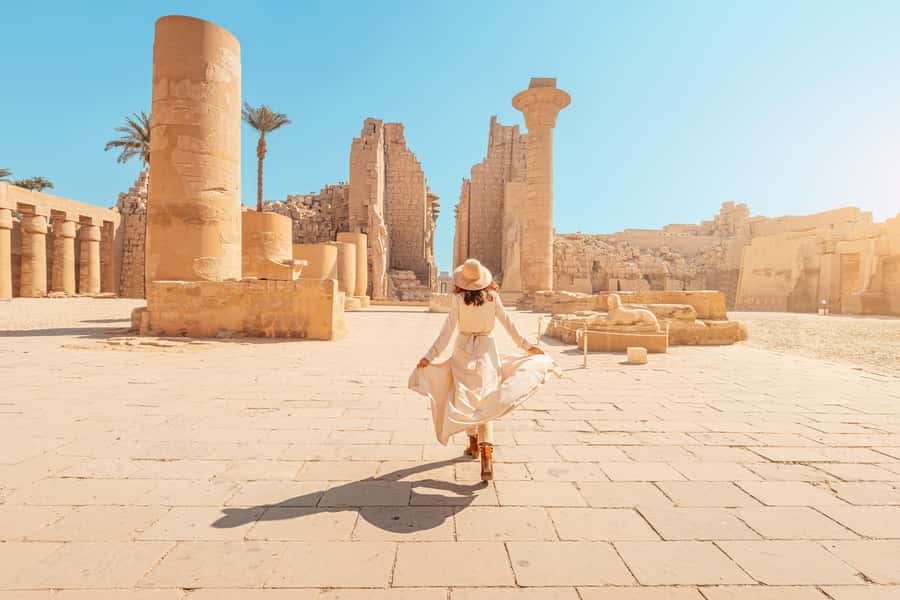
Now you get to the big, recognizable centerpiece: Karnak Temple. This is the largest temple in Luxor, dedicated to Amun and his family. You’ll walk along the avenue of sphinxes to enter, and then you’re hit by towering columns and decorated walls.
Karnak can feel overwhelming if you’re wandering alone. With a guide, it becomes easier to follow. Your guide can explain how the temple was shaped over time—started by Amenhotep III and completed by Ramses II—so the site starts feeling like layers of decisions rather than one static ruin.
Then you move to Luxor Temple, which is smaller than Karnak but still hits hard. It’s connected to Ramses II as well, including massive statues flanking the entrance. The feeling here is more intimate than Karnak, but the message is still the same: pharaohs used sacred spaces to display strength and continuity.
If you want one day to understand how Luxor worked, this pairing is a practical choice. Karnak shows a huge ceremonial machine. Luxor Temple shows another piece of the state-temple story, closer to the visitor eye.
Price and Logistics From Aswan: How to Handle a Long, Full Day
This day trip is listed at 12 hours, with the travel time between Aswan and Luxor described as about 3 hours each way by private air-conditioned vehicle. In practice, that means you’ll be moving early, doing a lot of walking, and staying alert through a full sequence of sites.
One booking reported extra return time due to changes in roads and transport routing, and that can happen on any busy international corridor. Another booking had the balloon canceled for weather. Neither of those issues is under your control, but both are exactly the kind of things that can shift the “perfect timeline.”
So here’s my practical advice: plan for this as a highlight day, not a day to cram in other plans later. Bring cash, because you might want small extras along the way. And pack comfort basics: sunglasses, a sun hat, and comfortable clothes and shoes. The included snacks and Egyptian tea help, but they don’t replace good planning for heat and walking.
Who This Trip Is Best For (and Who Might Want a Different Plan)
You’ll probably love this if:
- You want a big hit of Luxor from Aswan without juggling multiple days
- You care about meaning, not just visuals—especially afterlife beliefs and how tomb art connects to those ideas
- You’re excited by the sunrise balloon and want it paired with temple touring, not done separately
You might want a slower option if:
- You get cranky with long car days and early starts
- You need an itinerary that’s guaranteed balloon-proof (weather can change that)
- You prefer fewer stops with longer breaks between them
This is a strong match for couples, history-minded solo travelers, and anyone who likes structured touring with a private, English-speaking guide.
Should You Book This Aswan to Luxor Day Trip?
I’d book it if you want one day to cover Luxor’s most iconic ideas: burial, judgment, royal power, and the Nile’s calm. The combination of a sunrise balloon, Egyptologist-led tomb and temple time, a felucca reset, and included meals adds up to more than just a checklist.
Just go in with the right expectations. The schedule is full, and weather can change the balloon plan. If you can roll with that, you’ll come away with the kind of Luxor understanding that’s hard to get from a quick stop.
FAQ
Is the balloon ride included in the price?
Yes. A hot air balloon ride is included as part of this experience.
How long is the trip from Aswan to Luxor?
The duration is listed as 12 hours.
What’s included besides the balloon?
You get an English-speaking guide, hotel pickup and drop-off, hot air balloon ride, felucca ride, lunch, and snacks with Egyptian tea. The plan also includes site visits and skip-the-ticket-line entry where applicable.
Are entrance fees included?
Entrance fees are included if the entrance-fees option is selected.
What sites will I visit on Luxor’s West Bank?
You’ll visit the Valley of the Kings (three tombs), the Temple of Hatshepsut, Deir el-Medina (with its Hathor-dedicated temple and Final Judgement carvings), and the Colossi of Memnon.
What sites will I visit on Luxor’s East Bank?
You’ll visit Karnak Temple and Luxor Temple.
How does pickup work if I’m not staying in central Aswan?
Pickup is included from Aswan hotel pickup. There is an extra cost if pickup is needed from certain locations like Gharb Soheil, the island, Nagaa al-Mahatta, or New Aswan.
What should I bring for the day?
Bring comfortable shoes, sunglasses, a sun hat, comfortable clothes, and cash.
You Might Also Enjoy

More 1-Day Tours in Aswan
More Tour Reviews in Aswan
- 4-Days Nile Cruise From Aswan To Luxor including Abu Simbel and Hot Air Balloon
★ 5.0 · 3,142 reviews