REVIEW · CAIRO
3 Night 4 Day Luxor and Aswan Nile Cruise From Aswan
Book on Viator →Operated by SK Tours · Bookable on Viator
That first Nile sunrise changes your whole trip. This 3-night Luxor and Aswan Nile cruise blends must-see Upper Egypt temples with a 5-star ship feel, guided by an Egyptologist. I also like that the experience is built around easy port transfers so you spend less time figuring out logistics. One drawback to plan for: entrance fees aren’t included, so you should budget for them before you go.
If you want a lot of Egyptian “big names” in a short time, this route delivers. You’ll move from Aswan’s famous sites to Edfu and Kom Ombo, then end in Luxor with the Valley of the Kings, Hatshepsut, Memnon, and the temple complexes. The pacing is solid, but it’s still a guided program, so expect long days that start early and end late.
In This Review
- Key highlights worth knowing before you book
- Why an Aswan-to-Luxor Nile cruise is a smart way to see Egypt
- Price and logistics: what $350 gets you (and what it won’t)
- Day 1 in Aswan: Philae, the High Dam, and the Unfinished Obelisk
- Temple of Philae: the island temple story
- Aswan High Dam: engineering that reshaped daily life
- Unfinished Obelisk: when you see the work, not just the finish
- Felucca sail time: why it’s worth making room for
- Day 2 in Edfu and Kom Ombo: Horus, the double temple, and a smoother rhythm
- Edfu’s Temple of Horus: huge, intact, and very “Egypt”
- Kom Ombo: the unusual double temple
- Day 3 in Luxor: Valley of the Kings, Hatshepsut, and Memnon’s statues
- Valley of the Kings: burial power and elite secrecy
- Temple of Hatshepsut at Deir el Bahari: three terraces of ambition
- Colossi of Memnon: monumental and a little mysterious
- Day 4 in Luxor: Luxor Temple and Karnak’s sprawling complex
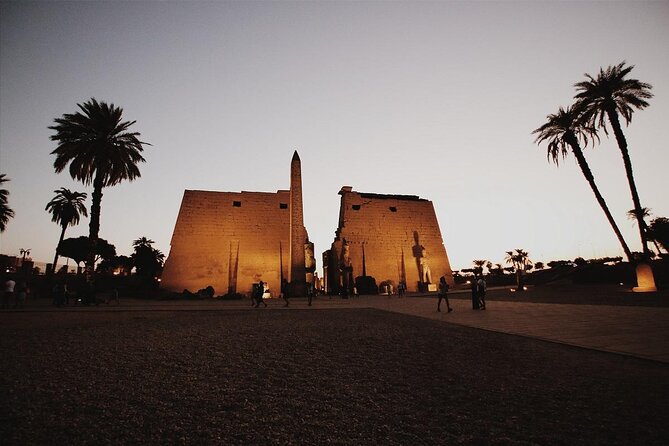
- Luxor Temple: central sanctuary energy
- Karnak Temple Complex: where “a temple” becomes a whole world
- The “5-star ship” and included meals: what to expect without hype
- Egyptologist guide quality: the big reason the trip works
- Who should book this Aswan and Luxor cruise?
- Should you book this Nile cruise from Aswan?
- FAQ
- Where does this tour start?
- What time does the tour start?
- How long is the cruise?
- Are entrance fees included?
- What meals are included?
- Does the tour include transfers?
- Is there a vegetarian option?
- What’s the refund timeline if plans change?
Key highlights worth knowing before you book
- A real Egyptologist guide on the major sites, not just a driver with a playlist
- Door-to-door port transfers that cut down the Cairo-style headache factor
- Philae, High Dam, and the Unfinished Obelisk in Aswan before you cruise out
- Edfu + Kom Ombo as two very different temple experiences
- Valley of the Kings, Hatshepsut, and Karnak for your Luxor “greatest hits”
- Buffet meals included across breakfasts, lunches, and dinners on board
Why an Aswan-to-Luxor Nile cruise is a smart way to see Egypt
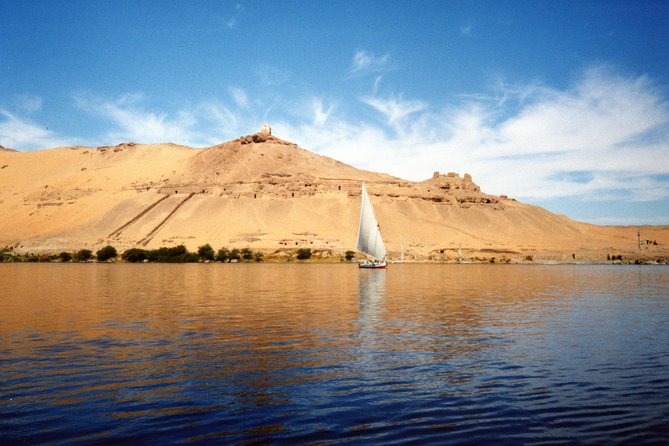
There’s a reason people keep coming back to the Nile: it turns history into something you can feel in real time. Day trips alone can turn exhausting fast—long drives, backtracking, and more waiting around than sightseeing. On this cruise, the boat becomes your base. You wake up, eat, tour, and then slide back toward the next highlight while the scenery changes outside your window.
This is also a practical way to hit both sides of Egypt’s most famous river stretch—Aswan in the south, then north to Luxor. You get temple stops that are iconic for very different reasons: some are tightly packed religious spaces, some are giant ceremonial landscapes, and some (like the Valley of the Kings area) are built for elite burial culture.
The “value” angle matters here. At $350 per person for a 4-day/3-night package with a 5-star ship, included meals, and guided touring, you’re not just paying for a boat ride. You’re paying for the schedule to be handled—so you show up, get picked up, and spend your time learning and looking, not sorting transport.
You can also read our reviews of more boat tours in Cairo



Price and logistics: what $350 gets you (and what it won’t)
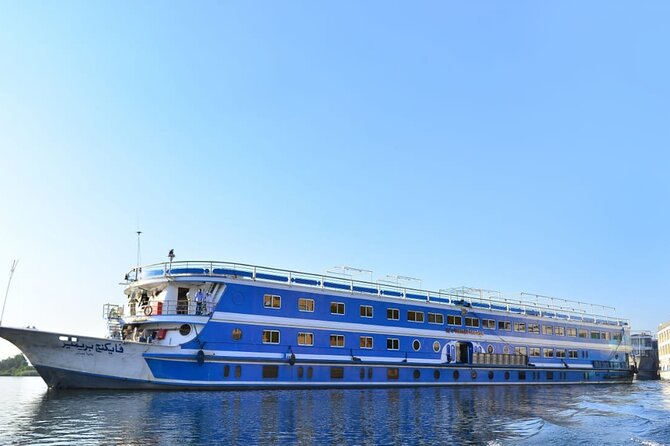
At face value, $350 per person is the kind of price that makes you pause. The reason it can be that level is simple: this is a group-style program with set inclusions, and it does not include entrance fees. In Egypt, tickets for temples and archaeological sites can add up, so treat this cost as a strong foundation—not the full final bill.
Here’s what you do get from the package as listed:
- 3 nights on the cruise with lodging per the itinerary
- Qualified Egyptologist guide
- Port pickup and drop-off (door-to-door style)
- Breakfasts, lunches, and dinners included on board
- A set routing through Aswan, Kom Ombo, Edfu, and Luxor highlights
Here’s what you should plan to pay separately:
- Entrance fees for the sights
- GST (Goods and Services Tax), if applicable
If you’re budgeting, I’d set aside extra money for tickets and any optional extras you might want on top of what’s scheduled. The tour runs with a group size capped at 40 travelers, which is usually friendly enough for a guide to manage without turning the experience into chaos.
Day 1 in Aswan: Philae, the High Dam, and the Unfinished Obelisk
You start with an 8:00 am start, and the day begins the minute you arrive. From Aswan airport or train station, you meet the representative, then get picked up to the cruise ship. You’ll have breakfast on board before your touring starts—this helps a lot if your travel day has been long.
Temple of Philae: the island temple story
Philae is famous because it’s not just “a temple.” It’s a whole story about the Nile changing and humans responding. The temple complex is on an island in the reservoir of the Aswan Low Dam area, downstream of the High Dam. The setting matters: it helps you understand why this location became a sacred center in Upper Egypt.
Practical note: the visit is listed as about 2 hours, so you’ll want comfy shoes and a light layer. Temple sites can be sunny, windy, and bright even when it feels “cool enough.”
Aswan High Dam: engineering that reshaped daily life
The Aswan High Dam is one of the world’s largest embankment dams and, since the 1960s, it has eclipsed the earlier Aswan Low Dam completed in 1902. On a tour like this, the value isn’t that you’ll stand there for long. The value is that a guide can connect the dam to the Nile’s modern story—water management, changing river life, and how Egypt’s land and people adapted.
You can also read our reviews of more evening experiences in Cairo





Unfinished Obelisk: when you see the work, not just the finish
This stop is one of the most fascinating because it shows a process. The Unfinished Obelisk is the largest known ancient obelisk and sits in the stone quarries area in Aswan. Since it was studied in detail by Reginald Engelbach in 1922, it also has that “archaeology in action” feeling—like you’re seeing evidence left behind, not just a reconstructed monument.
This is a good day for contrast: sacred island temple, then modern engineering, then quarry history. If you like learning how civilizations worked, you’ll likely enjoy this sequence.
Felucca sail time: why it’s worth making room for
The cruise includes a felucca sailboat ride in Aswan. Even if you’ve seen pictures, there’s still something special about doing it yourself. It slows your brain down. Between long temple walks and museum-style viewing, a sail gives you space to look at the river like it’s the main character.
Also, feluccas are a reminder that the Nile isn’t just a backdrop for monuments. It’s how people have lived, traded, and traveled for centuries. If your schedule is packed, prioritize staying present here—don’t spend the ride thinking about the next stop.
Day 2 in Edfu and Kom Ombo: Horus, the double temple, and a smoother rhythm
Day 2 is where the cruise starts feeling like a classic Nile itinerary: you wake up onboard, tour with a guide, then settle back in for the next sailing rhythm.
Edfu’s Temple of Horus: huge, intact, and very “Egypt”
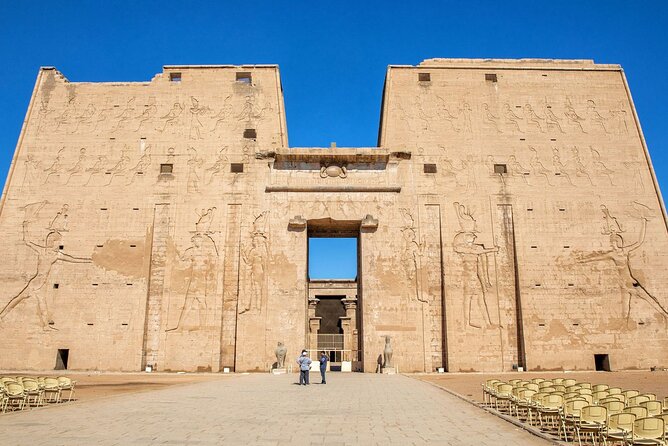
The Temple of Edfu—often described through Horus—is on the west bank of the Nile in Edfu. The listing frames the temple with the Horus identification and mentions historical naming shifts in the Hellenistic and Roman worlds (like Apollo/Horus comparisons). That matters, because it means the guide can help you read the temple beyond simple “pretty carvings.”
You’ll have about 3 hours here, and that’s a sweet spot. Long enough to understand the layout, not so long that your feet give up.
Entrance fees are marked as not included, so plan for tickets. Also, Edfu tends to be active, so the pacing you get from an Egyptologist guide can save you from wandering without context.
Kom Ombo: the unusual double temple
Kom Ombo is a different kind of temple experience. It’s a double temple built during the Ptolemaic dynasty (180–47 BC), with later Roman additions. When a site is “double,” you should expect two halves, two sets of religious focus, and a layout that feels designed for comparison.
This stop is listed as 3 hours and includes Kom Ombo admissions as free in this program. That’s a win: you get time in a major stop without the extra ticket step.
If you like symbolism, the double-temple design is the kind of thing your guide can clarify fast—why the temple looks the way it does, and what it was meant to do for worship.
Day 3 in Luxor: Valley of the Kings, Hatshepsut, and Memnon’s statues
Day 3 is where Luxor hits hard. This is the day many people picture when they imagine “Egypt temples”—plus the burial ground that still feels unreal.
Valley of the Kings: burial power and elite secrecy
The Valley of the Kings covers New Kingdom rock-cut tombs carved over centuries (roughly 16th to 11th century BC). It’s also known as the Valley of the Gates of the Kings. The name alone tells you this wasn’t meant to feel casual.
You’ll have about 4 hours here. That’s enough time to see the big story, understand why the valley mattered, and not feel like you’re only getting a quick look at rock walls.
Entrance fees are not included. If you’re traveling during peak periods, expect a line situation at ticket points and at popular areas—so start the day ready to move.
Temple of Hatshepsut at Deir el Bahari: three terraces of ambition
The Temple of Hatshepsut at Deir el Bahari is described as a masterpiece of ancient architecture with three massive terraces rising above the desert floor. It’s a mortuary temple built during Pharaoh Hatshepsut’s reign, and it’s opposite Luxor.
You’ll have about 2 hours. This is one of those places where the light changes fast, and the terraces make it easy to “read” the building like a sculpture. It’s also a good spot to ask your guide to explain what a mortuary temple was meant to accomplish, because it’s not just a tomb with a view.
Colossi of Memnon: monumental and a little mysterious
The Colossi of Memnon are two massive stone statues of Pharaoh Amenhotep III, standing at the front of the ruined Mortuary Temple of Amenhotep III. Even with the temple in ruins, the statues remain—big enough to remind you how scale worked before cranes, concrete, and GPS.
This stop is about 1 hour. It’s short, which is fine because it acts like a palate cleanser after hours in other spaces.
Day 4 in Luxor: Luxor Temple and Karnak’s sprawling complex
Your final day keeps Luxor on the east bank theme: big temple complexes, more surfaces carved with stories, and the kind of scale that makes you look up without meaning to.
Luxor Temple: central sanctuary energy
The Luxor Temple dates to about 1400 BCE and was known in Egyptian as ipet resyt, the southern sanctuary. That tells you how important the temple was as a focal religious site. You’ll have about 3 hours, which allows time to see the main areas without rushing through everything.
Karnak Temple Complex: where “a temple” becomes a whole world
Karnak is a massive complex of decayed temples, pylons, chapels, and buildings. The word complex fits perfectly. You can’t see it like you see one building; you have to think of it like a neighborhood of sacred architecture.
You’ll have about 4 hours here. This is the kind of stop where your guide’s explanations help you avoid getting lost in patterns without meaning. Entrance fees are not included, so again—budget for tickets.
If you’re the type who likes photos, this is your day. But don’t only shoot. Pause and let your guide connect the dots between the layout and the religion behind it.
The “5-star ship” and included meals: what to expect without hype
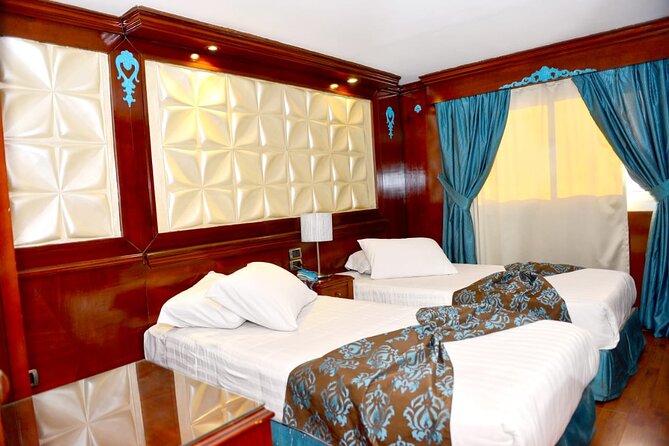
This cruise is marketed as a 5-star Nile cruise experience with buffet meals included. That’s a big part of why these packages feel good for time-strapped travelers. You don’t have to hunt for lunch. You don’t have to decide where dinner is after a long day of walking.
The meal schedule listed is:
- Breakfast (3)
- Lunch (4)
- Dinner (3)
So you’ll eat on board during the days you’re not touring after meals. Expect buffet-style service. Buffets can be hit-or-miss on variety depending on the ship and season, but the value here is predictability: you know food is handled, and you know you’ll be near the meeting points for transfers.
A practical note: if you have dietary needs, the program says a vegetarian option is available and you should advise dietary requirements at booking. That matters. Egypt meal timing can be strict on guided schedules, and telling them early helps avoid last-minute substitutions.
Egyptologist guide quality: the big reason the trip works
The tour includes a qualified Egyptologist guide, which is the difference between seeing monuments and actually understanding them. The itinerary is built around major sites—Philae, Edfu, Kom Ombo, Valley of the Kings, Hatshepsut, Luxor Temple, Karnak. Without context, it can blur together into “a lot of ancient stuff.”
With an Egyptologist, you can connect:
- why certain temples were built where they were
- how later eras added layers (Ptolemaic and Roman additions at Kom Ombo are a great example)
- why burial culture shaped the valley’s geography and secrecy
One thing I’d keep in mind: organization can vary by departure and workload. I’ve seen both sides of this dynamic—some people felt the communication and timing were tight, others found the planning stressful. My advice is simple: confirm your pickup and meeting details right after booking, and keep your expectations flexible so delays don’t turn into a bad mood.
Who should book this Aswan and Luxor cruise?
This fits best if you want:
- a well-paced highlights tour with minimal thinking about transport
- strong “greatest hits” coverage across Aswan and Luxor
- included meals and port transfers so you don’t waste vacation time
It may be less ideal if you’re the type who hates group pacing or wants deep time inside one tomb or one temple at a slow, self-directed speed. The program covers a lot, and that’s the point—don’t choose it if you want to linger for hours beyond the scheduled stops.
If you’re traveling as a couple or solo traveler, it’s often a comfortable size for conversations and questions without feeling overcrowded. The cap of 40 travelers usually keeps things manageable.
Dress code is listed as smart casual, so plan for light layers, comfortable walking shoes, and sun protection.
Should you book this Nile cruise from Aswan?
If you want an Aswan-to-Luxor Nile cruise that hits the big ancient sites without making you solve logistics, I’d say it’s a strong choice. The value is in the combination: Egyptologist-guided touring + included meals + port transfers + a 5-star ship setup for 3 nights.
Book it if:
- you want a guided “best of” route and you like learning as you walk
- you’re comfortable budgeting for entrance fees separately
- you’d rather be guided than plan every connection yourself
Skip or reconsider if:
- you need total freedom of pacing
- you’re sensitive to schedule bumps and prefer DIY travel planning
- you expect entrance fees and taxes to be fully covered in the headline price
If you do book, do one thing that pays off: confirm your pickup details and budget a bit for tickets up front. Then you can focus on what you actually came for—temples, statues, tomb valleys, and that Nile feeling that makes Egypt feel real.
FAQ
Where does this tour start?
It’s based in Cairo as the location on the booking details, but the experience itself begins in Aswan with pickup from the airport or train station and then transfer to your cruise ship.
What time does the tour start?
The start time listed is 8:00 am.
How long is the cruise?
The duration is listed as 4 days (approx.), including 3 nights on the Nile cruise.
Are entrance fees included?
No. Entrance fees for the sights are listed as not included.
What meals are included?
Breakfast is included 3 times, lunch 4 times, and dinner 3 times, served on board.
Does the tour include transfers?
Yes. Port pickup and drop-off are included, and door-to-door transfers are part of the experience.
Is there a vegetarian option?
Yes. A vegetarian option is available if you advise at the time of booking.
What’s the refund timeline if plans change?
You can cancel up to 6 days in advance for a full refund. Cancellation changes within 2–6 days have different refund terms, and less than 2 days before start time is not refundable.